Shop Your House First · No. 01 of 20
A Freezer You Can Actually Shop From
Your freezer is a grocery store you already paid for. How to set it up, pack it, label it and shop it — for the freezer you actually have.
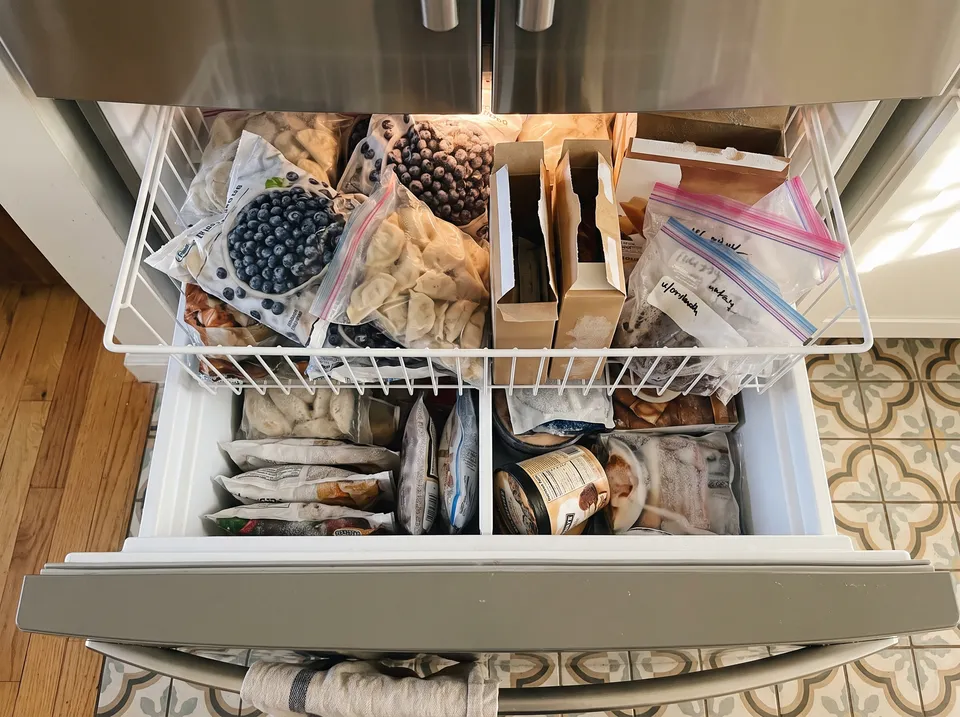
The freezer is the one appliance built to stop food waste — and the one most families lose track of. Food goes in fast and comes out almost never: hard to identify, awkwardly portioned, buried behind the newer bag. This guide makes it findable, fills it on purpose, and lets it decide dinner before the store does.
Most of the work is one hour, once. After that it’s five minutes on a Sunday. Here is exactly how — for the freezer you actually have, with the containers, labels and bins that make it stick.
1 · Start with your freezerFive zones, one drawer.
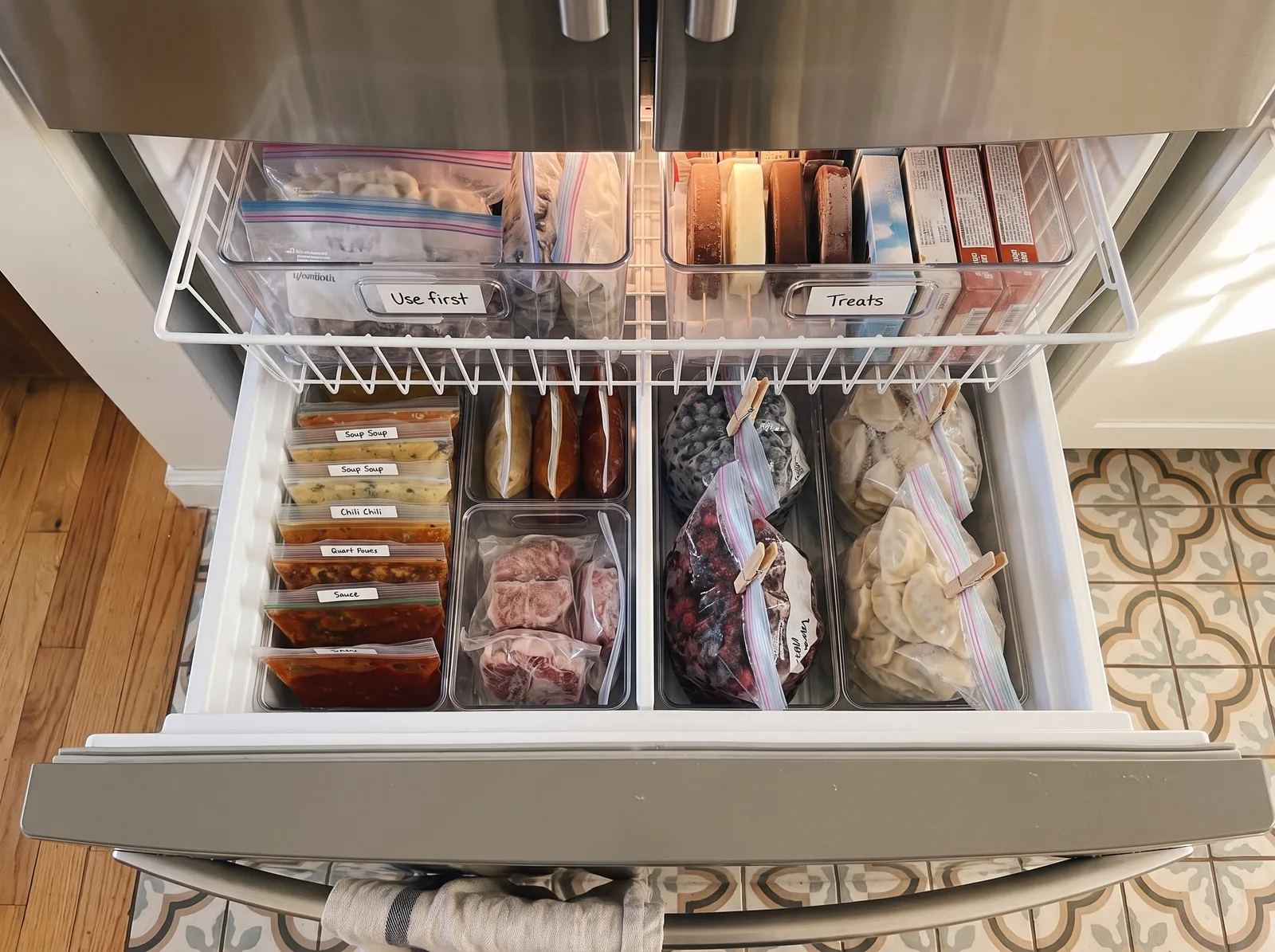
Every freezer gets the same five zones. In a French-door drawer freezer, the shallow top basket holds what you grab, and the deep drawer holds what you plan with.
- A
Use first — Leftovers, opened bags, anything aging — tonight’s first option.
- B
Grab & go — Ice-cream bars, frozen snacks and breakfasts, out of dinner’s way.
- C
Meals & sauces — Soups, chili, sauces and stock frozen flat, filed upright like books.
- D
Proteins — Warehouse packs broken down into one-meal flat quart bags.
- E
Bulk bags — Fruit, vegetables and dumplings: air out, rolled, clipped, standing up.
Shop this
“If it’s in the Use first bin, it’s tonight’s first option.”
Shop this
2 · The one-hour setupReset it once, properly.
Do it the day before a grocery run, when the freezer is emptiest. Work one zone at a time so nothing sits out long.
Step 1: Measure · 5 min
Width, depth and height of the basket and each side of the drawer. It decides which bins fit.
Step 2: Empty one zone · 10 min
Into a cooler or onto a sheet pan. Sort as you go: keep, use this week, let go.
Step 3: Wipe and dry · 5 min
A dry drawer means less frost and nothing frozen to the bottom.
Step 4: Repack · 25 min
Each food into its container — the next section says exactly which.
Step 5: Load the zones · 10 min
Oldest in front, flat bags standing up, labels facing you.
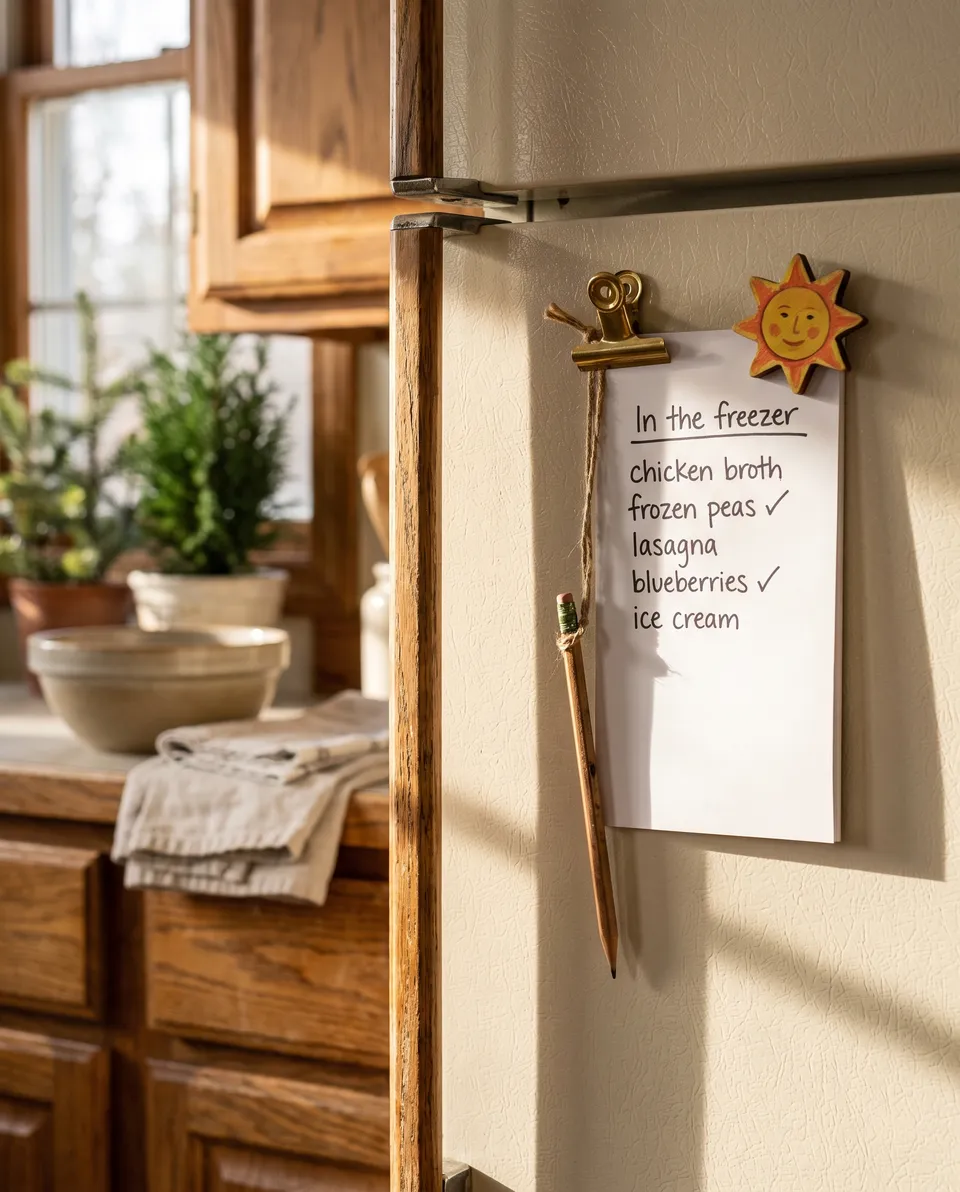
Step 6: Write it down · 5 min
A list on the door, or in HearthIQ.
Shop this
3 · What goes in whatThe right container for every food.
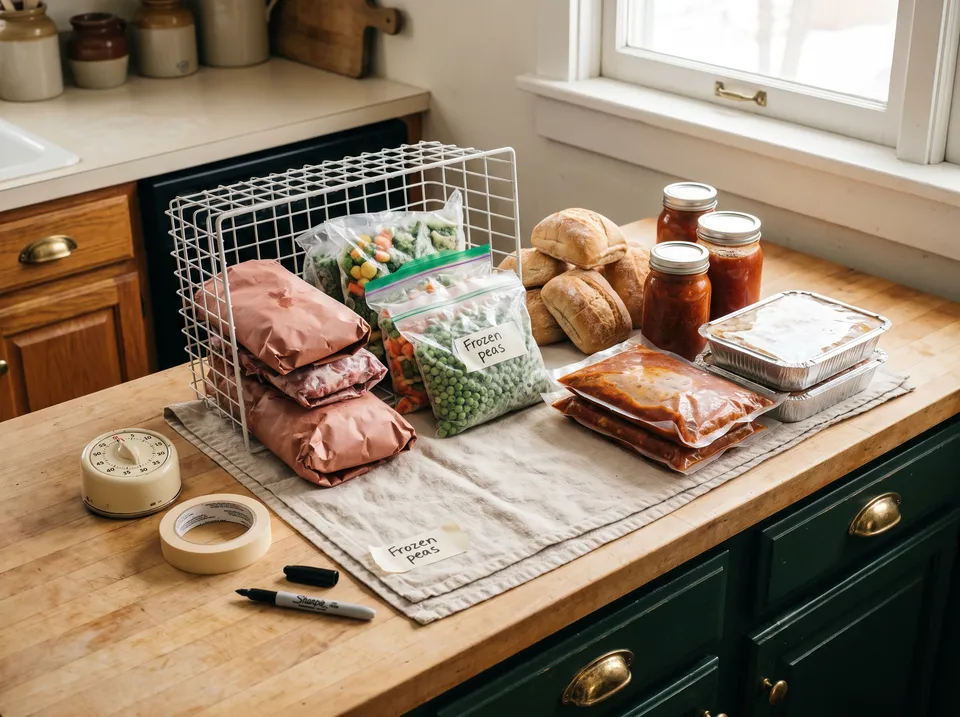
Most of what goes wrong in a freezer is packaging. Start with what’s already in your drawer; buy only what fills a gap.
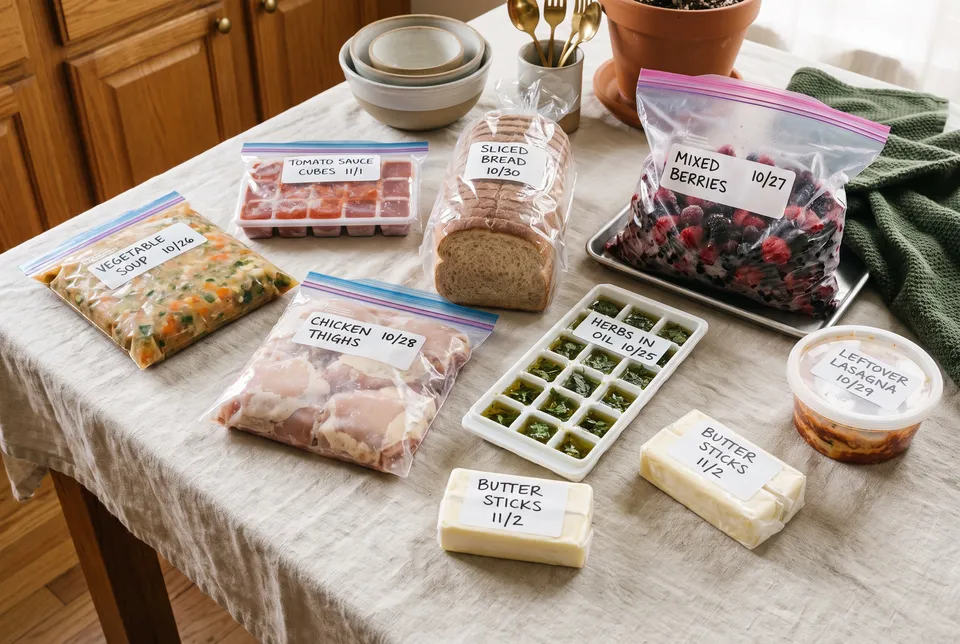
Soups, chili, sauces, stock
Cool it. Stand a zip bag in a tall measuring cup, fill one meal’s worth, press out the air, freeze flat on a sheet pan, then file upright. Leave about ½ inch of headspace in a pint, 1 inch in a quart.
Raw meat, warehouse packs
Break it down the day you buy it: one meal per flat quart bag, pressed thin so it freezes fast and thaws overnight. Store packaging lets air through — overwrap anything staying past a month or two.
Cooked leftovers
One meal per container, cooled first. Label it and put it straight into Use first.
Berries and cut fruit
Single layer on a parchment-lined sheet pan until firm, then bag right away — they pour out loose instead of as one lump.
Bulk bags of vegetables and dumplings
Squeeze out the air, roll the top down, clip it, and stand it up in a bin so every bag is visible.
Butter
Overwrap in foil or a freezer bag and date it. Best within 6–9 months.
Fresh herbs
Chop into ice-cube trays, half water or mixed with oil (good for basil). Freeze, pop out, bag and label.
Ice-cream bars and snacks
One grab-and-go bin at the front of the basket. Keep ice cream out of the door.
Why flat works: a food 2 inches thick should freeze through in about 2 hours. Thin packs freeze faster, with smaller ice crystals and less mush.
4 · Labels that talkWrite it while it’s in your hand.
Shop this
5 · Keeping it workingFive minutes on Sunday.
Open Use first and build one or two of this week’s dinners from it before you write a grocery list. New food goes in the back. After a big shop, add only what freezes within a day — about 2–3 lb per cubic foot — and keep vents clear. Keep the freezer at 0°F, and check it with a thermometer.
Shop this
6 · If you’re storing breast milkBuild a milk library.
Shop this
Quick referencePin this.
Sources: U.S. EPA (April 2025) · USDA FSIS, Freezing and Food Safety · FoodSafety.gov · NCHFP, University of Georgia · NDSU and Penn State Extension · CDC · America’s Test Kitchen. Checked October 3, 2026. HearthIQ may earn a commission on product links.