Shop Your House First · No. 28 of 30
The Holiday Playbook: Stop Reinventing the Same Celebration Every Year
Write the holiday down once: the menu with real amounts, the corrected timeline, the table and where it’s stored, who does what, and what to change. Next year, you open the playbook instead of starting over.
Every year it’s the same holiday, and every year you plan it like it’s the first time. How big a turkey? Where did the good tablecloth go? Did we run out of rolls, or was that two years ago? A holiday playbook ends that. It’s a few pages you write once, right after the holiday, while you still remember: what you made and how much, when you started each thing, what went on the table and where it’s stored, who did what, and what you’d change. Next year you don’t plan the holiday; you open the playbook.
1 · How HearthIQ keeps itSave it as a playbook.
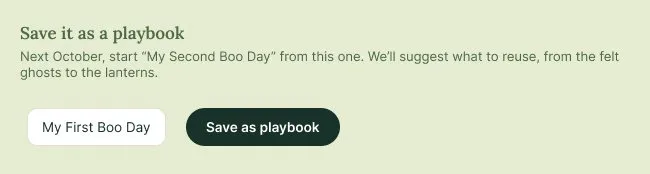
That banner is the whole idea in one line. When a party is planned in HearthIQ, the whole plan lives in one place, and Save as playbook keeps it for next time: “Next October, start ‘My Second Boo Day’ from this one. We’ll suggest what to reuse, from the felt ghosts to the lanterns.” The rest of this article is how to build the same thing for any holiday, on paper or in the app.
2 · The five pagesWhat goes in the playbook.
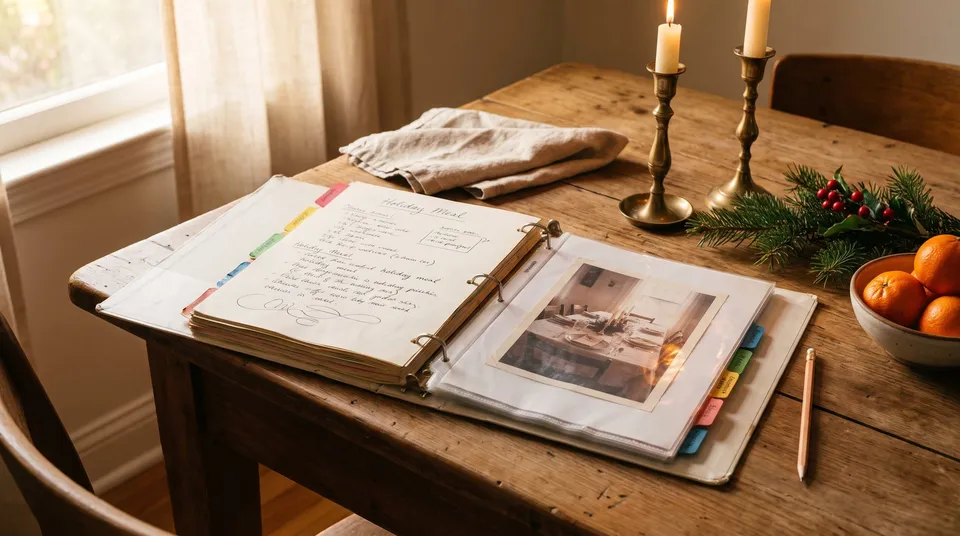
A binder with tabs works, so does a notebook, so does a note on your phone. What matters is that it’s written down in one place, with a photo of the table. Five pages:
- 1
The menu, with real amounts — What you made, how much, and how much was left. Leftovers tell you next year’s amounts better than any chart.
- 2
The timeline — When each job actually happened, counted back from when you ate.
- 3
The table — A photo, the pieces you used, and where every one of them is stored.
- 4
The jobs — Who brought what, who carved, who did the dishes. Next year nobody has to ask.
- 5
What to change — Two or three lines, written that night: too much stuffing, start the pies a day earlier, more chairs.
3 · Page oneThe menu, and how much of it.
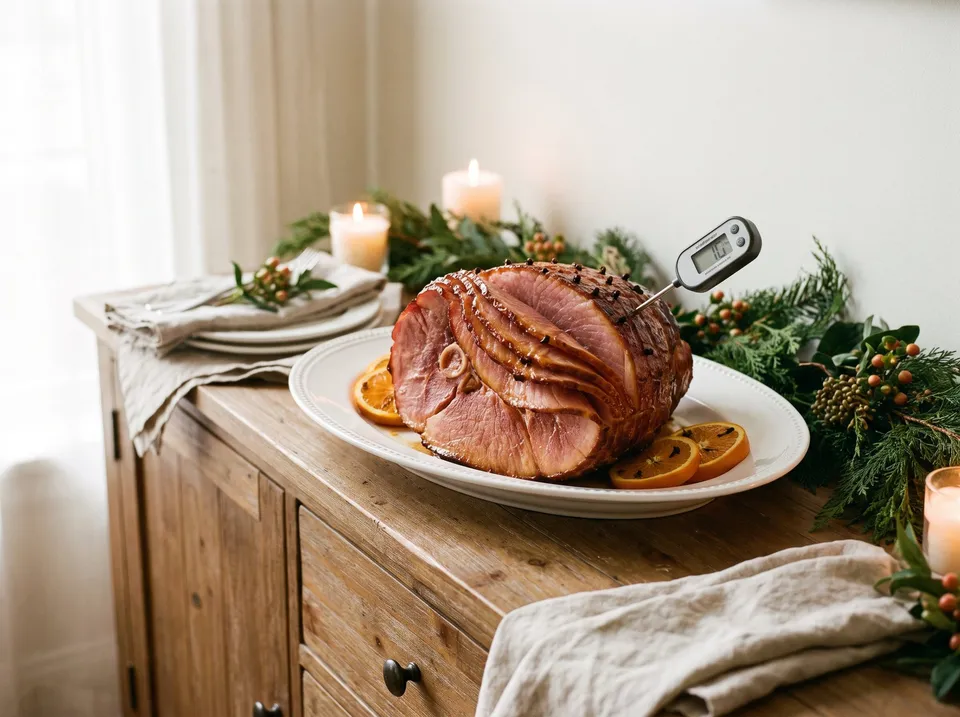
Start with the big things. A turkey is about 1 pound per person (1¼ pounds for a frozen pre-stuffed bird). A ham is about ¼ to ⅓ pound per serving boneless, or ⅓ to ½ pound bone-in. A precooked ham from the store warms to 140°F; leftover ham, or one that’s been repackaged, reheats to 165°F.
For the sides and desserts there’s no trustworthy chart, and that’s exactly why the playbook works: write down how much you made and how much came back, and next year’s amount is right there. One tip for scaling up a family recipe: don’t multiply it into one giant batch. Big batches of baked goods and anything thickened (gravy, sauces) go wrong when you multiply them. Make the regular recipe 3 or 4 times instead, and write “made it 3 times” in the playbook.
4 · Page twoThe timeline, from what actually happened.
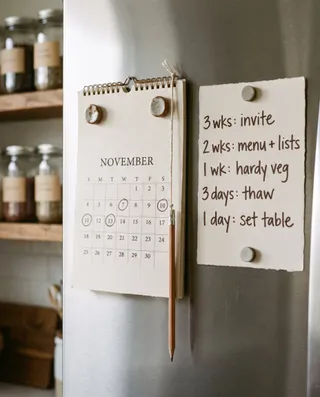
Use the backward timeline from No. 26: start at the time you sit down and count back. Then, the night of the holiday, correct it. The turkey took 3¼ hours. The pies should have been Tuesday. That corrected timeline is the most valuable page in the book.
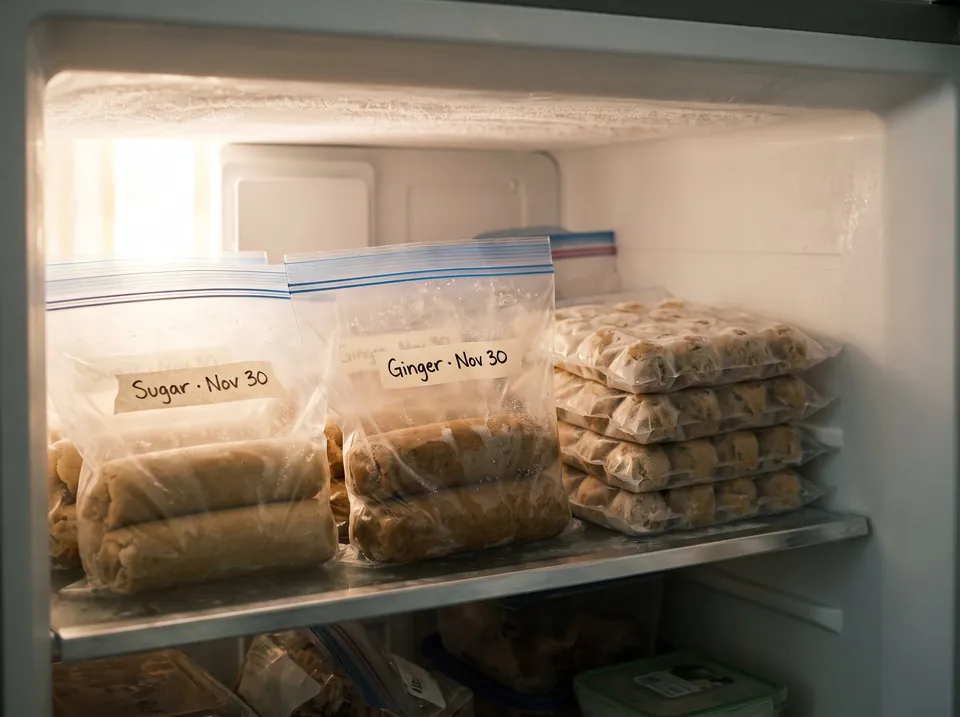
Cookies are the classic job to move early. Cookie dough keeps in the freezer up to 3 months, and baked cookies usually up to 2 months. Label and date every bag, and thaw dough in the fridge, not on the counter. On the timeline page, the line just reads: Nov 30, make and freeze the dough.
5 · Page threeThe table, and where it all lives.
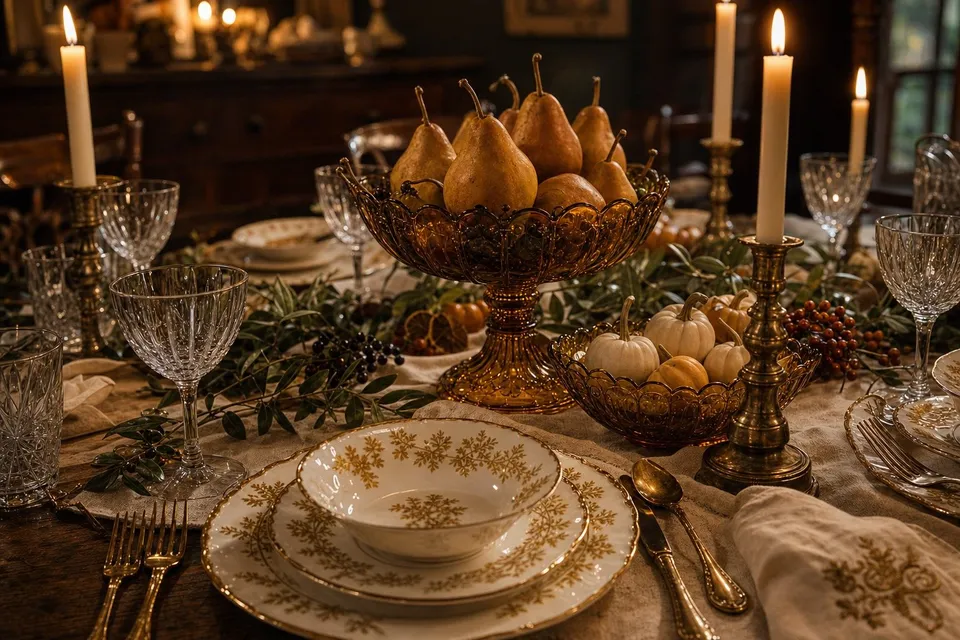
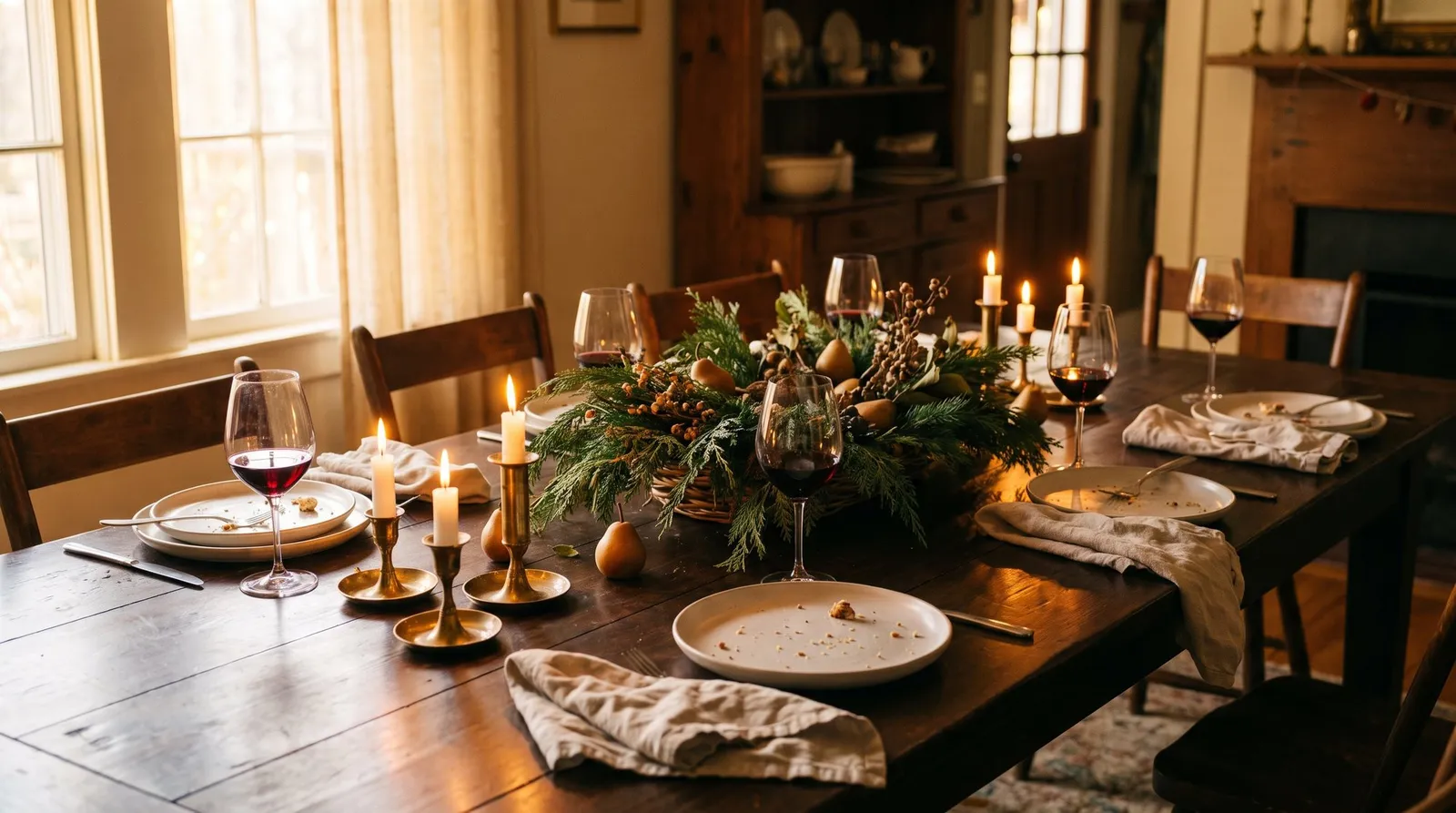
Take one photo of the finished table from above and one from a chair, and list every piece. Our Winter Solstice Supper table is a good model of a holiday table worth keeping: it was put together to work through the whole season, not just one night, so the brass candlesticks, the crystal and the gold-patterned china come back out every year. The pears and the greenery are new each time; everything else lives in the playbook.
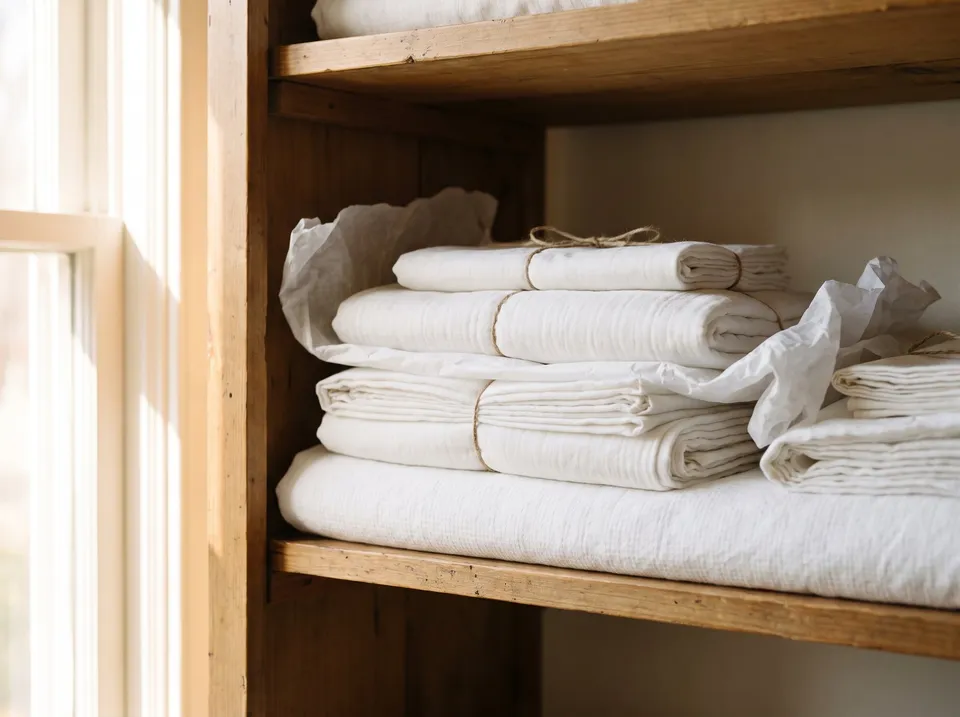
Then pack it so it’s still good next year. For the linens you really care about, the heirloom tablecloth, grandma’s napkins, the textile experts agree on a few things:
Not in plastic
Plastic traps moisture, which can mean mildew. Wrap linens in clean cotton muslin or acid-free tissue paper instead.
Not touching wood or cardboard
Bare wood shelves, cedar chests, ordinary cardboard and paper give off acids as they age that weaken cotton and linen. Lay a clean sheet or muslin between them.
Not in the attic or basement
Store them somewhere heated in winter and cool in summer, like a closet in the house, not the attic, basement or garage.
Refresh the wrapping
Wash the muslin about once a year when you take the linens out, and replace the tissue now and then.
Everything sturdier (candlesticks, serving pieces, decorations) goes into one bin with a label on the outside and a card on top listing what’s inside. It’s the same trick as the hosting kit in No. 20, just for one holiday.
6 · Pack it, and open it againNext year starts the night after.
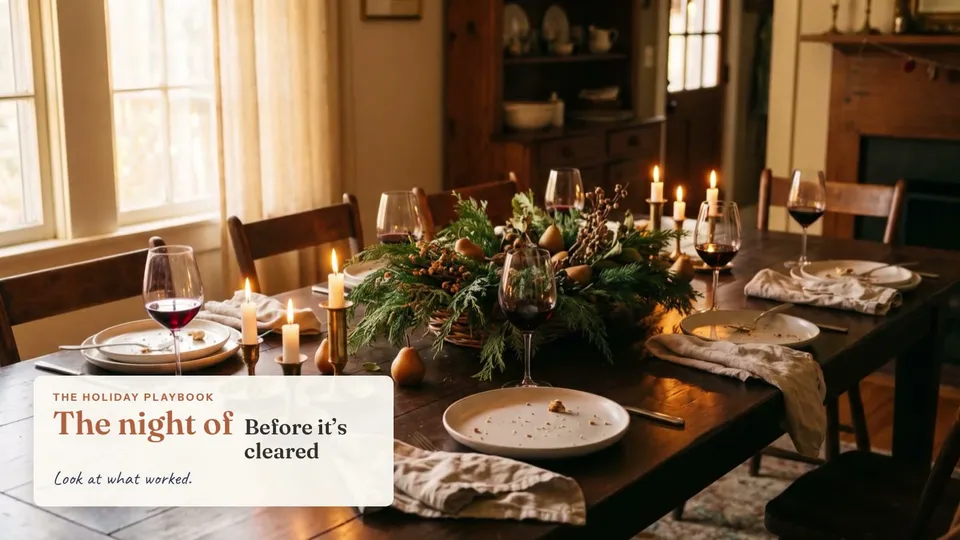
The trick is doing it the night of, or the morning after, while you still remember. Write the notes and take the photos before the table is cleared. Pack the bin with the card inside. A year later, open the bin, read the card, and half the table sets itself.
7 · Pages four and fiveThe jobs, and what to change.
Write down who did what, so next year it’s already decided: who brings the green beans, who carves, who washes and who dries, who takes the leftovers home. Then the change list. Keep it short and specific, three lines at most, written that night. This is the page that makes each year easier than the last.
“Don’t plan the holiday every year. Write it down once, then just open the playbook.”
Quick referencePin this.
Sources: USDA Food Safety and Inspection Service, Let’s Talk Turkey (Nov 17, 2023), Hams and Food Safety (Jan 15, 2025), Your Safe Thanksgiving Guide (Nov 25, 2025), Shell Eggs from Farm to Table (Nov 20, 2024) and Steps to Keep Food Safe (Jan 5, 2024) · University of Minnesota Extension, Planning the quantity food occasion (2021) · Michigan State University Extension, Plan ahead: Cookies you can use safely (Nov 28, 2012) · University of Nebraska–Lincoln Extension, quilt and textile storage, G1820 (2007) · University of Georgia Extension, Heirlooms · Fiese et al., A review of 50 years of research on naturally occurring family routines and rituals, Journal of Family Psychology (2002). Checked October 5, 2026.