Shop Your House First · No. 19 of 20
The Collected Table: How to Host Beautifully With What You Already Own
Create a welcoming, layered gathering by starting with what your home already holds, and buying only what truly adds something.
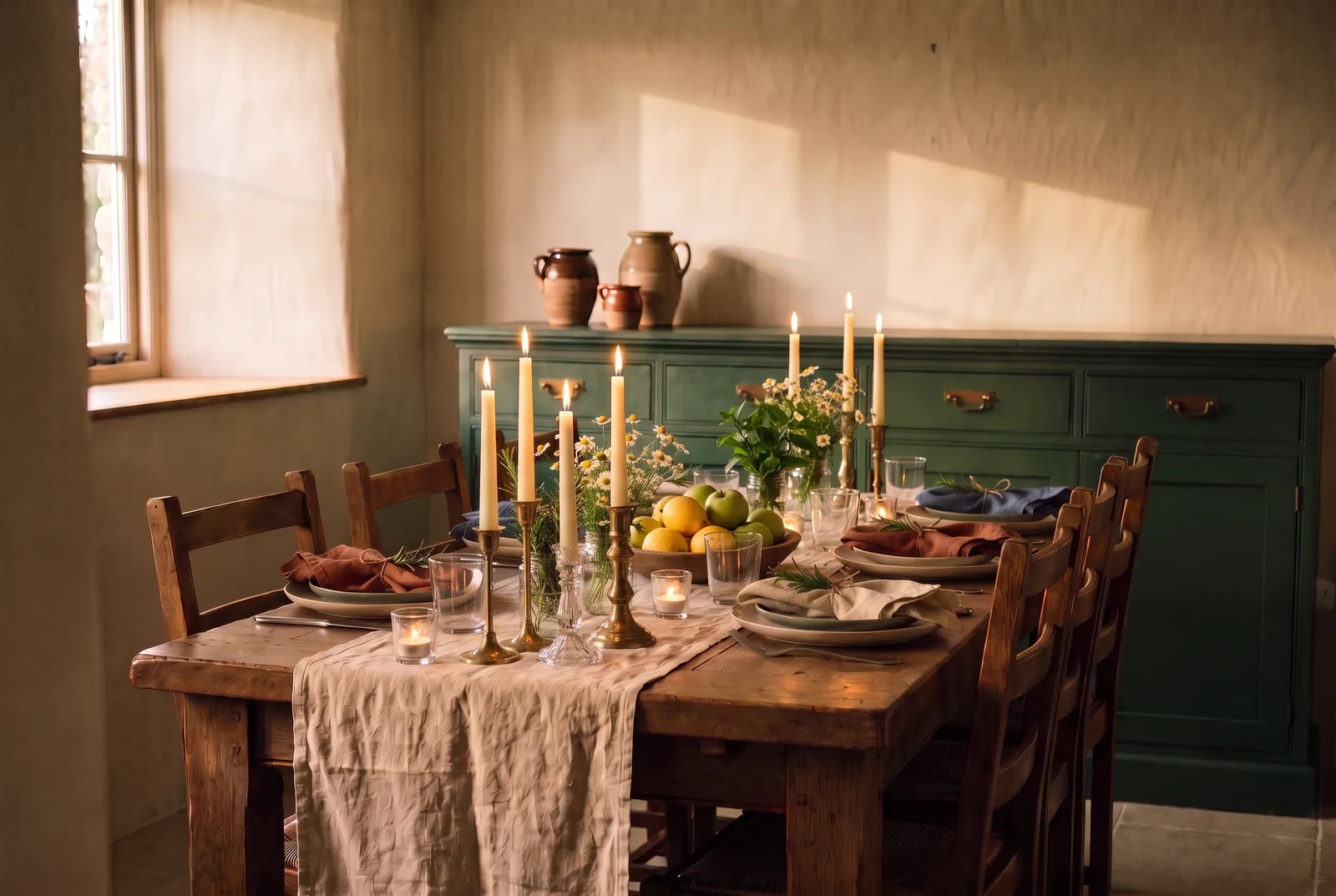
Hosting with what you own isn’t settling for less. It’s the more personal way to do it. The serving bowl you use every week, your grandmother’s candlesticks, a stack of small plates, a pitcher of branches from the yard, napkins that don’t quite match, a cutting board pressed into service: together they make a table that feels collected, generous and unmistakably yours. The goal isn’t to make everything match. The goal is to make everything look chosen.
1 · Shop your house firstWalk the house before you write a list.
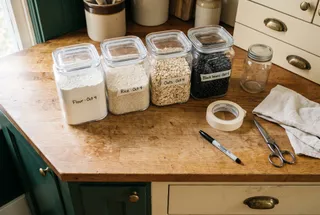
Before you buy a thing, take a lap. Kitchen cabinets, the dining-room hutch, the linen closet, bookshelves, the bar cart, the garage shelves, the garden. You’re looking for anything that could help: serving bowls, platters, trays, glasses, linens, candlesticks, baskets, pitchers, vases, cutting boards, cake stands, a stack of books, branches, a side table, and anything with family history. (Same lesson as the pantry in No. 03: you can only use what you can see.)
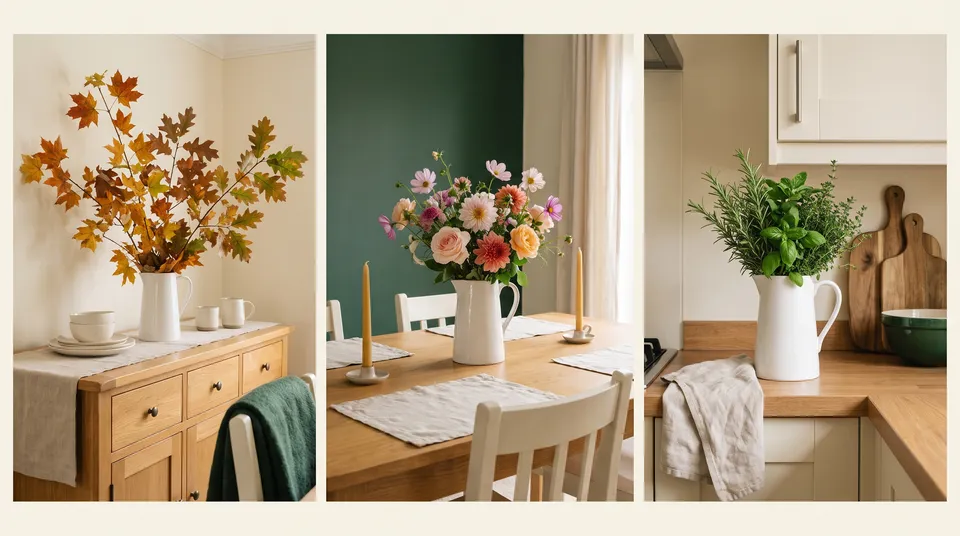
Water pitcher → vase. Your water pitcher is the most useful vase you own. Tall branches cut from the yard look sculptural in it; a loose handful of garden flowers looks effortless; a fat bunch of basil, parsley or rosemary is pretty and doubles as a garnish station. A heavier pitcher won’t tip, and you don’t need floral foam: a classic rule of thumb is an arrangement about twice as tall as its container.
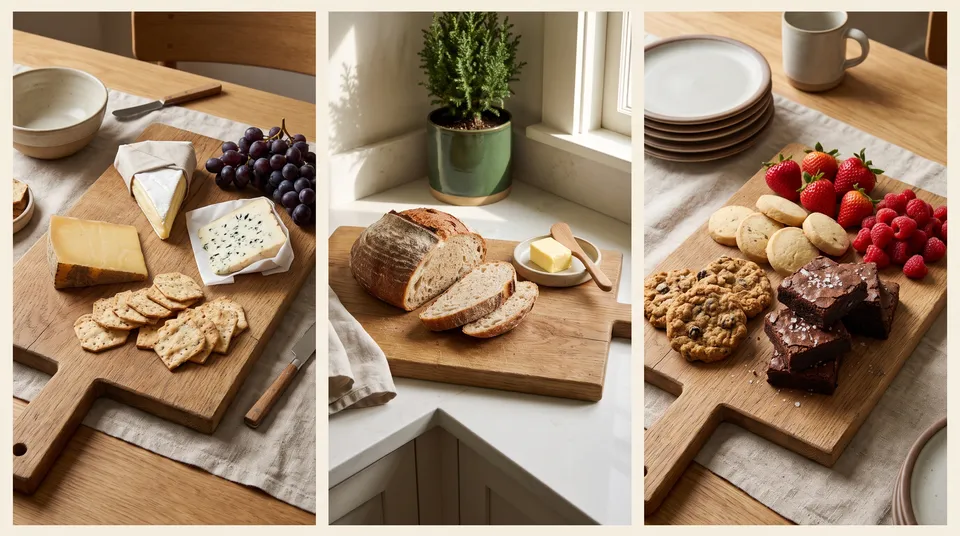
Cutting board → serving board. A big wooden cutting board is a serving platter you already own. Three cheeses, crackers and grapes make an instant appetizer; a sliced loaf and a dish of soft butter turn it into the bread course; cookies, brownies and berries piled on it become dessert with no plating at all. Use the side that’s never touched raw meat, and wash it well afterward.
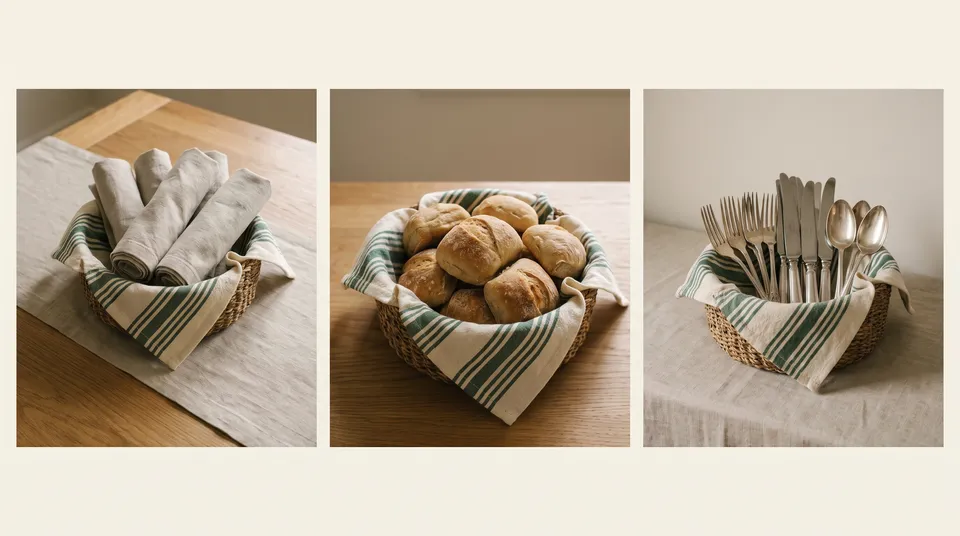
Basket → napkins, rolls or flatware. Line any basket with a clean tea towel and it’s ready for work. Rolled napkins in one by the plates look generous; warm rolls tucked in the towel stay warm longer; a basket of forks, knives and spoons standing upright at the end of a buffet saves you setting every place.
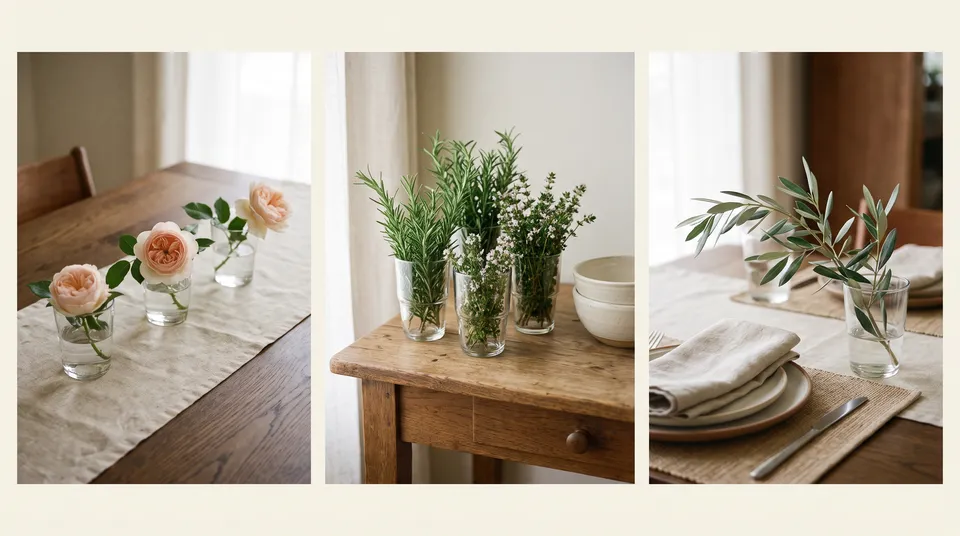
Small glasses → bud vases. Juice glasses, small tumblers, even jam jars make lovely bud vases. Line three down the runner with one stem in each; cluster five together with rosemary and thyme for a centerpiece that smells good; or tuck one glass with a single branch beside each place as a little welcome. They stay low, so everyone can still see across the table.
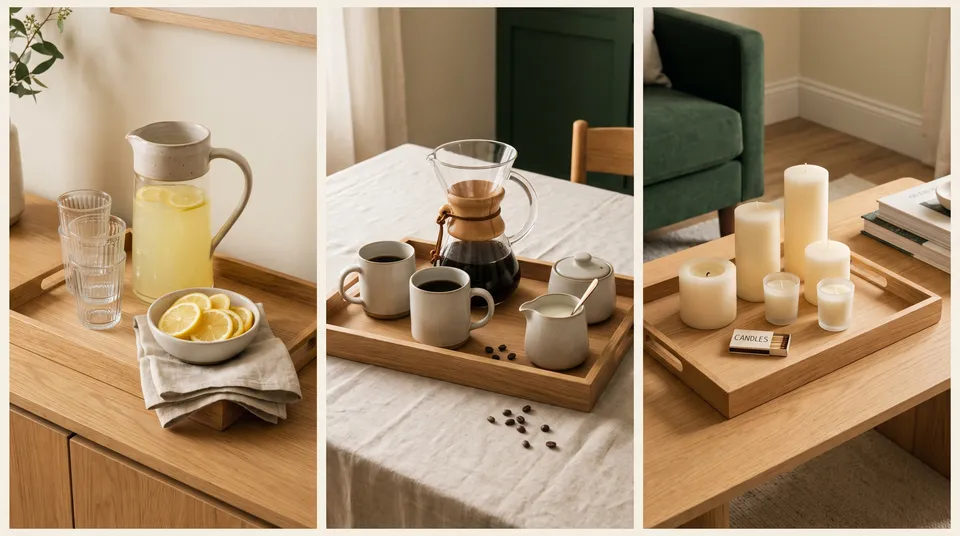
Tray → drink station or coffee service. A tray makes a station. Set a pitcher, glasses and a bowl of lemon slices on it and guests can help themselves; after dinner it becomes the coffee service, carried out all at once; on the coffee table it corrals a cluster of candles so the wax and the clutter stay in one place.
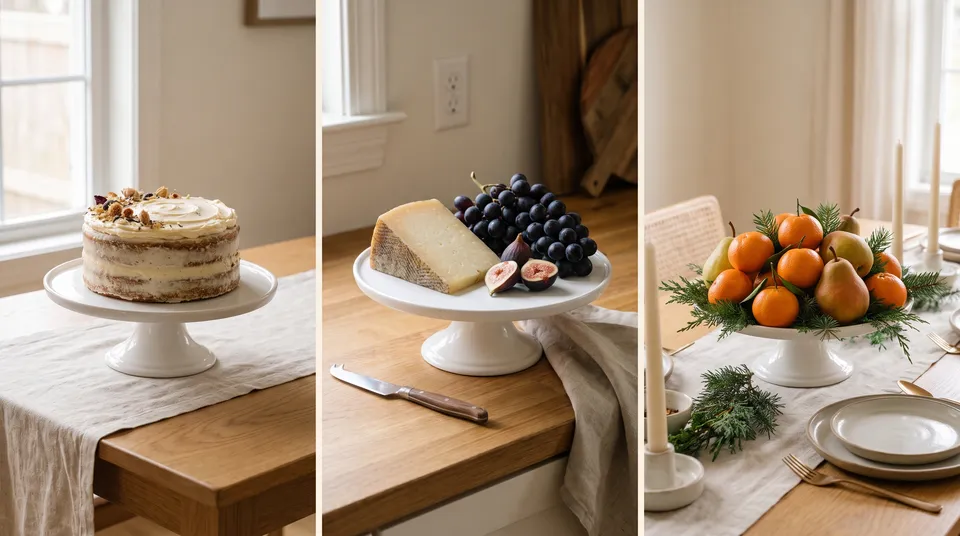
Cake stand → height for anything. A footed cake stand is the easiest way to add height to a flat table. Of course it holds the cake, but it’s just as good lifting a wedge of cheese with grapes and figs off the board, or holding a pile of clementines and pears as a centerpiece that guests can eat by the end of the night.
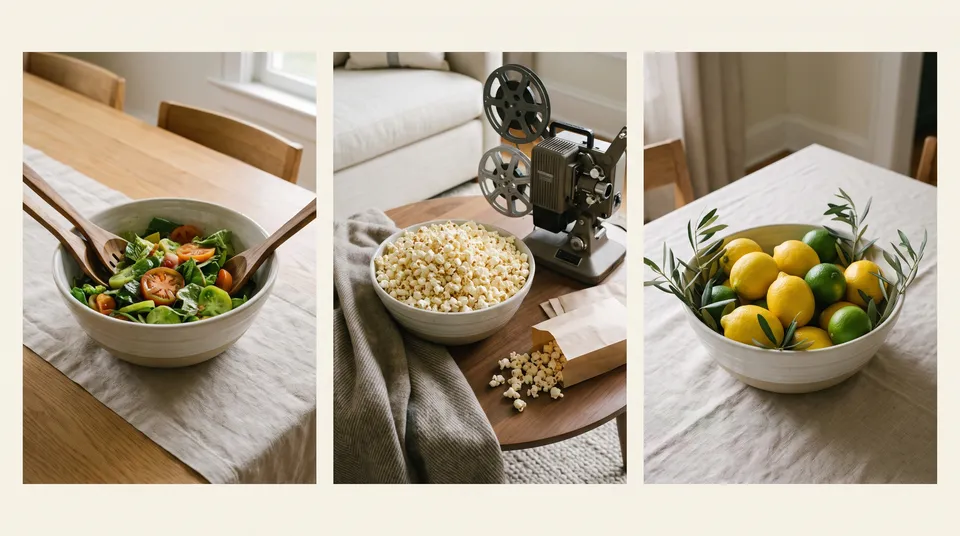
Mixing bowl → salad bowl and more. That big ceramic or glass mixing bowl looks right at home on the table. Toss the salad right in it and bring it out with wooden servers; fill it with popcorn for a movie night; or pile it with lemons and limes for a centerpiece that costs nothing and goes back to the kitchen afterward.
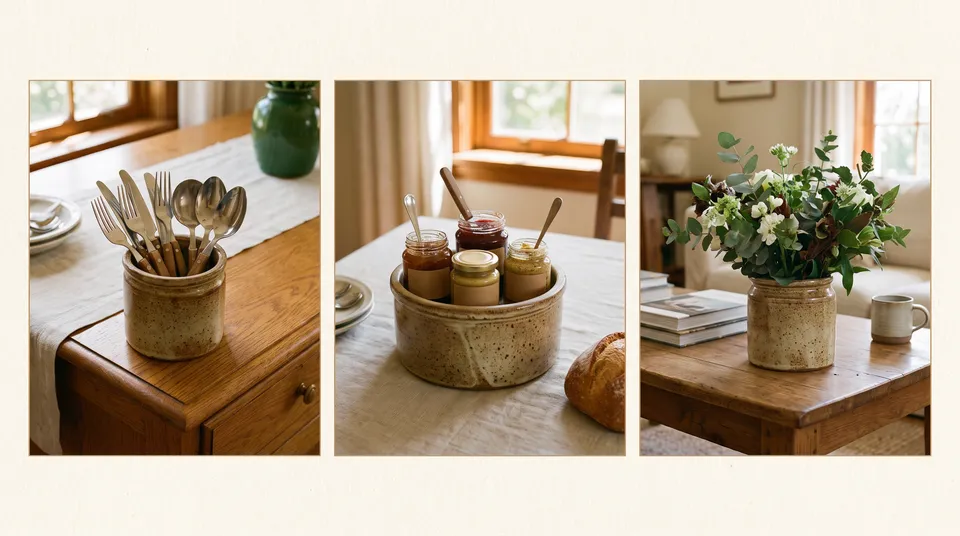
Crock or jar → utensil holder, condiments, flowers. A stoneware crock or a big jar earns its keep three ways. On a buffet it holds the forks and spoons upright where everyone can grab them; set small jars of mustard, jam and relish inside it with little spoons and it’s a condiment caddy; and with a bunch of garden flowers it’s a vase with weight and character.
2 · Choose an anchorOne strong idea, then build around it.
Start with one thing that sets the feeling: a beautiful platter, a tablecloth, a vase of branches, a set of colored glasses, a pottery bowl, a piece of silver, or the food itself. Let everything else support it instead of competing with it. A table doesn’t need ten focal points; one confident idea looks better than five shy ones.
3 · Collected, not matchedRepetition is what makes it look designed.
A table doesn’t need to look like it came from one store; a home often feels more interesting when things were gathered over time. What ties mismatched pieces together is repetition: the same color, material, shape or finish showing up in a few places. Three touches of brass connect otherwise unrelated objects. Green glass repeated around the table makes mixed glassware look intentional. A handful of white serving pieces reads as a set even when none of them match. Too many different things with nothing repeated is what looks accidental.
“The goal isn’t to make everything match. It’s to make everything look chosen.”
4 · Build it in layersBase, plates, napkins, centerpiece, light.
Step 1: The base
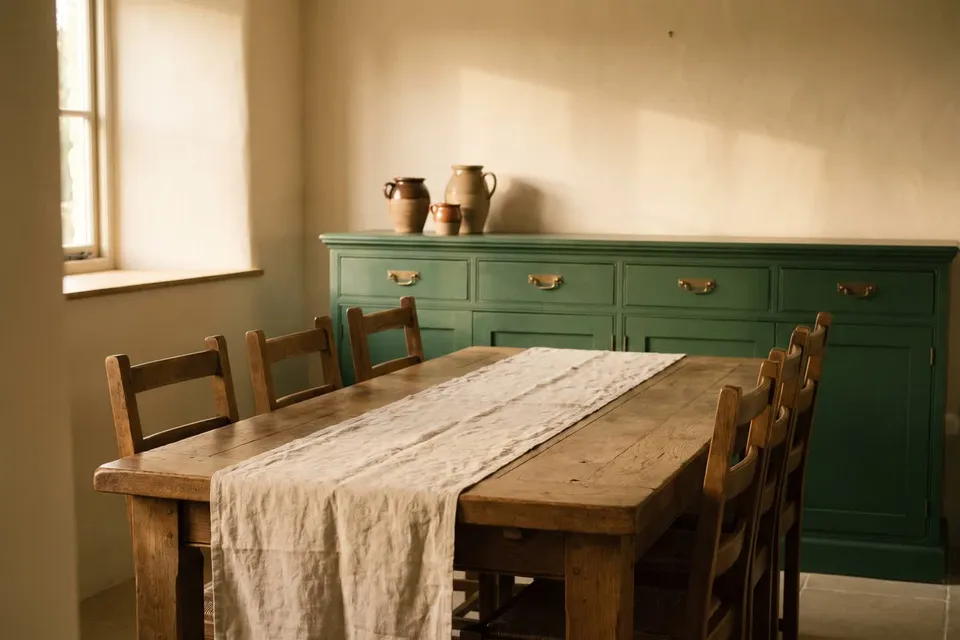
Bare wood, a runner, a tablecloth, or a clean flat sheet in a color you like. It sets the palette for everything after.
Step 2: Stack the plates
A larger dinner plate with a smaller plate on top adds a layer for free. Alternate two sets around the table if you don’t have enough of one.
Step 3: Napkins and glasses
Mismatched napkins look cheerful when they share a color family. Tie each with kitchen twine and tuck in a sprig of rosemary or thyme.
Step 4: A low centerpiece
Keep it under about 12 inches so people can see each other across the table. A bowl of lemons or apples, a few jars of herbs from No. 15, branches laid flat down the runner.
Step 5: Then the light
Candles at different heights, grouped together, are the fastest way to make an ordinary table feel like an occasion.
5 · Contrast and heightMix polished with rustic. Give the table some architecture.
A silver tray holding casual sandwiches. A weathered cutting board next to your best glasses. A plain white plate that lets one patterned salad plate be the star. Contrast on purpose is what gives a table personality. And lift things up: cake stands, footed bowls, a stack of books under a platter, candlesticks. A completely flat table looks unfinished, and varied heights carry the eye around it. Just keep it open enough that guests can see and talk to each other.
6 · Edit, then design for the guestA calmer room beats a fuller one.
- 1
Clear before you add — Put away the everyday clutter and the mail. Make room for the serving dishes and somewhere for every guest to set down a drink.
- 2
Make it work — An obvious place to find the food, napkins within reach, a serving spoon in every dish, a spot for coats and bags, room to move.
- 3
Soften the light — Turn off the overheads and use lamps and candles.
- 4
Let one thing be special — A spectacular dessert with a simple dinner, or beautiful flowers with a familiar menu. Not five ambitious things at once; your energy is part of the party.
7 · Let HearthIQ helpStart from a look. Swap in what you own.
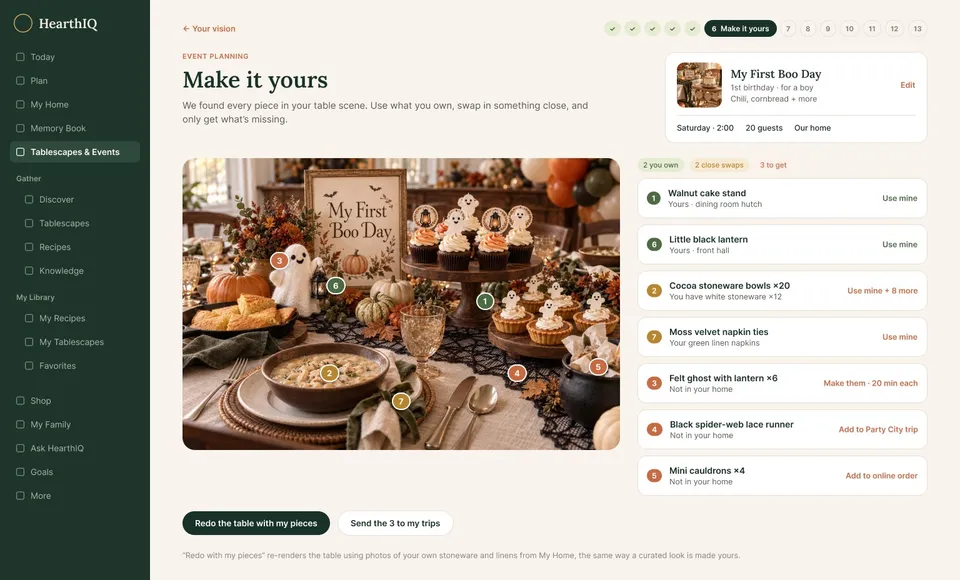
If you’d like a head start, HearthIQ’s event planner works exactly this way. Describe the gathering in a sentence (“a fall dinner for eight on Saturday, chili and cornbread”) and it reads back a brief. Then you can start from a look Amber has styled, with the table, the guest-of-honor spot, the food display and the welcome all worked out.
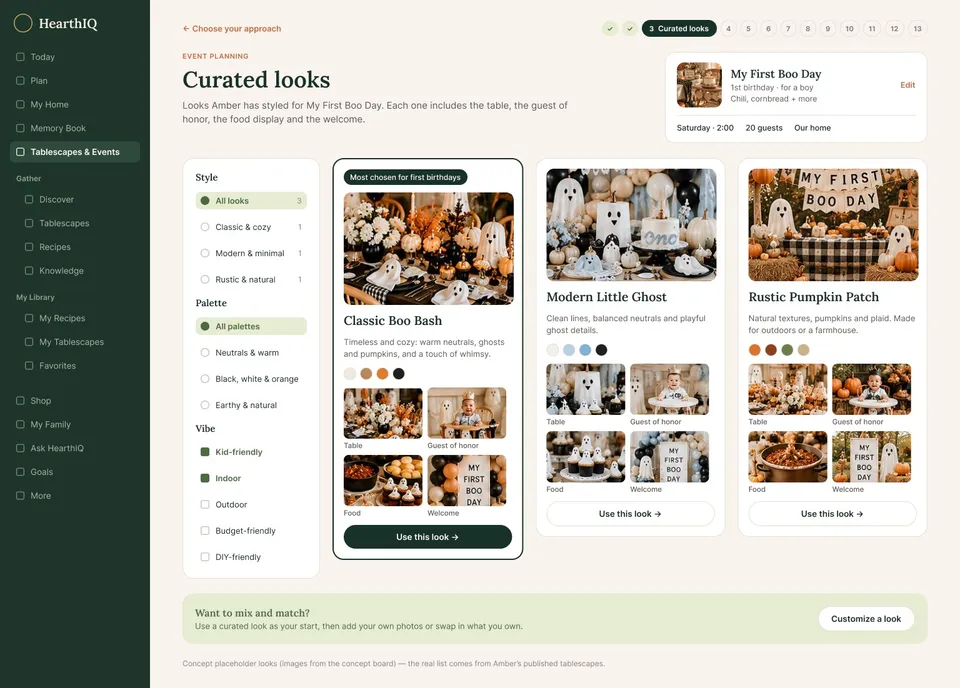
Then comes the part that’s pure Shop Your House First: Make it yours. HearthIQ finds every piece in the look and checks it against what’s in your home: the cake stand you already own, the close swap (your white stoneware for the cocoa bowls), and only the few things you’d actually need to make or get, which can go straight onto your errand trips.