Shop Your House First · No. 15 of 20
Fresh Herbs: How to Store Them, Save Them and Use Them Up
Where each herb keeps for weeks instead of days, how to bring a limp bunch back, freezing and drying what you won’t get to, and pesto, herb butter and stems that use up the whole bunch.
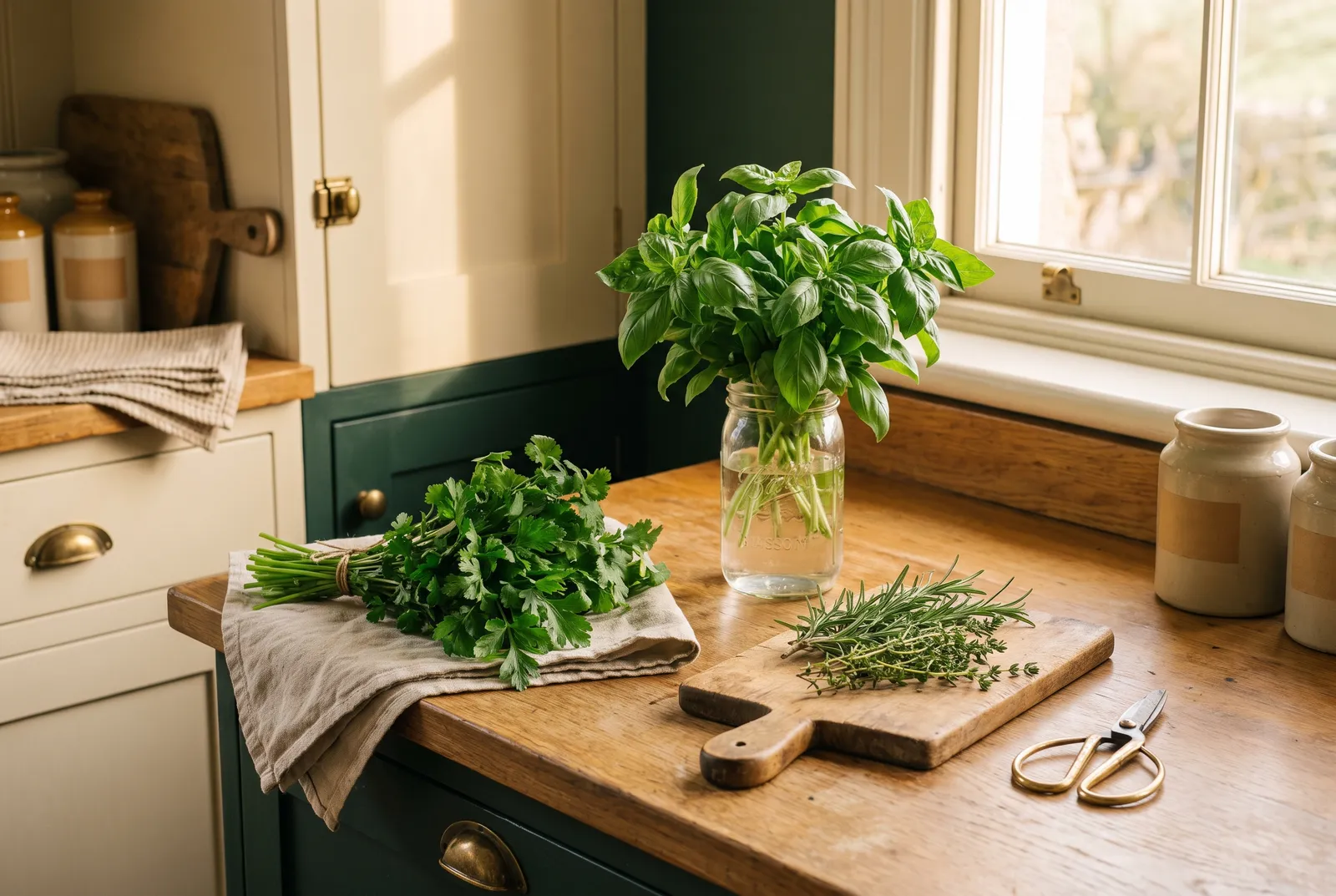
You buy a bunch of cilantro for one recipe that uses two tablespoons, and a week later the rest is a slimy green surprise in the back of the fridge. It doesn’t have to go that way. Each herb has a spot where it keeps for weeks, a way to freeze or dry what you won’t get to, and a sauce or butter that uses up a whole bunch at once. Here’s how.
1 · Two kindsTender or hardy.
- T
Tender herbs — Soft stems, delicate leaves: basil, parsley, cilantro, dill, mint, chives, tarragon. They bruise and wilt easily, and they’re usually added at the end of cooking or raw.
- H
Hardy herbs — Woody stems, sturdier leaves: rosemary, thyme, sage, oregano, marjoram. They hold up to long cooking and keep longer in the fridge.
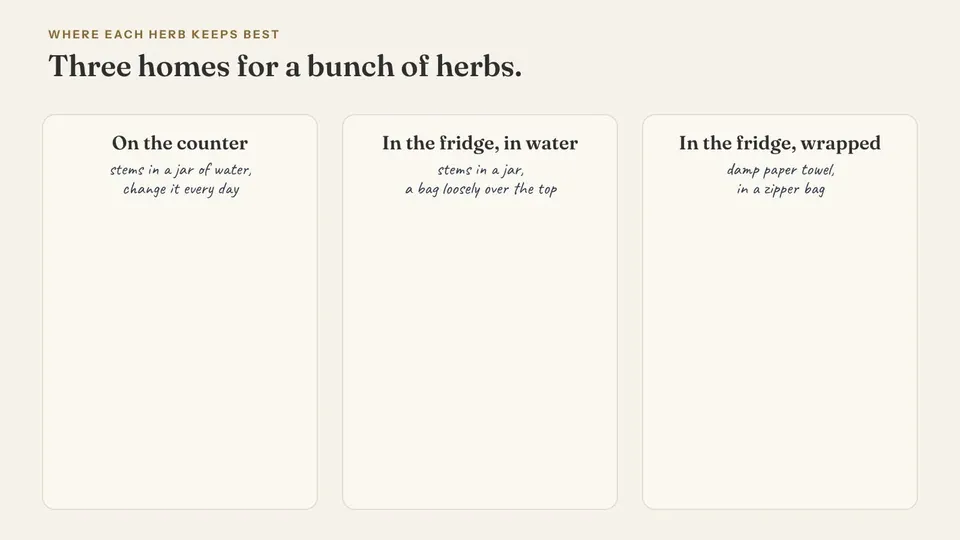
2 · Keeping themThree homes for a bunch of herbs.
Basil: on the counter, like flowers
Trim the ends and stand the stems in an inch or two of water in a glass, at room temperature. Change the water every day. It keeps about 5 days this way, longer if you keep pinching off any leaves that turn. In the fridge it starts to darken.
Parsley, cilantro, dill, mint: a jar in the fridge
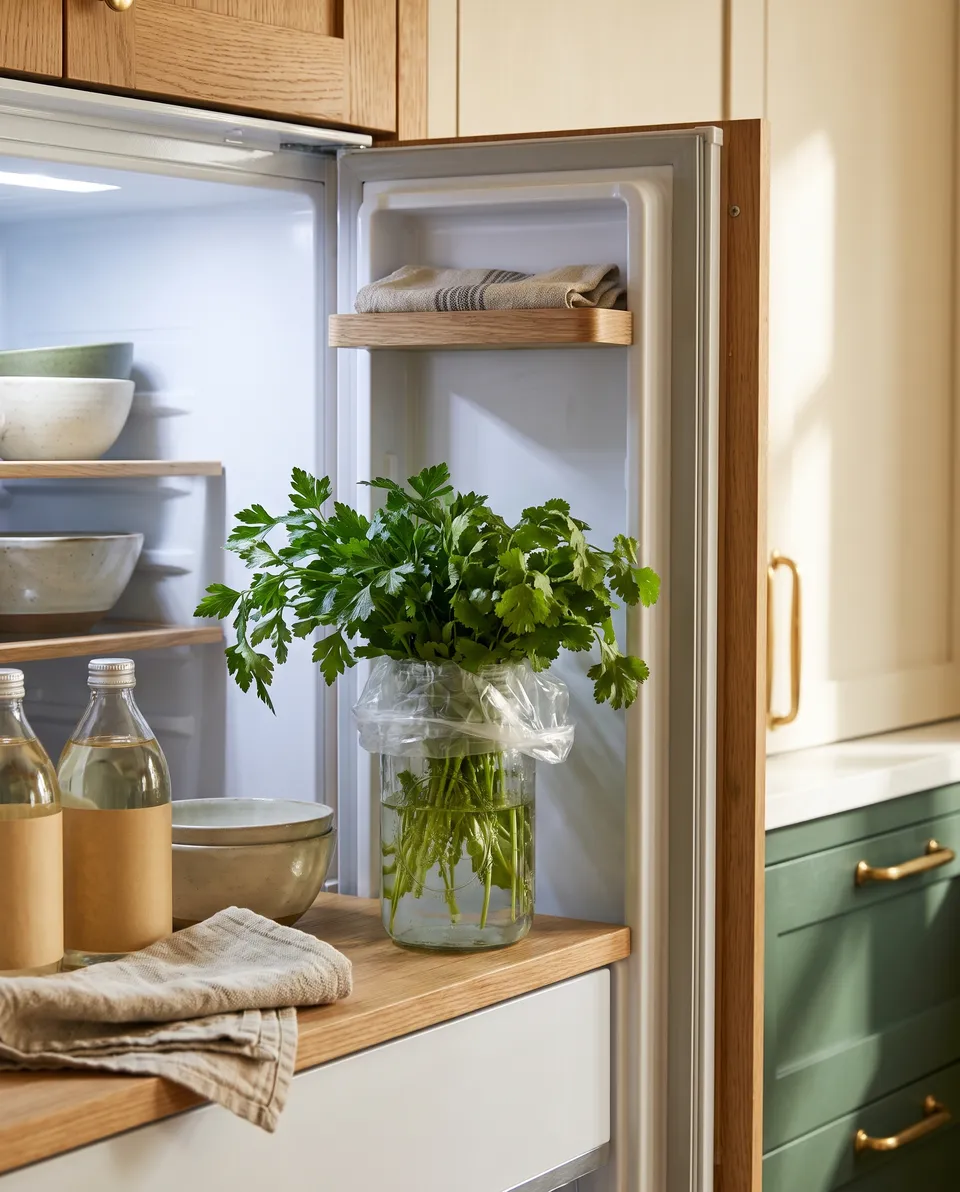
Trim the stems and stand them in a jar with a little water, leaves above the rim. Pull a produce bag loosely over the top and refrigerate; change the water when it looks cloudy. Kept this way, parsley can go up to 3 weeks and cilantro about 2. Wrapping them in a damp paper towel in a zipper bag works too.
Rosemary, thyme, sage, oregano: wrapped in the fridge
Roll them loosely in a slightly damp paper towel, slide them into a zipper bag left a little open, and put them in the crisper drawer. In a long test, thyme kept this way stayed fresh for more than five weeks.
Wash them before or after? Either way, the key is getting them dry before they go in the fridge. Rinse, then spin them in a salad spinner lined with a paper towel.
3 · Gone limp?Give it a drink.
A bunch of parsley that’s gone floppy usually isn’t done for, it’s just thirsty. Trim the stems at an angle and stand them in a glass of cold water in the fridge for about an hour; they’ll perk right back up. It’s worth trying on any limp bunch before you give up on it (more rescues in No. 10). Slimy, dark or moldy leaves, though, go in the compost.
4 · Freeze what you won’t useHerb cubes for later.
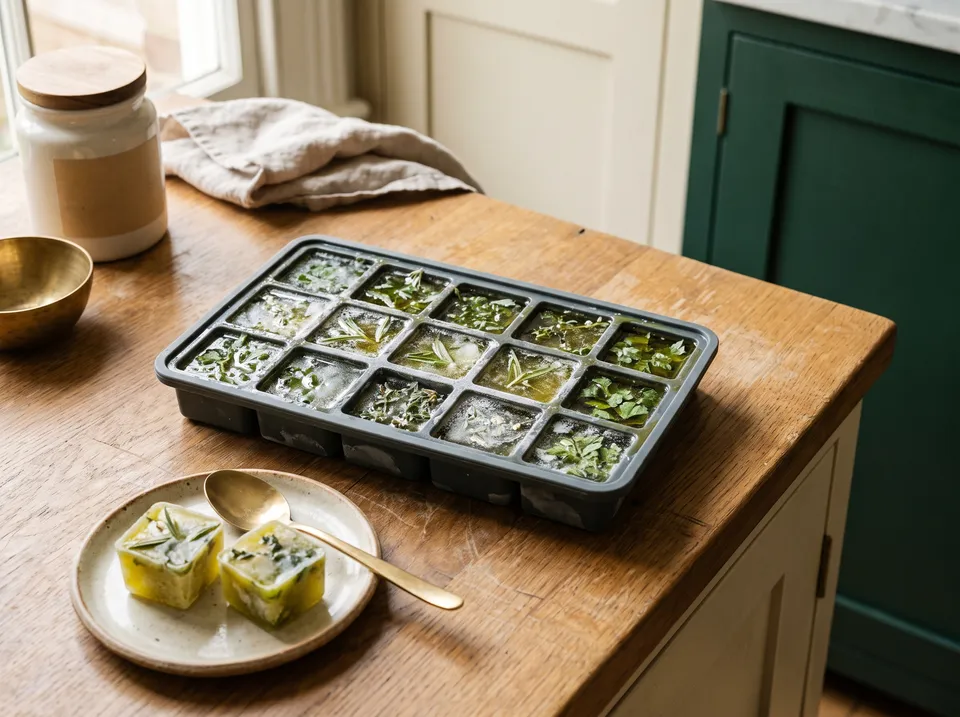
Parsley, dill, basil, chives, mint, cilantro and tarragon all freeze well. They won’t look pretty enough to sprinkle on top after thawing, but they’re perfect stirred into soups, sauces and stews, and you use them in the same amounts as fresh.
Step 1: In water
Half-fill an ice-cube tray with water and push about 1 tablespoon of chopped herbs into each cube. Freeze, top off with water the next day, and freeze solid. Pop them into a freezer bag.
Step 2: In oil
Mix 2 cups chopped herbs with ⅓ cup oil (olive oil, or a neutral oil if you want the herb to shine) and spoon it into a tray or small jars. Freeze right away; it stays soft enough to scrape out a spoonful. Basil keeps its color best this way.
Step 3: Whole sprigs
Rosemary, thyme and sage can be frozen right on the stem. Wrap a few sprigs tightly and pull off leaves as you need them.
Step 4: How long
Use frozen herbs within a couple of months for the best flavor. Wrap strong ones well so the whole freezer doesn’t taste of dill.
5 · Dry the hardy onesHang them up and forget them for a week.
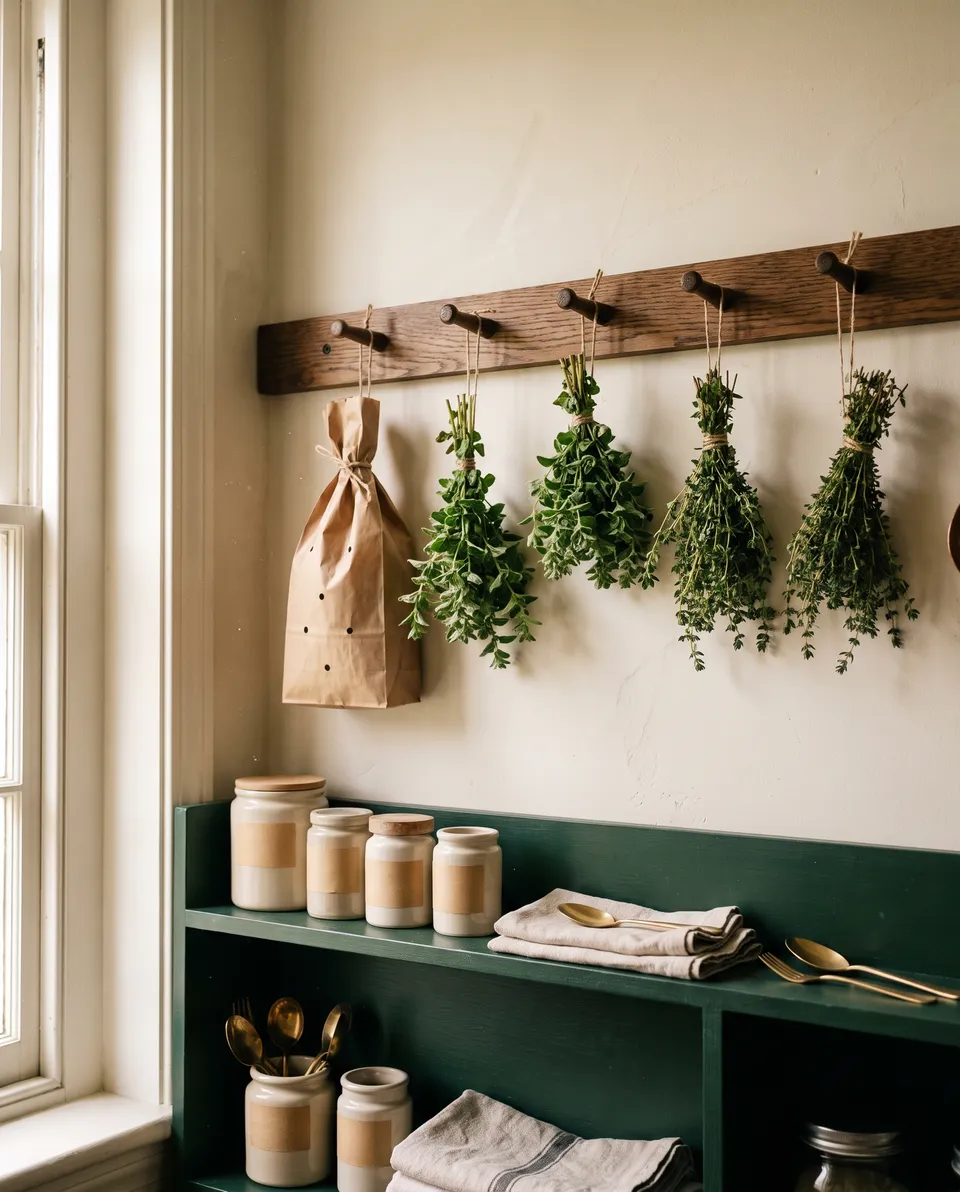
Step 1: Air-dry · 5 to 10 days
Tie hardy herbs into small bundles (big ones can mold) and hang them upside down somewhere dry and airy, out of the sun. Tender herbs dry better hung inside a paper bag with holes poked in the sides.
Step 2: Or the microwave · 1 to 3 min
For a cup of hardy herbs: a single layer between two paper towels, on high for 1 to 3 minutes, checking every 30 seconds after the first minute. They’re done when the leaves are brittle and fall off the stems.
Step 3: Store
When the leaves crumble between your fingers, strip them into a jar with a tight lid and keep it somewhere cool and dark. Use them within about a year for the best flavor.
6 · Use the whole bunchPesto, herb butter and the stems.
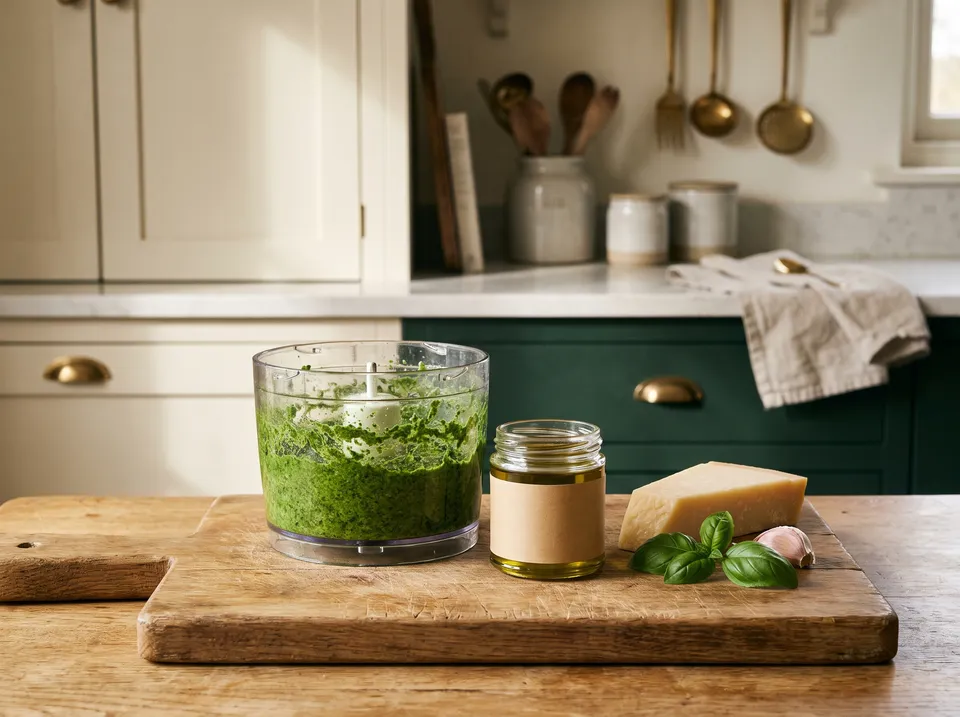
Basil pesto. Pulse 2 cups packed basil leaves, 2 cloves garlic, ½ cup pine nuts (or walnuts, almonds or pumpkin seeds), ½ cup grated Parmesan and ¾ cup olive oil until combined, then add black pepper. Dry the basil well first. Cilantro, mint and dill all make good pesto too.
Herb butter. For each stick of softened butter, mix in 4 tablespoons chopped fresh herbs (any mix: parsley, chives, thyme, a little rosemary) and 1 teaspoon lemon juice or a little zest. Keep it in the fridge for several days, or roll it into a log in plastic wrap and freeze it to slice off coins for steak, corn, bread or a pan of vegetables.
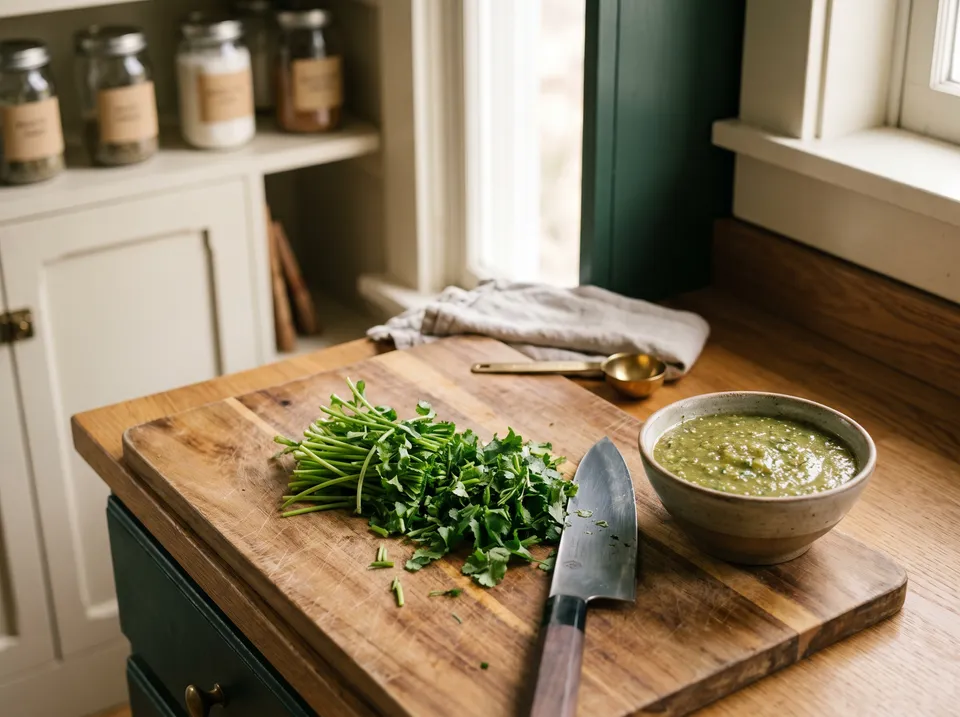
Don’t toss the cilantro stems. The tender part of the stem has even more flavor than the leaves, so chop it right in with them unless you want a delicate garnish. Parsley stems are stronger and a little bitter; save those for soups and stews.
Quick referencePin this.
Sources: USDA FSIS FoodKeeper data · National Center for Home Food Preservation, Freezing Fresh Herbs, Freezing Garlic-in-Oil, freezing pesto and drying herbs · University of Georgia Extension, How to Safely Make Infused Oils · Penn State Extension, Freezing Herbs and Preserving Herbs by Drying · South Dakota State, Preserving Herbs · Oregon State Extension on drying herbs · University of Alaska Fairbanks Extension, Herbs (pesto and herb butter) · Michigan State Extension, Herbs · America’s Test Kitchen on buying and storing fresh herbs, herb keepers, reviving wilted produce and parsley and cilantro stems, plus reviews of salad spinners and food choppers. Checked October 4, 2026. HearthIQ may earn a commission on product links.