Shop Your House First · No. 04 of 20
Prep Once, Use Many: A Better Way to Meal Prep
Cook parts, not plates: one Sunday session that becomes five different dinners — with how long every component keeps, and the day it has to be eaten or frozen.
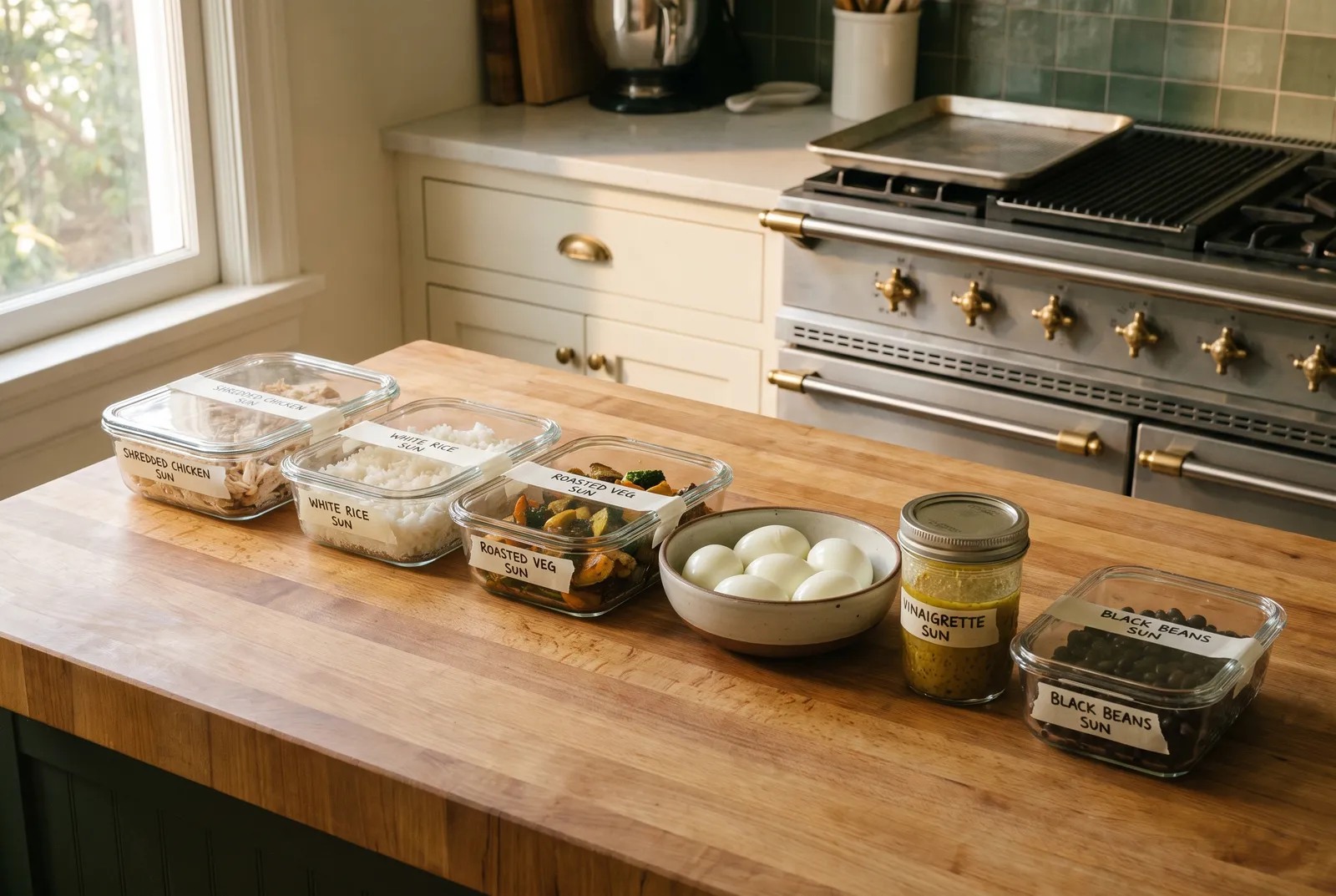
Most meal prep makes five identical boxes of the same lunch, and by Wednesday nobody wants to open them. This is the other way. One Sunday session that makes the parts of dinner, not the dinners: a pan of chicken, a pot of rice, two trays of roasted vegetables, a few eggs, a can of beans and a jar of dressing. Then each night puts them together differently.
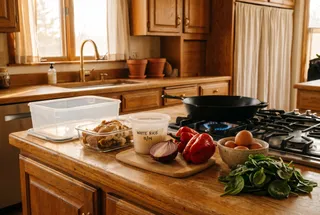
In No. 02 every dinner came from five parts: A, what needs using; B, a base; C, a vegetable; D, a sauce or liquid; and E, flavor and finish. Here’s the trick: on Sunday you make A through D ahead of time. The chicken you roast becomes the thing that needs using all week, and everything gets seasoned plainly, just salt and pepper, so it can go anywhere. Monday’s bowl and Wednesday’s fried rice come out of the same Sunday. E, the seasoning, stays a weeknight decision.
1 · What you makeSix things on Sunday, four parts of dinner.
Keep the seasoning simple: salt, pepper, oil, a little garlic powder. You add the real flavor on the night, and that’s what lets the same chicken be tacos on Tuesday and fried rice on Wednesday.
- A
What needs using: the protein — Roast chicken thighs, pulled off the bone. Eight hard-cooked eggs. Two cans of black beans, drained and rinsed.
- B
A base — One big pot of long-grain white rice, about 9 cups cooked.
- C
A vegetable — Two sheet pans of roasted broccoli, cauliflower, carrots and red onion.
- D
A sauce — A pint jar of mustard vinaigrette. Give it a shake before each use.
“Cook the parts, not the plates. The week decides what they become.”
2 · The Sunday sessionOne oven, two burners, about two hours.
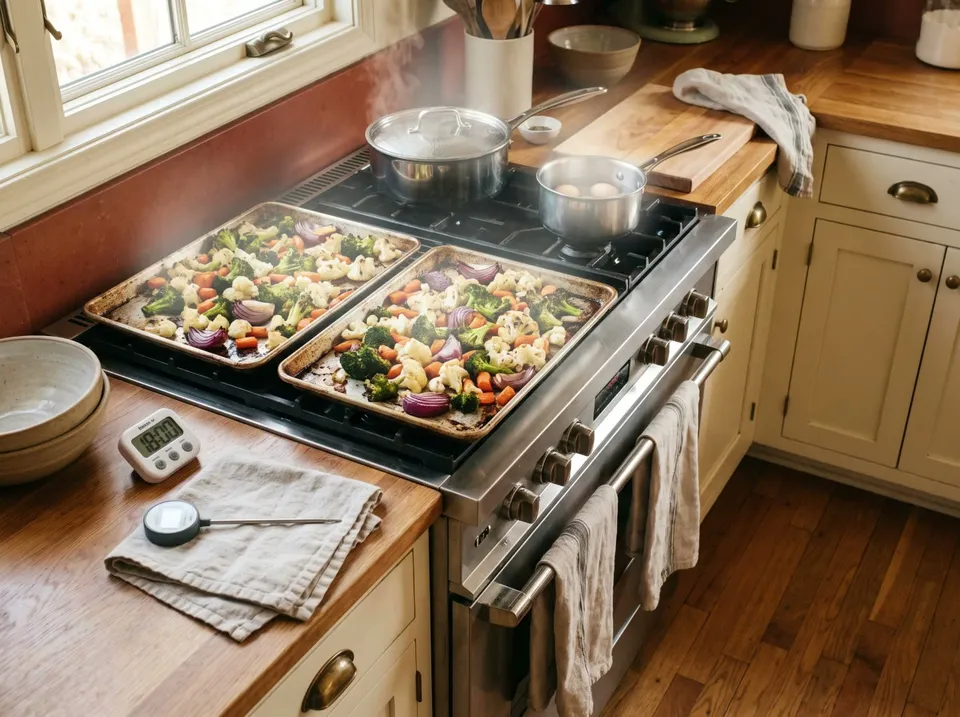
The order keeps the oven busy the whole time: vegetables first at 425°F, then chicken at 400°F, while the stovetop takes care of the rice and eggs. Add up the steps and it comes to about two hours, and a lot of that is you standing around waiting for a timer. (Bring a podcast.)
Step 1: Vegetables in · 30 min
Heat the oven to 425°F. Toss 3 cups broccoli florets, 3 cups cauliflower florets, 4–5 carrots cut into bite-size chunks and 1 red onion in chunky pieces with 1–2 tablespoons olive oil, 1 teaspoon salt, ½ teaspoon pepper and 1 teaspoon garlic powder. Split them between two rimmed sheet pans so they roast instead of steam. Roast 25–30 minutes, flipping halfway.
Step 2: Rice on · 20 min
While the vegetables roast: 3 cups long-grain white rice with 1¾–2 cups water per cup of rice, covered, about 15 minutes. One cup of uncooked rice makes about 3 cups cooked, so this gives you about 9 cups.
Step 3: Eggs on · 20 min
Put 8 eggs in a saucepan and cover them with cold water. Put the lid on, bring it to a light boil for 1–2 minutes, then take it off the heat and let it sit 15 minutes. Drain, cover with ice water and leave them until they’re cool.
Step 4: Chicken in · 30 min
Turn the oven down to 400°F. Rub 8 bone-in, skin-on chicken thighs with oil, salt and pepper and roast them on a sheet pan for about 25–30 minutes, then broil 2–3 minutes to brown the skin. It’s done at 165°F on a thermometer. Go by the thermometer, not the clock.
Step 5: Shake the dressing · 5 min
In a pint jar: ¾ cup olive oil and ¼ cup red wine vinegar (that’s 3 parts oil to 1 part vinegar), plus Dijon mustard, salt and pepper to taste. Lid on, shake.
Step 6: Open the beans · 2 min
Drain and rinse two 15-ounce cans of black beans and move them into a lidded container.
Step 7: Cool, split, label · 15 min
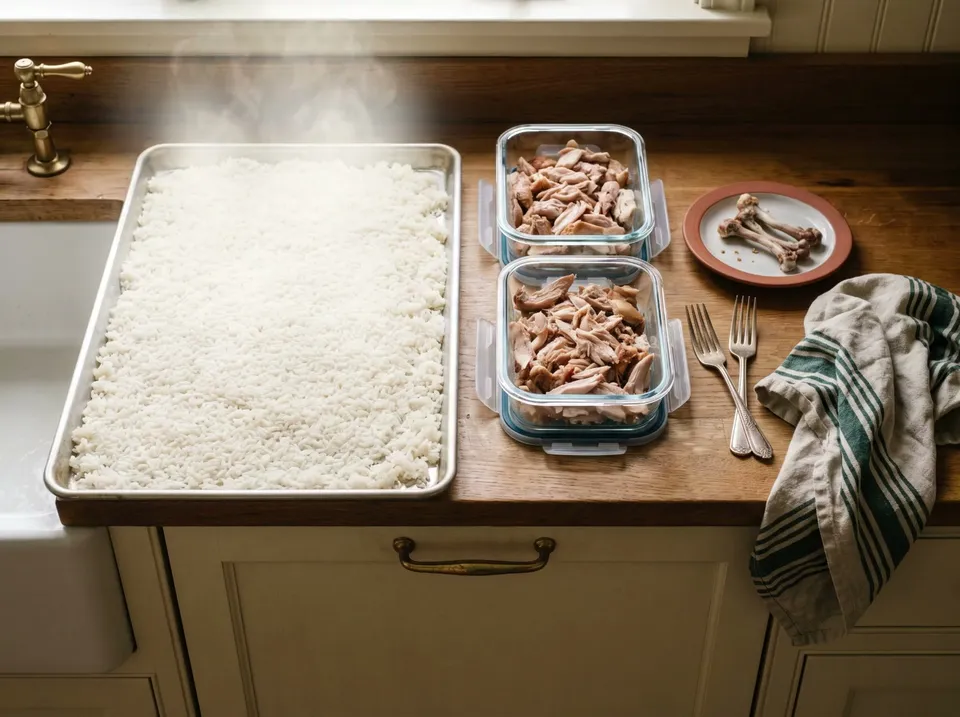
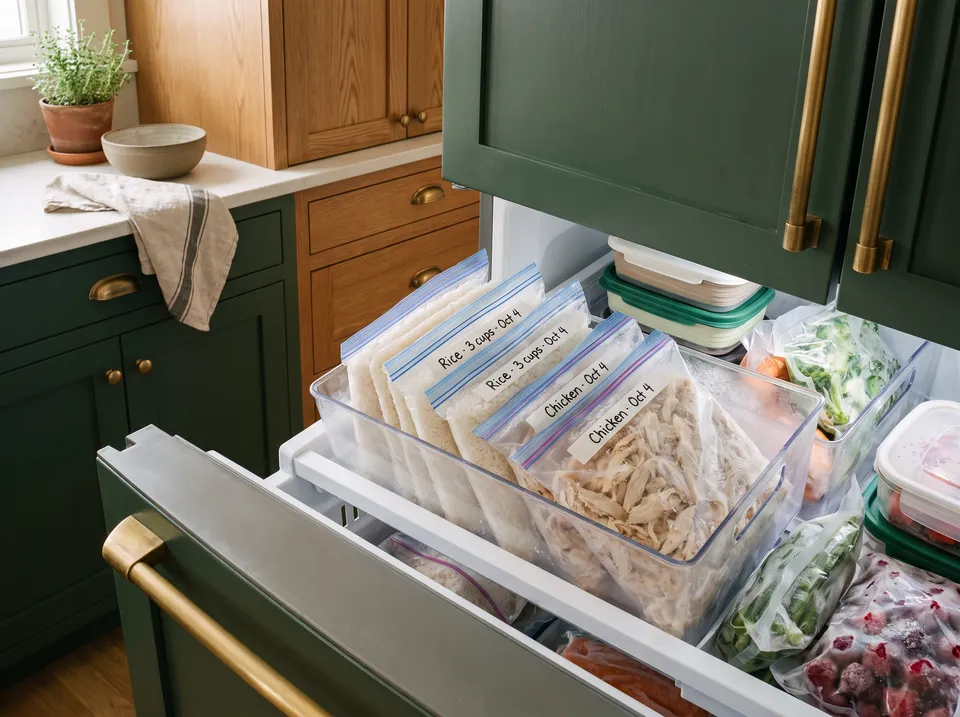
Spread the rice thin on a sheet pan. Pull the chicken off the bones into shallow containers. Everything goes into the fridge within 2 hours of cooking. Then split it: about a third of the chicken and 3 cups of rice go flat in quart bags into the freezer (the freeze-it-flat trick from No. 01). The rest goes on one fridge shelf.
Shop this
- Nordic Ware Naturals half sheet pans4-pack: two for vegetables, one for chicken, one for cooling riceamazon.com
- ThermoWorks ThermoPop 2Instant-read: 165°F for chicken and reheated leftovers · America’s Test Kitchen Best Buythermoworks.com
- Ball wide-mouth pint jarsShake the dressing right in the jaramazon.com
3 · One shelf, labeledPut the week where you can see it.
Give the week one shelf at eye level. It’s the fridge version of the Use first bin from No. 01: if it’s on that shelf, it’s tonight’s first option. Glass shows you what’s inside, and a strip of tape on the lid says what it is and when you made it.
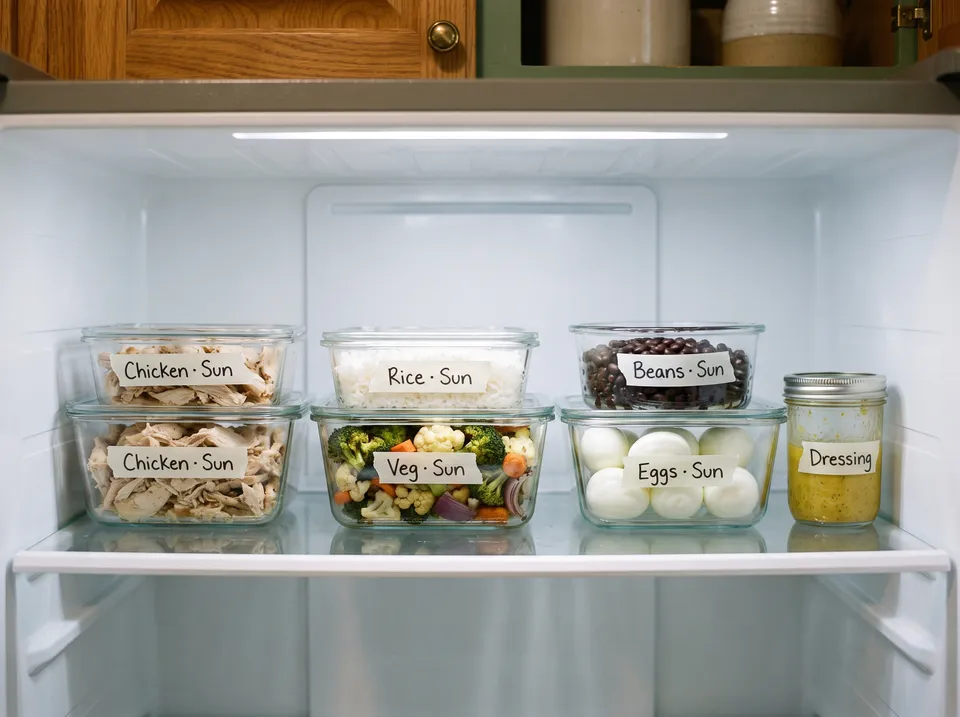
Roast chicken, pulled
Fridge 3–4 days. Freezer 2–6 months for best quality. Freeze the share you won’t eat by Thursday on Sunday, not on Thursday.
White rice
Cooked rice keeps 4–6 days in the fridge and 6 months frozen. Plan it like everything else anyway: eaten or frozen by day 4.
Roasted vegetables
Fridge 3–4 days; freezer 1–2 months. These go first, because four of the five dinners use them.
Hard-cooked eggs
Fridge up to 1 week, and don’t freeze them. Some guides say 4 to 5 days, so eat them early in the week if you can. The two that don’t end up in Monday’s bowls are breakfast and lunch.
Black beans
Once the can’s open, beans keep 3–4 days in the fridge.
Vinaigrette
Fridge 2–3 weeks. It outlasts everything else on the shelf, so make a full jar.
Shop this
4 · The weekMonday to Friday, from one Sunday.
Sunday is day 0. Each night pulls a few things off the shelf, adds one or two things you already have, and leaves the rest. Reheat leftovers to 165°F. Keep an eye on the day count: by Thursday night the shelf is empty or everything left on it is in the freezer.
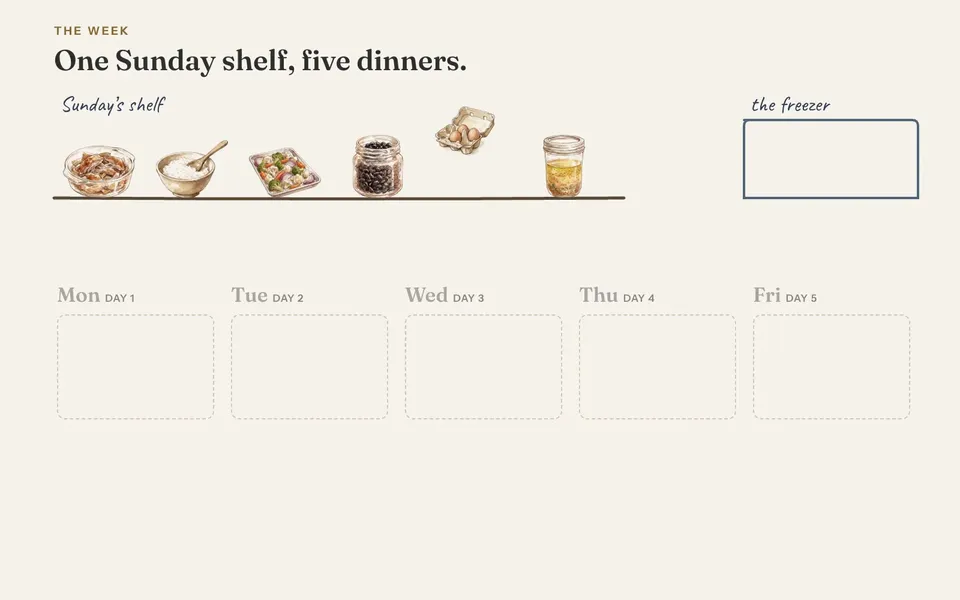
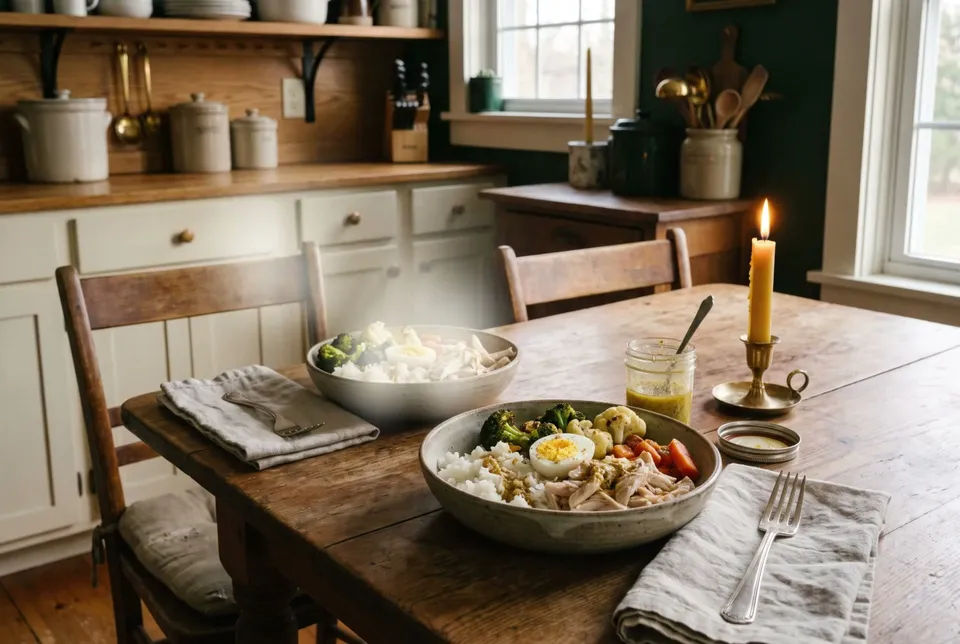
Step 1: Monday — bowls · Day 1
Warm rice, chicken and vegetables; top each bowl with half a hard-cooked egg and a spoonful of vinaigrette. Uses: chicken, rice, vegetables, eggs, dressing.
Step 2: Tuesday — tacos · Day 2
Warm the chicken with the black beans and a pinch of cumin. Fill warm tortillas, add roasted onion from the vegetable tray and whatever salsa or cheese is already open. Uses: chicken, beans, vegetables.
Step 3: Wednesday — fried rice · Day 3
Serves four. Scramble 3 eggs and set them aside. Soften ½ cup chopped onion in 1 tablespoon oil, stir in 2 cups chopped roasted vegetables, then 3 cups cold cooked rice and 1 tablespoon low-sodium soy sauce, and fold the eggs back in. Leftover rice works great here. Add the last of the fridge chicken. Uses: rice, vegetables, chicken.
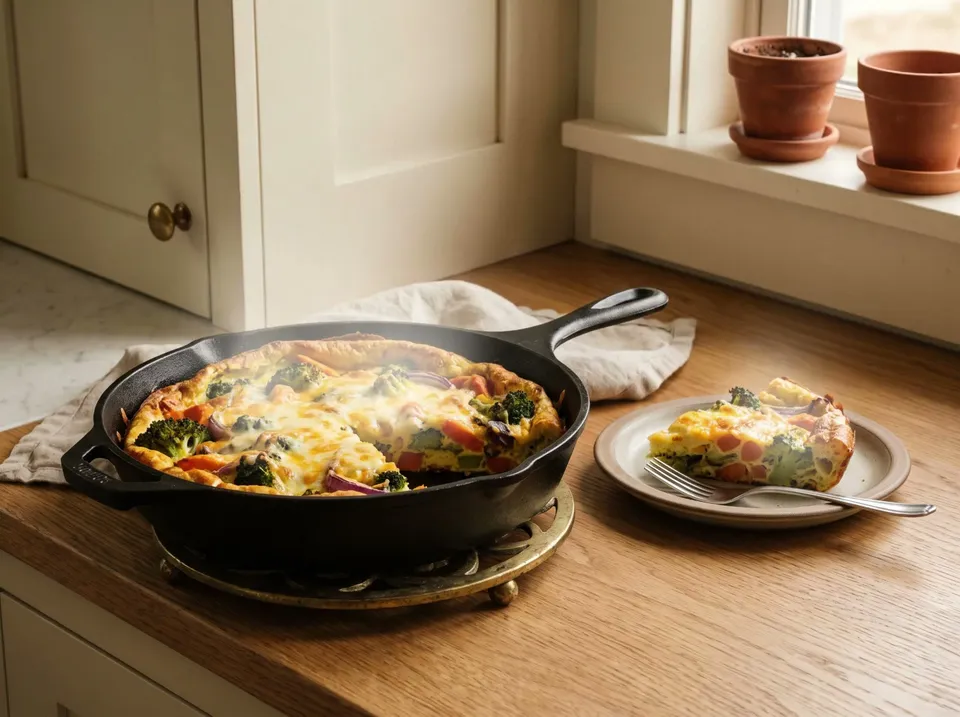
Step 4: Thursday — frittata, and the deadline · Day 4
Sauté 2 cups chopped roasted vegetables for 3–5 minutes in an ovenproof skillet. Pour over 6 eggs beaten with ¼ cup milk and ½ cup shredded cheese, cover and cook about 6 minutes until it’s nearly set, then slide it under the broiler for 2–3 minutes. Egg dishes are done at 160°F. Tonight is day 4, so anything still on the shelf goes into the freezer now, and one bag of chicken moves to the fridge to thaw for tomorrow. Uses: vegetables, eggs.
Step 5: Friday — chicken and rice soup · Day 5
From the freezer: the thawed chicken, a slab of rice straight from frozen, a carton of broth and any vegetables that are left. When you reheat soup, bring it all the way to a rolling boil. Thawed leftovers get their own 3–4 days in the fridge. Uses: the freezer bags.
Step 6: The weekend · Day 6–7
The eggs are good through Sunday, the dressing for two to three weeks. And anything still in the freezer is a head start on next week.
Shop this
5 · Make it yoursSame week, different parts.
This works with anything that fills one of the parts, as long as you know how many days it keeps. Cooked quinoa keeps 6–7 days in the fridge, cooked pasta 3–5 days, and a store rotisserie chicken counts as cooked chicken: 3–4 days. Whatever you swap in, write its last day on the lid on Sunday, and eat whatever runs out soonest first.
Cooking for fewer people, or eating out twice this week? Do half the session and still freeze a share. The goal isn’t a full shelf. It’s that nothing on it surprises you on Thursday.
Quick referencePin this.
Sources: USDA FSIS, Leftovers and Food Safety · FoodSafety.gov Cold Food Storage Chart · FoodSafety.gov Safe Minimum Internal Temperatures · USDA FoodKeeper · Extension recipes from Oklahoma State, Nebraska–Lincoln, Iowa State, Mississippi State and Minnesota · America’s Test Kitchen equipment reviews. Checked October 4, 2026. HearthIQ may earn a commission on product links.