Shop Your House First · No. 25 of 30
The Anatomy of a Beautiful Tablescape
Three HearthIQ library tables taken apart piece by piece, the order to build any table from what you own, the principles underneath, color, cloth and table shape, five formulas to adapt, and how to fix a table that isn’t working.
Every table in the HearthIQ library is built the same way: a quiet base, one star, something repeated, and a small touch carried out to every seat. None of it depends on owning the right set. So instead of starting with rules, we’re starting with three of our own tables, taken apart piece by piece: what you see first, what repeats, what’s deliberately quiet, and how you’d make the same choices with what’s already in your cupboards. Then the long version: the principles underneath, color, cloth, the shape of your table, five formulas to copy, and how to fix a table that just isn’t working.
1 · See it at workThree HearthIQ tables, taken apart.
These come from the HearthIQ library, and each one is styled around a handful of real pieces. Look at them the way you’d look at a friend’s table you love: what catches your eye first, what shows up more than once, and what’s quietly staying out of the way?
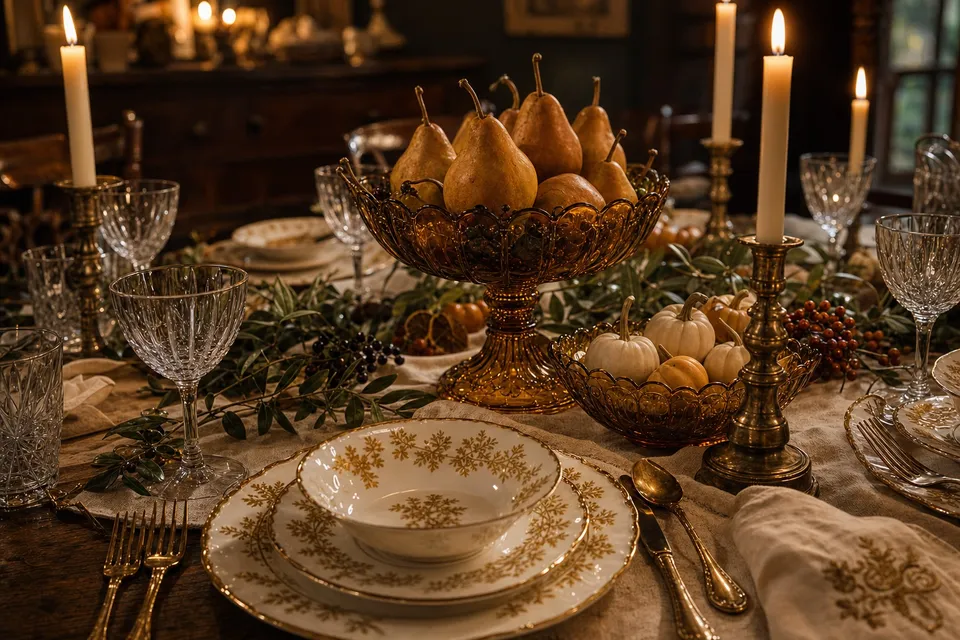
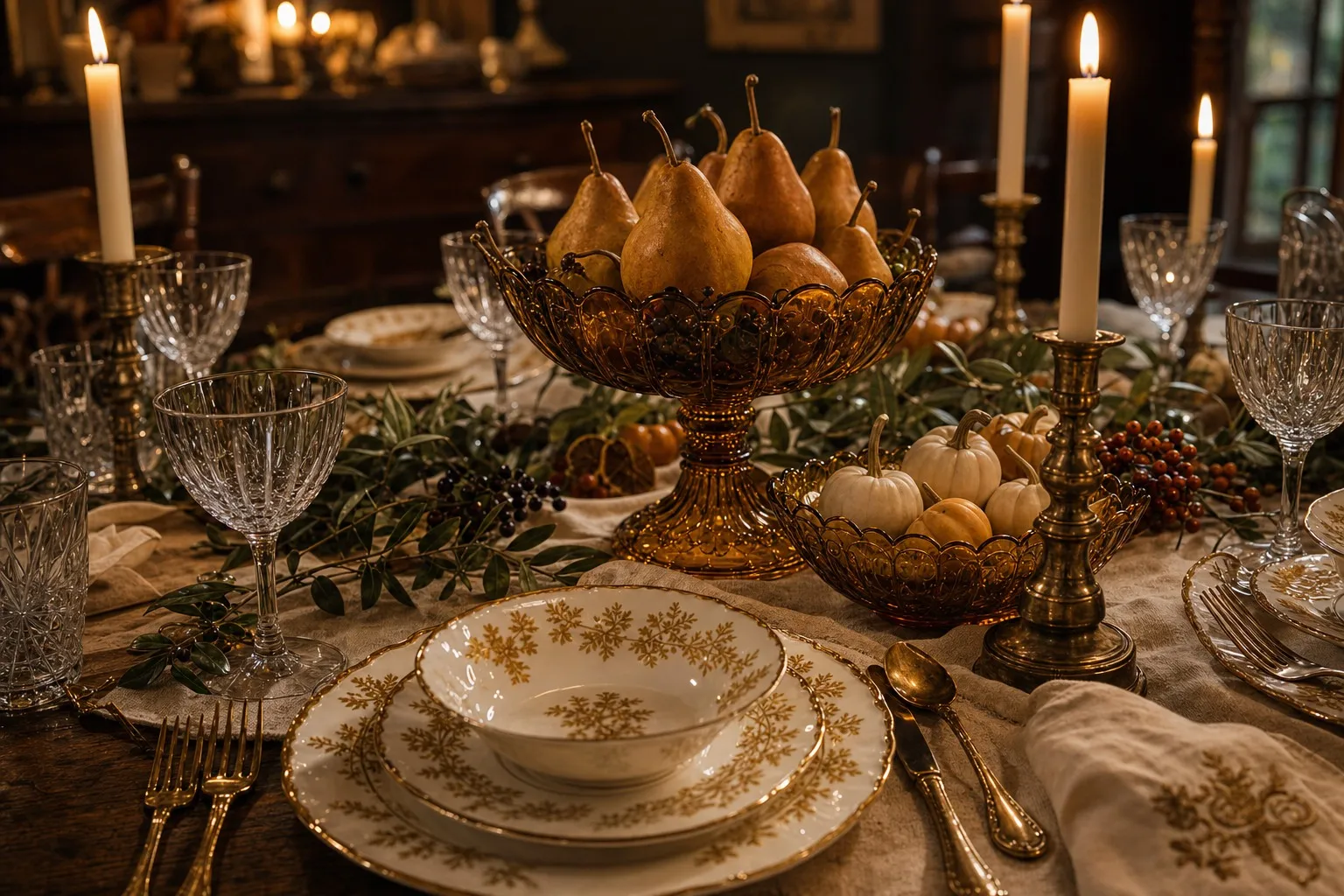
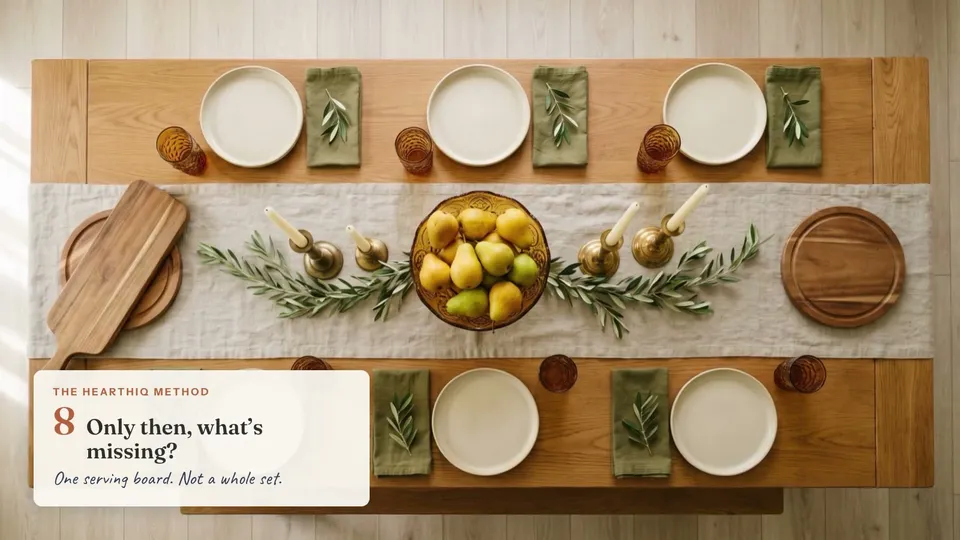
Winter Solstice Supper. Start with the whole table. What repeats: gold, everywhere. Brass candlesticks, gold-rimmed china, gold flatware, gold embroidery on the napkins and the amber of the glass all share one warm metal tone, and that’s why a table this full still feels calm. Height comes in three levels: an olive branch garland laid flat down the linen runner, the fruit in the middle, and tall ivory tapers up above everyone’s eyes.
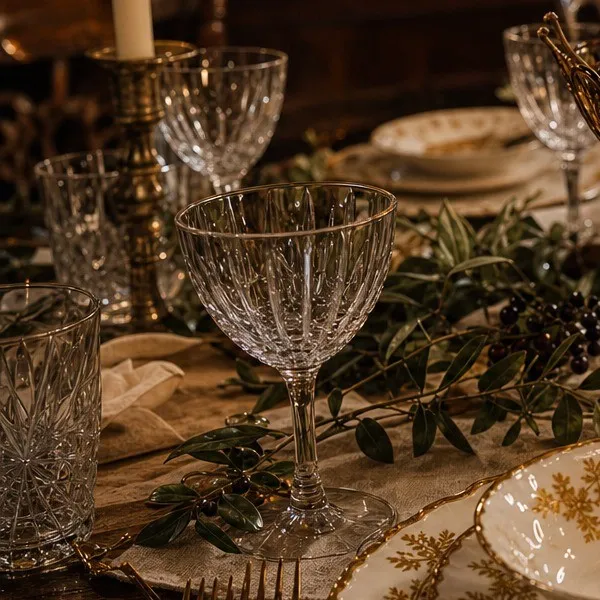
Collected, not matched: look closely at the crystal. The goblet has tall fan-shaped cuts, the tumbler in front has a starburst, and the one behind is cut in diamonds. Three different patterns, and they still read as a set because they’re all clear and they all catch the candlelight. That’s the trick for any mismatched glasses you own: keep one thing in common.
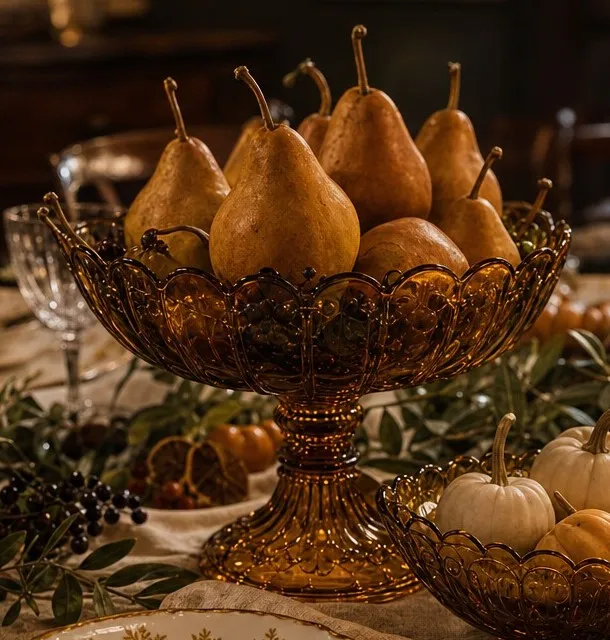
The star is this tall amber glass compote heaped with pears. It’s a footed bowl, so it lifts the fruit up where every seat can see it. Right beside it sits a second, lower amber bowl of small white pumpkins: the same glass, smaller and lower. The star gets company without getting a rival.
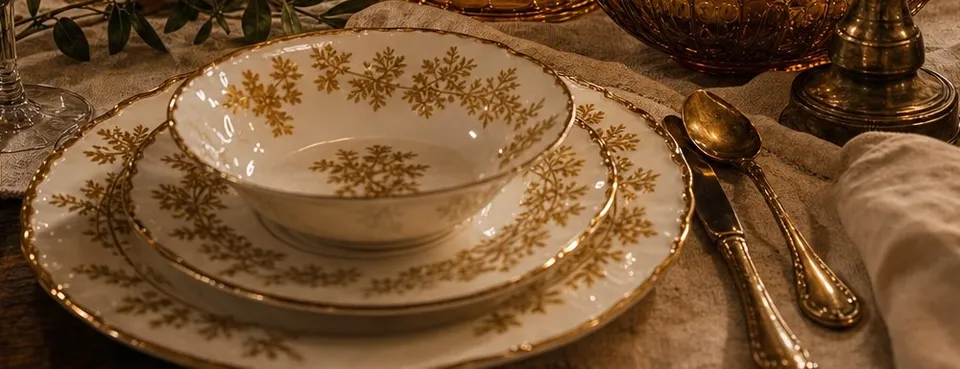
What’s quiet: the plates carry a busy gold pattern, so everything around them stays plain: flax-colored linen under them, a plain ivory napkin beside them, plain ivory tapers above. That calm is what lets a patterned plate shine. From your house: a cake stand, or a bowl set on an upturned bowl, for the raised star; whatever fruit is in season; branches from the yard laid flat down the middle; every brass or gold candlestick you own, matched or not; and any plates with a touch of one metal, picked up again by your flatware or a napkin ring.
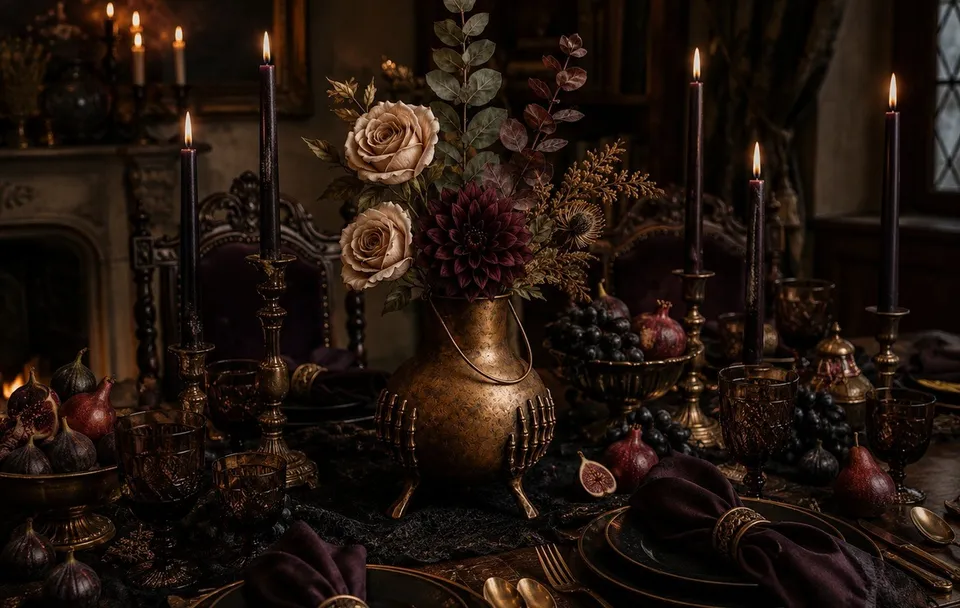
New Midnight. Dark on purpose: nearly black plates on a black lace runner, plum velvet napkins, plum tapers. When almost everything is dark, the few light things glow, and here that’s the ivory roses and every bit of brass catching the candlelight. The star is the brass urn of roses, a deep burgundy dahlia and eucalyptus in the middle of the picture. It’s the only big pale shape on the table, so your eye lands there first. What repeats: brass (the urn, the candlesticks, the fruit bowl, the napkin rings, the flatware) and plum (the candles, the napkins, the dahlia, the figs). What’s quiet: the black plates almost disappear, which is exactly their job.
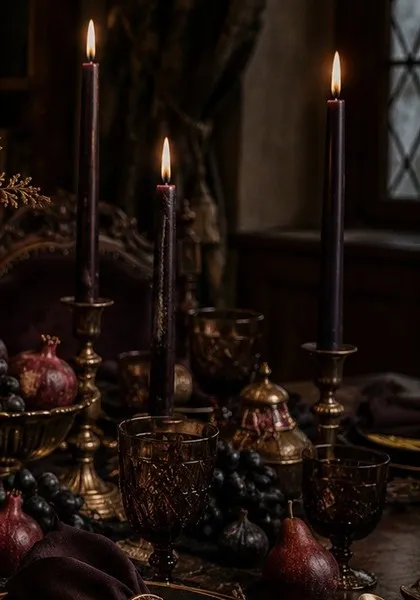
Rhythm comes from the candles: plum tapers at changing heights, in brass holders that echo the urn, so your eye travels across the table instead of stopping at one straight line.
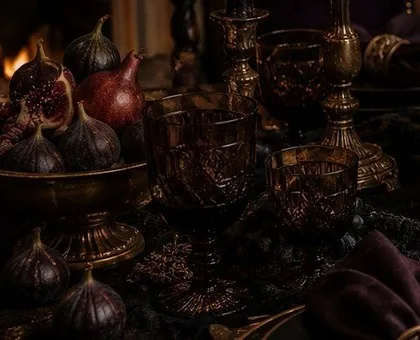
The fruit does double duty: figs, pears and pomegranates in low clusters, a few cut open, look like decoration now and get eaten for dessert later. From your house: the heaviest metal pitcher, crock or vase you own as the star; grocery-store roses; dark grapes and plums; any dark napkins; mismatched candlesticks with dark tapers. On a narrow table, trim the arrangement so faces stay visible over it, and let the candles and fruit carry the look.
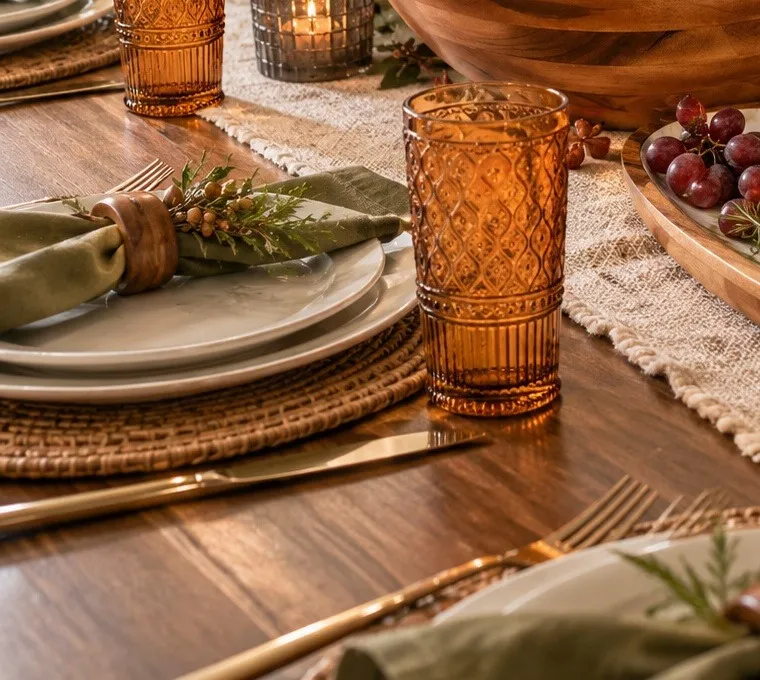
The Collected Botanical Table. Up close, this one is all about the place setting: a round woven charger on bare wood, pale quiet plates, an olive napkin pulled through a wooden ring with a sprig of greenery and berries, gold flatware, and one tall amber patterned glass. What repeats: that amber glass at every seat; wood in the table, the napkin rings and the serving pieces; and the little clipping of greenery at each napkin, which carries the botanical idea out to every place. The star isn’t a tall centerpiece at all: it’s the broad wooden serving bowl and the low wood platter of grapes at the top of the picture, and because both stay low, everyone can still see each other.
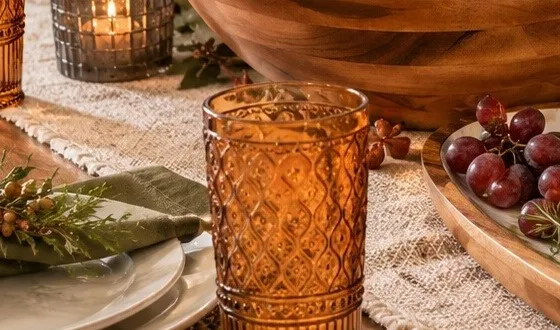
Two glass tones: look closely at the glass. Amber at each place, a smoky gray votive in the middle, so the table doesn’t melt into one honey-brown color. The amber glass is pressed with a pattern that catches the light, and that one piece carries the whole place setting. Texture does the rest: woven rattan, the fringed nubby runner, wood grain, pressed glass and matte plates, all at the same easy, casual weight. From your house: any colored glasses you have four or more of; your salad bowl and a cutting board as the two serving pieces; placemats or bare wood instead of chargers; a sprig of rosemary, or anything green from the yard, at each napkin.
“A quiet base, one star, one thing repeated at every seat. That’s the whole method.”
2 · The HearthIQ methodShop the house, then build in this order.
Step 1: Walk the house first
Before you buy a thing, gather candidates: serving bowls, platters, pitchers, candlesticks, glasses, linens, a cake stand, branches from the yard. Line them up on a counter so you can see them together.
Step 2: Lay a quiet base
A cloth, a runner, mats or bare wood, and plates that mostly disappear. All three tables above start with a base that doesn’t ask for attention.
Step 3: Choose one star
The biggest, most colorful or most unusual thing you gathered: a raised bowl of fruit, a heavy vase, a broad serving bowl. Everything else is there to support it.
Step 4: Repeat something three times or more
A color, a metal, a kind of glass, a candle. Repetition is what makes mismatched things look chosen.
Step 5: Add height and texture on purpose
Something tall (tapers), something low (fruit, a garland laid flat), and at least one rough surface next to a smooth one.
Step 6: Carry it to every seat
A sprig at each napkin, the same glass at each place, napkin rings that match the candlesticks. Every guest gets a little piece of the centerpiece.
Step 7: Edit, and leave room for the food
Take one thing away. Then check there’s space for every serving dish and that people can see each other across the table.
Step 8: Only then, see what’s missing
If there’s a real gap, now’s the time to fill it, and it’s usually one piece, not a whole set.
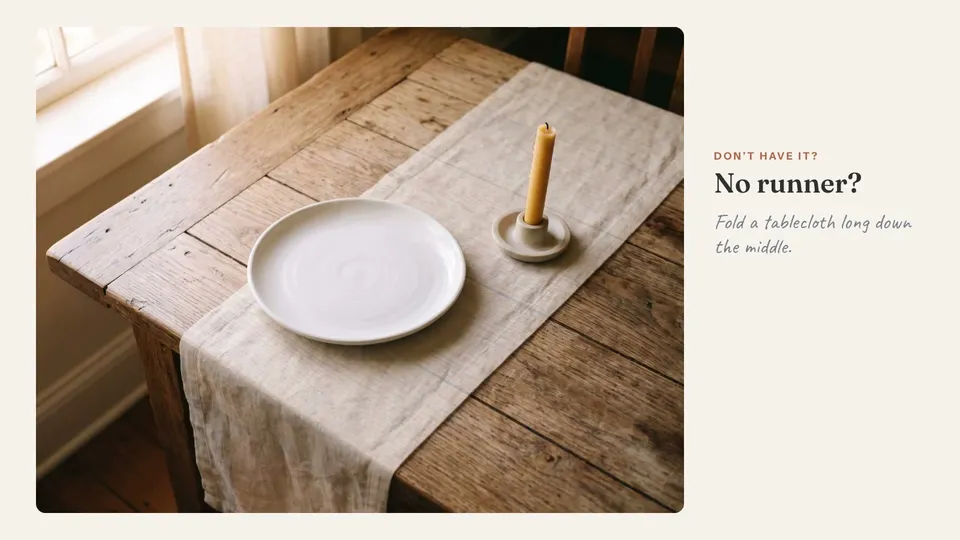
No runner?
A tablecloth folded long down the middle, two napkins overlapped end to end, or just bare wood.
No matching vases?
Three pitchers, jars or low bowls that share one thing: all glass, all white, or all the same color.
No chargers?
Skip them. Let the plate, or a placemat, be the first layer.
No flowers?
Branches, herbs, fruit, vegetables, greenery from the yard, or a small collection you love.
Mismatched candlesticks?
Keep one finish (all brass, all glass, all black) and vary the heights. It looks like you planned it.
Plain everyday plates?
Perfect. Let the glasses, the napkins, the greenery or one special serving piece carry the character.
3 · The principles underneathBalance, proportion, rhythm, a focal point.
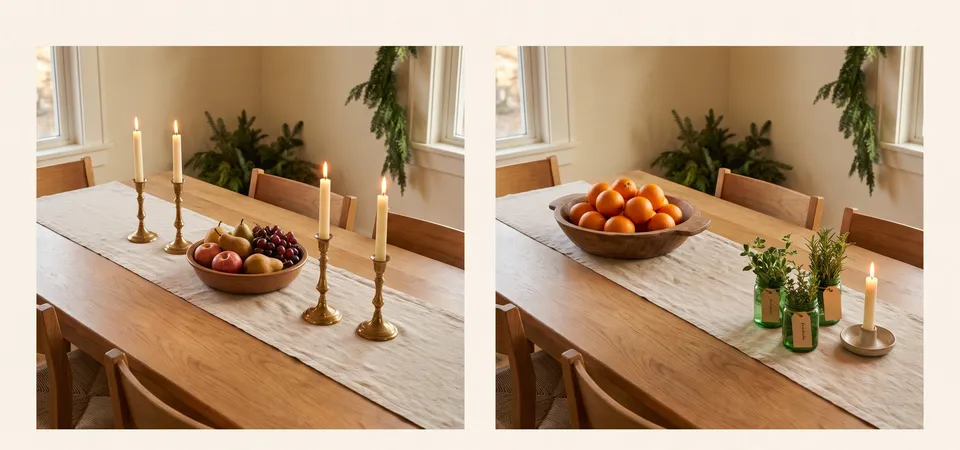
Balance: mirror it, or seesaw it. Symmetrical balance is the same on both sides: one centerpiece in the exact middle, an even number of candlesticks, places spaced evenly. It reads formal and dignified, perfect for a holiday dinner, and a little stiff for a Tuesday. Asymmetrical balance gives both sides equal visual weight without matching: a big bowl of fruit at one end, three small jars and a candle at the other. It feels relaxed and alive. A table pushed against a wall, with guests on two sides, is the perfect place to go off-center. In our library: Winter Solstice Supper is close to mirror-image down its middle, a centerpiece flanked by candlesticks, which suits a formal winter dinner.
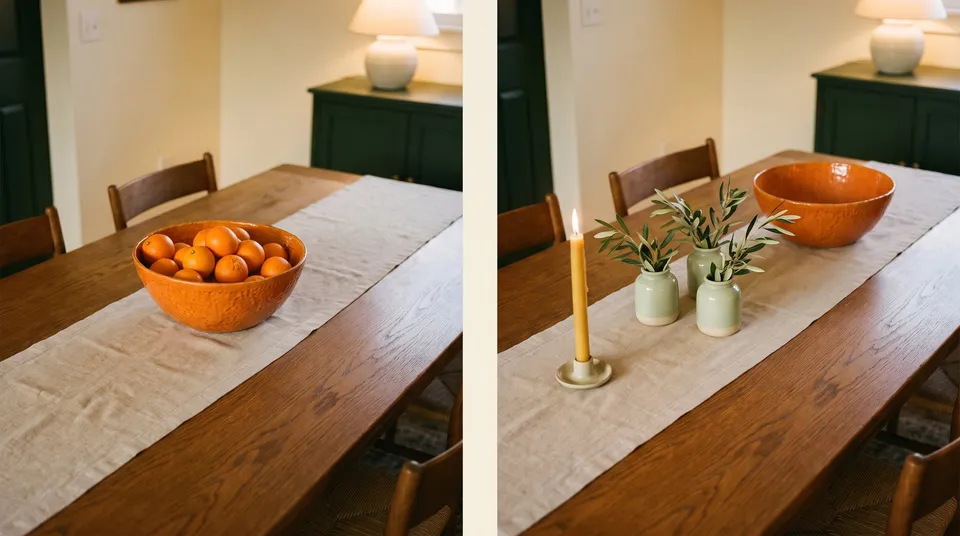
Visual weight: what counts as heavy. Bigger looks heavier, of course, but so do warm colors (red, orange and yellow seem to come toward you), dark pieces, and anything placed higher or farther from the middle. Cool colors like blue and green recede and feel lighter. That’s how three small green jars and one tall candle can balance one big orange bowl: height and number make up for color and size. Use it on purpose: a dark wooden bowl needs more on the other side than a pale glass one. In our library: on New Midnight, the ivory roses outweigh everything their size, because they’re the only light thing on a dark table.
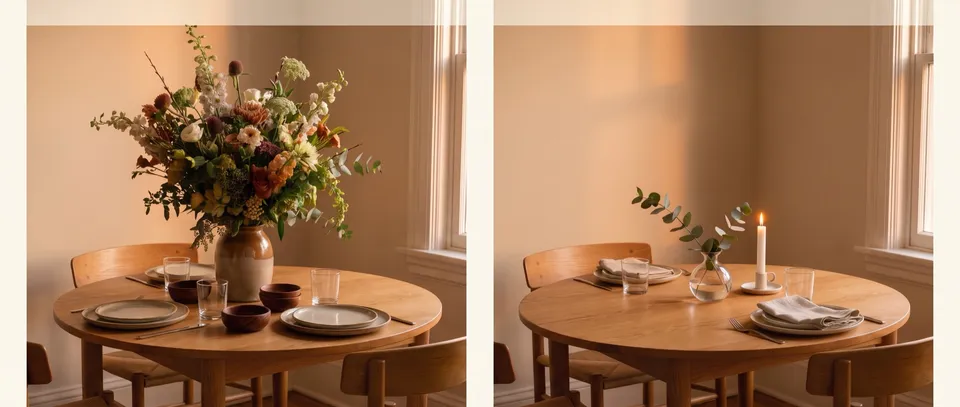
Proportion and scale: fit it to the table. Proportion is how the parts relate to each other; scale is how the whole thing fits its setting. A big arrangement overwhelms a table for two and makes everyone talk around it; a single bud vase disappears on a banquet table. Give each guest room first (about 20 to 24 inches of table edge each, more if you can), and the space left down the middle is your design space. In our library: the Collected Botanical Table keeps its serving pieces low and broad, so a full table still feels open.
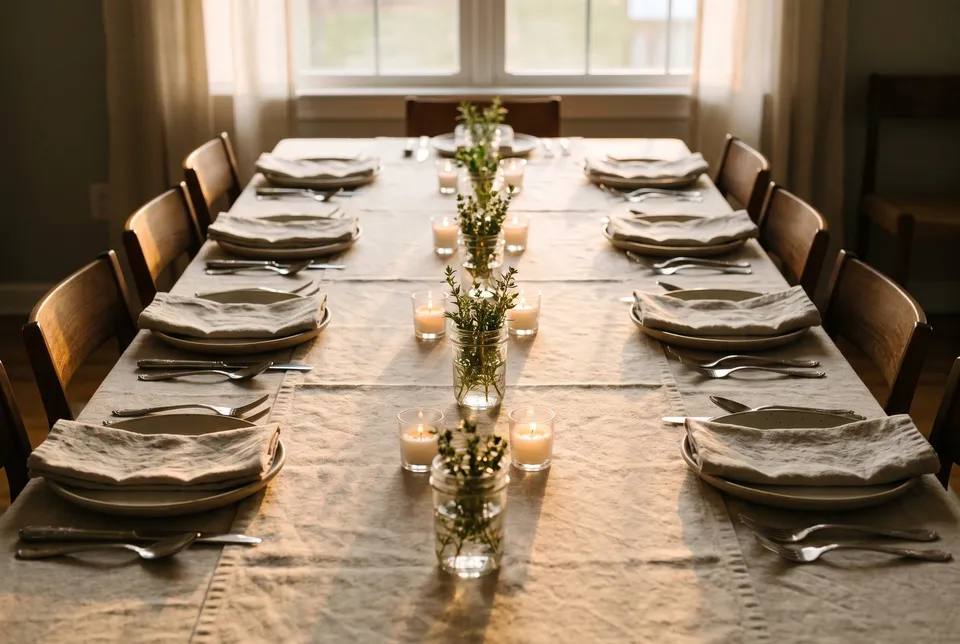
Rhythm: give the eye a path. Rhythm is what moves your eye through a design: repeating a color, shape or texture, or a gentle progression from small to large or light to dark. On a long table, a repeated unit (here, a jar of herbs between two votives, repeated at even intervals) carries the eye from one end to the other and makes every seat feel like the good one. It also solves the long-table problem: one centerpiece in the middle leaves the ends bare. In our library: New Midnight’s tapers at changing heights are rhythm you can see from across the room.
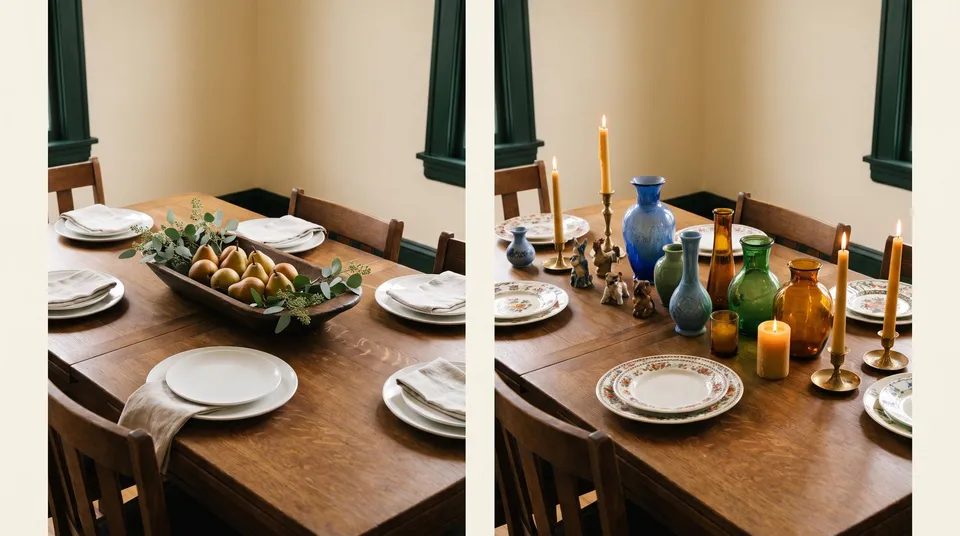
Emphasis: one star. Every design needs a point of interest, the thing you see first. Make it the biggest, the most colorful, or the one different shape, and let everything else support it quietly. On the right of the photo, every piece is shouting, so nothing is heard. Equal amounts of two colors, or two things competing for attention, make a table feel undecided. Pick the star first, then edit everything that steals its light. In our library: each of the three tables has exactly one star: the pear compote, the brass urn, the wooden bowl.
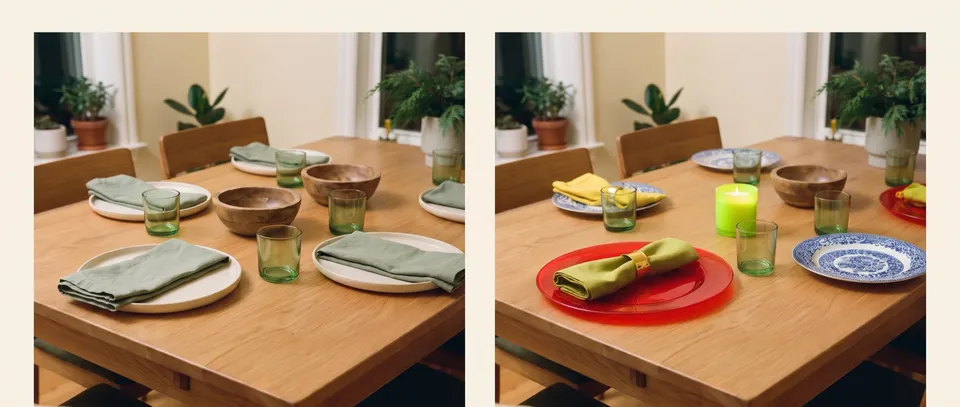
Unity: everything belongs together. Unity is the sense that it all goes together: shapes that echo each other, colors with a common hue, textures with a similar feel. Mismatched pieces are fine (that’s the whole point of No. 19), as long as they share something: a color family, a material, a finish. On the right of the photo, one glossy red charger, a neon-green candle and a gold napkin ring break the spell. Too much sameness gets dull, though, so let one thing break the pattern on purpose. In our library: Winter Solstice Supper holds a lot of pieces together with one metal tone, gold.
“Use a lot of one color, and small amounts of others. Equal amounts of two colors compete, and nobody wins.”
4 · ColorThree ways colors get along.
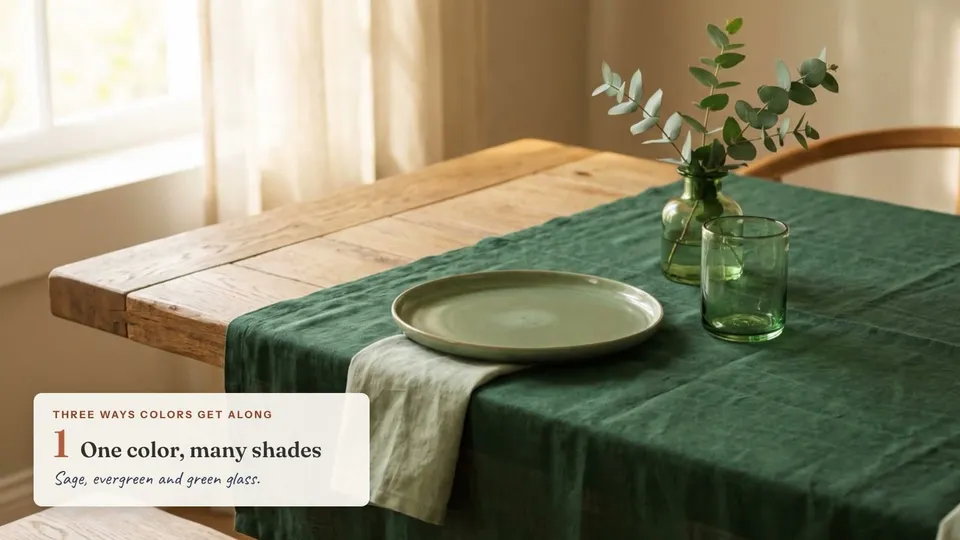
- 1
Monochromatic: one color, many shades — One hue, lighter and darker: pale sage napkins, green glass, deep evergreen cloth. Calm and elegant, and easy with mismatched dishes.
- 2
Analogous: next-door neighbors — Three or more colors side by side on the wheel, like gold, orange and rust in the fall, or blue, green and violet in summer. Warm, easy, and hard to get wrong.
- 3
Complementary: opposites — Across the wheel: blue and orange, red and green, yellow and violet. Lively and high-contrast, so let one color lead and use the other as the accent.
Color sets the mood, too. Deep, vivid backgrounds are dramatic and make glassware and white china pop. Blues and greens feel restful and dignified; pale colors feel soft and light; natural, earthy colors feel homey and casual. Whatever you choose, ask one practical question: will these colors make the food look good? And keep at least one plain element: if the plates are patterned, make the cloth plain, and vice versa. Pattern on pattern takes real skill.
Our three library tables show all of this. New Midnight stays almost entirely in one dark plum family, with brass and ivory for light. The Collected Botanical Table uses next-door neighbors: amber, olive and warm wood, with smoke-gray glass so it doesn’t go all one color. Winter Solstice Supper is warm gold and ivory, with olive green as the contrast.
5 · TextureMatch the weight of things.
Texture is how surfaces look and feel: rough, smooth, glossy, matte, nubby. Coarse linen, burlap, jute and grass mats feel deep and casual, and they suit sturdy pottery, chunky glasses and heavy flatware. Fine, smooth linen with a sheen suits fine china and delicate stemware. The usual mistake is a mismatch: delicate crystal on burlap, or heavy stoneware on a shiny damask cloth. A little contrast keeps things interesting, but let one texture dominate.
6 · The cloth, the runner, the matsChange the cloth, not the dishes.
How far the cloth should hang
About 8 to 12 inches over the edge on a seated table, and evenly on all sides. Iron it, or at least smooth it, so it hangs straight.
A silence cloth underneath
A felt or padded layer under the tablecloth protects the table from heat and spills and quiets the clink of plates and glasses.
No tablecloth? Use a sheet
A bright, wrinkle-free bedsheet makes a perfectly good tablecloth. And because a few cloths cost far less than a few sets of dishes, change the cloth to change the mood.
Runners and placemats
A runner is a strip of fabric about 12 inches wide. Down the middle, it becomes the stage for the centerpiece; laid across the table, two runners can hold the place settings on each side. Placemats sit even with, or within half an inch of, the table edge, long side parallel to it.
Place cards
Directly above the plate or on the napkin. Plan the seating ahead, and on a long table, seat people on both long sides with no one at the ends; it makes conversation easier.
7 · The shape of your tableLong, round, or small, style it differently.
- ▭
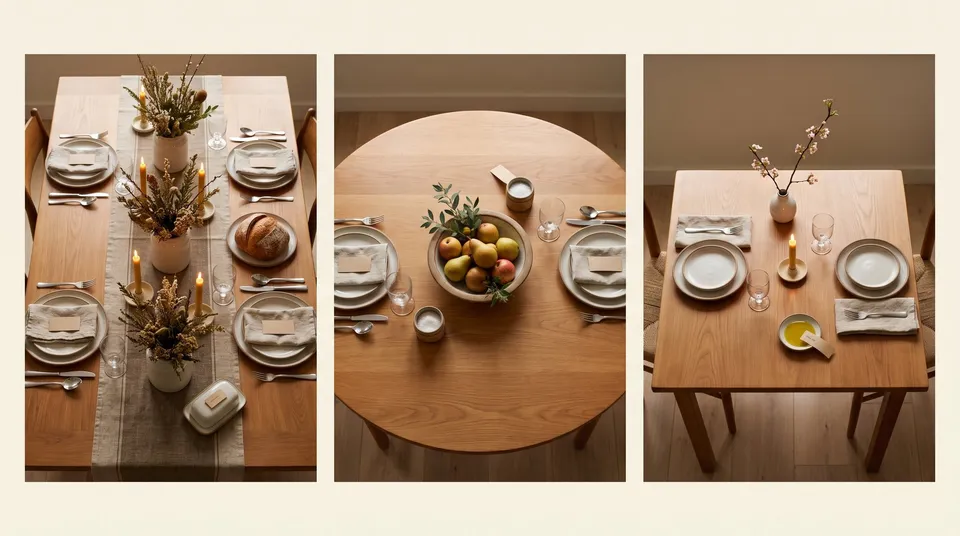
Long rectangle — Several small centerpieces or one long, low arrangement, repeated down the middle to give the eye a path. Make sure it looks good from both sides.
- ○
Round or square — One centerpiece in the middle, viewed from every side, so it should be round or low and even all the way around.
- □
Small table or table for two — Skip the big centerpiece. A couple of tiny vases with one or two stems each, a single candle, or a few leaves along the edge add charm without crowding the plates.
8 · Five formulas to copyFive tables, as recipes you can adapt.
These aren’t looks to go out and buy. Each one is a formula: a color that leads, a star, something to repeat, a way to get height, and room left for the food. Swap in whatever you own. The color strips show roughly how much of each color to use: lots of the first, a little of the rest.
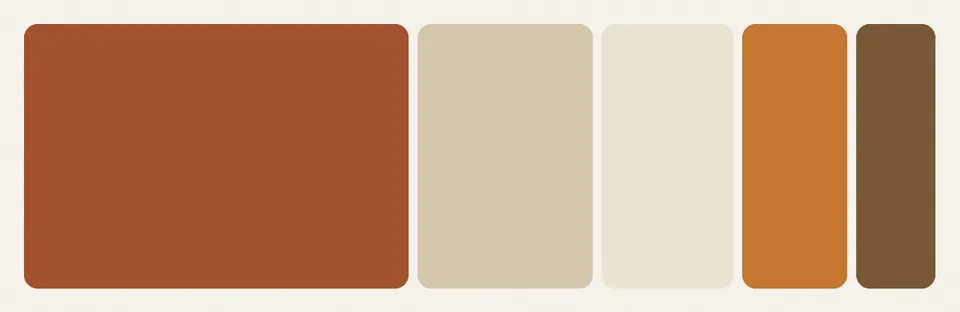
Fall harvest. Leads: rust. Star: a low wooden bowl or baking dish of apples, small pumpkins and squash. Repeat: rust napkins at every place, and cream plates alternating with one other color. Height: a few candles in sturdy holders behind the bowl. Base: an oatmeal cloth or a plain sheet, with a second cloth folded down the middle as a runner; coarse linen suits sturdy pottery. Keep off the table: acorns, buckeyes, privet, yew and boxwood sprigs are toxic; keep pods and berries away from little hands and from food.

Summer garden. Leads: blue and white. Star: a big bowl of lemons at one end, for an off-center balance. Repeat: three jam jars in a line, each with a few garden stems cut that morning; mismatched plates in just those two colors look like a set. Height: the jars. Base: a white or pale sheet as the cloth, and one striped napkin. Keep off the food: foxglove, larkspur, sweet pea, hydrangea and lily of the valley are lovely in a jar and poisonous on a plate.
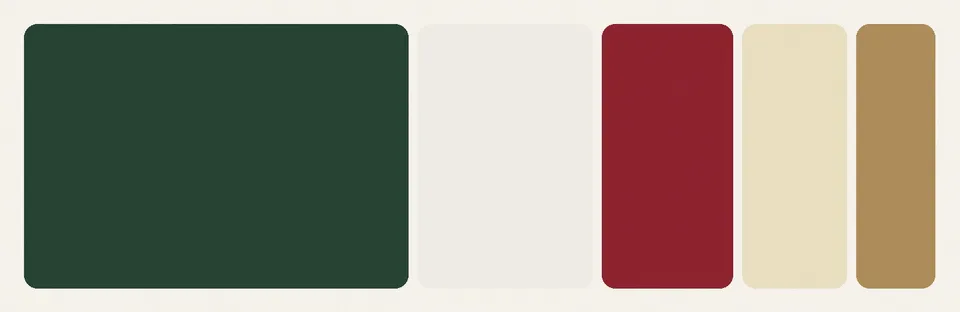
Winter holiday. Leads: a deep evergreen cloth, which makes white china and glass stand out. Star: evergreen boughs from the yard and a few pinecones in a low, flat dish. Repeat: deep red napkins, plates in two colors. Height: a line of candles in sturdy holders at different heights, well above and away from the greens. Keep away: holly berries, mistletoe, yew and poinsettia; keep them off food trays and out of reach of children and pets.

Spring brunch. Leads: soft pale yellow. Star: a shallow bowl of eggs or fruit. Repeat: white plates with a pale pastel salad plate; napkins in a simple rectangle fold. Height: a pitcher with a few cut tulips. Base: placemats on a bare table, and the white plate as your one plain element. Careful with bulbs: daffodil, hyacinth and lily of the valley are toxic; tulips and violets are on edible-flower lists.
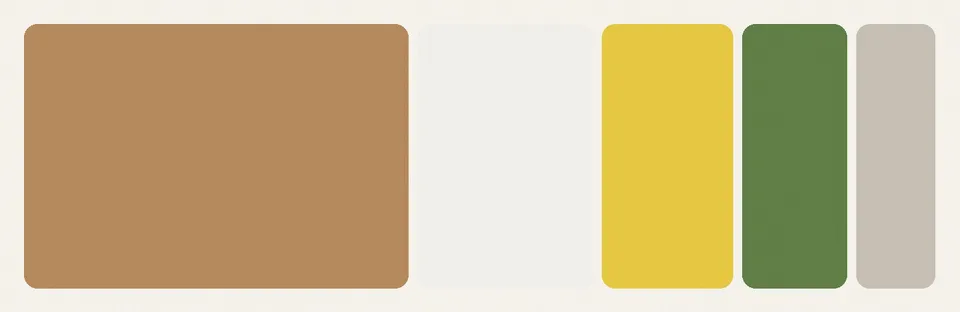
Weeknight “make it special”. Leads: the bare wood of your table. Star: one low bowl of lemons or a bunch of herbs. Repeat: the everyday plates, all one color, and cloth napkins. Height: one candle and one small jar of whatever is growing. Setting a real table on an ordinary night makes the meal feel like an occasion.
9 · The napkinA simple fold, in the right place.
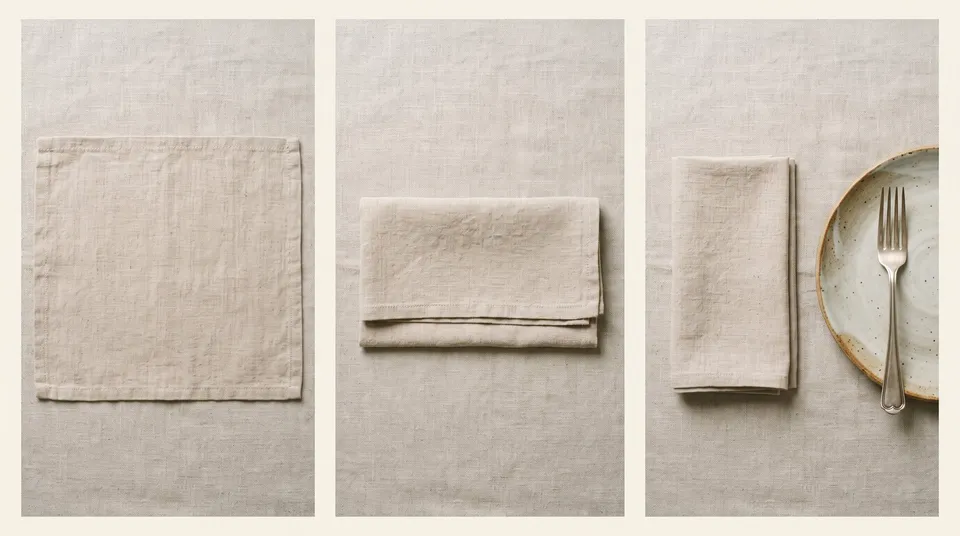
Fold it into a simple square or rectangle and lay it to the left of the plate and forks, with the open corners at the bottom, nearest the plate, so a guest can lift it and drop it into their lap in one motion. If the napkin goes on the plate, or you use a ring or a fancier fold, that’s fine too. Iron it first so the folds are crisp, and never stuff a napkin into a glass or set anything on top of it. A sprig of rosemary tucked under a ribbon is a pretty finishing touch (see No. 15 for keeping herbs fresh).
10 · CandlelightAbove or below eye level, never at it.
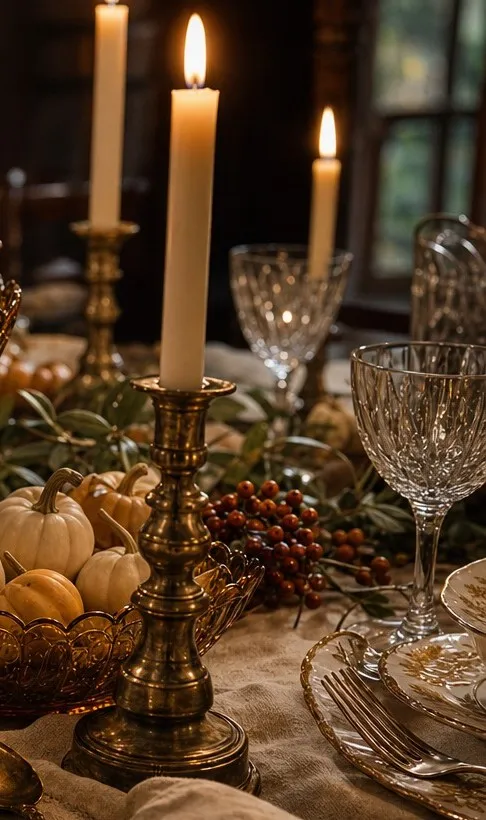
Candles are for when it’s getting dark, and once they’re on the table they should be lit. The one thing every guide agrees on: keep the flame out of your guests’ eyes, either clearly above eye level with tall tapers or clearly below with low votives and pillars, so nobody spends dinner squinting past a flame. Use enough candles to actually see your food, keep the flame at least a foot from anything that can burn (tall tapers like these lift it well clear of the greenery below), and blow them out when you leave the room.
11 · The buffetPlates first. Forks and drinks last.
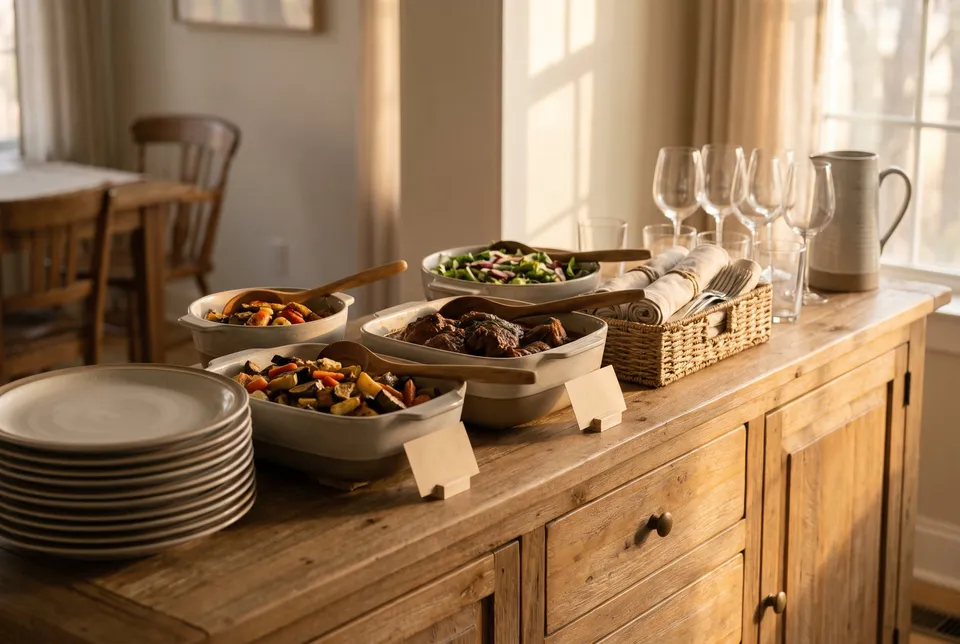
Set the buffet in the order people use it: plates first, then the main dish and sides, and silverware, napkins and drinks last, so guests have a hand free for their plate the whole way down. Give every dish its own serving spoon. The serving pieces, and where to find them, are in No. 24.
12 · From the gardenGorgeous in a jar. Not on the plate.
Step 1: Cut early
Cut stems in the early morning or evening, the night before if you can.
Step 2: Condition them
Strip any leaves that would sit under water, and stand the stems in lukewarm water about halfway up their length overnight in a cool, dark spot. They’ll last much longer on the table.
Step 3: Use any container
Mason jars, a pitcher, a baking dish, a shallow bowl, even a tin can. Low, shallow containers are the easiest to arrange.
13 · What the judges mark downThe mistakes table-setting judges look for.
- ✗
A centerpiece you can’t see over — If it blocks anyone’s view across the table, it’s too tall.
- ✗
Anything that sheds, droops or touches the food — No glitter, confetti, sand or beads on eating surfaces; no petals dropping onto plates.
- ✗
Too much — An overdecorated table, extra pieces the menu doesn’t need (no knife if there’s nothing to cut), crowded spacing.
- ✗
Wrinkles, chips and spots — Clean, pressed linens that hang evenly; glasses with no water spots or chips.
- ✗
Too many colors or patterns — No more than two plate shapes, sizes or colors at once; a patterned plate turned so the design faces the guest.
- ✗
A scent that fights the food — Skip heavily scented flowers and candles on a dinner table.
14 · Fix itWhen the table just isn’t working.
Stand back, sit in a guest’s chair, and name the feeling. Most tables that aren’t working fail in one of a handful of ways, and each one has a fix that usually means taking something away, not adding.
It feels cluttered
Too many stars competing. Take away two whole categories (all the little figurines, say), then gather the small things that are left into one or two bigger groups.
It feels flat
Everything is the same height and the same finish. Add one tall thing, like tapers, and one rough texture next to the smooth ones.
It feels random
Nothing repeats. Pick one color, shape, material or object and repeat it at least three times down the table.
It feels sparse
Things are scattered instead of grouped. Pull them into two or three stronger clusters.
It feels stiff
Everything is identical and lined up. Add something natural (greenery, fruit, a branch), shift the centerpiece off-center, or bring in one collected piece.
It’s hard to use
Decorations are taking up room the food and guests need. Move or remove them before you add anything else.
It looks bought
Every piece came from one matching set. Bring in one thing with a story: a vintage dish, something handmade, a branch from outside.
15 · Save the formulaWhen a table works, write it down.
The best table you’ll ever set is the one you only have to figure out once. When it works, take five minutes before you clear it, and next time you start from the formula instead of from scratch.
Step 1: Take two photos
One from above, one from a guest’s chair at eye level. The chair photo shows you what people actually saw.
Step 2: List the pieces
The cloth, the plates, the glasses, the star, the candlesticks, what went at each napkin.
Step 3: Note where each one lives
So you can find them next time in five minutes, not fifty (that’s No. 24).
Step 4: Write down the layout
How many candles, how far apart, where the star sat, where the serving dishes went.
Step 5: Note one change
What you’d do differently: too tall, too crowded, not enough light, a dish with nowhere to go.
Do that a few times and you’ve built your own library: tables your household knows how to set, made from things you already own.
Quick referencePin this.
Sources: Washington State University Extension, Dinner Is Served (EM3443) and the Walla Walla County 4-H table-setting scorecard · Tennessee 4-H, Color Wheel and Rhythm, Proportion, Emphasis, Balance · Iowa State University Extension, How to Create a Floral Arrangement (reviewed 2026) and county 4-H table-setting guides · University of Arkansas, Baxter County Extension floral design · West Virginia University Extension, Bloom Room floral design (2023) · Oregon State University Extension 4-H table setting guidelines (rev. 2018) and design bulletin (1979) · Ohio State, Utah State, University of Nebraska–Lincoln, Kansas State, Wisconsin and Virginia Tech 4-H table-setting guides · California State University Northridge, Table Appointments and Meal Service course packet (2008) · Colorado State Extension, Edible Flowers · Montana State Extension, Poisonous Plants in the Home Landscape · UC Agriculture and Natural Resources, holiday poisonous plants · University of Minnesota Extension on edible flowers · NFPA and U.S. Fire Administration on candle safety · HearthIQ Gather Library editions Winter Solstice Supper, New Midnight and The Collected Botanical Table. Checked October 4, 2026.