
Shop Your House First · No. 07 of 20
The Pantry Swap Guide: How Ingredient Substitutions Really Work
Out of buttermilk, eggs or baking powder? Swap by what the ingredient does — makes it rise, holds it together, adds tang, thickens, sweetens — with exact amounts for every swap, and what to adjust so the recipe never knows.
The recipe wants buttermilk. Of course it does. You have milk, and half a lemon rolling around the fridge door. So do you get back in the car, or swap and hope? Neither. Ask one question first: what is that ingredient actually doing in there? Once you know that, almost every gap in the pantry has two or three good answers already sitting on the shelf.
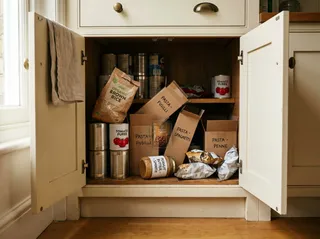
In No. 03 you set up a pantry you can read from the doorway. This is what you do with what you see. No. 02 gave you four quick swaps to save a trip. This one goes all the way, sorted by what each ingredient does: makes it rise, holds it together, adds fat, adds tang, thickens, sweetens, adds savory depth, or adds liquid. Every amount is exact, and every one comes from a trusted kitchen reference, listed at the end.
The HearthIQ ruleSwap what it does, not what it’s called.
An egg in cookies holds the dough together. An egg in a cake also helps it rise. Buttermilk is a liquid and a sour ingredient that gets baking soda going. Swap in something that does the same thing and the recipe won’t notice. Swap in something that just sounds close, and it will. Here’s how to do it, every time.
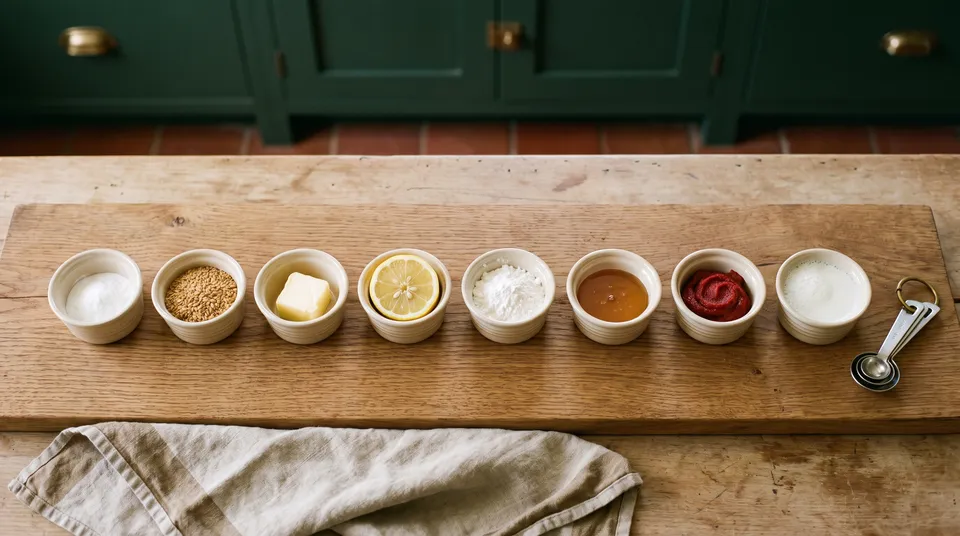
Step 1: Ask what it’s doing
What does the missing ingredient do here? Make it rise? Hold it together? Keep it moist? Add tang? Thicken a sauce? Some ingredients do two things at once, and your swap has to cover both.
Step 2: Look at the shelf
Check the zones from No. 03. The backups for most swaps live in Bulk & backstock and Meals & sauces. Anything already open is in Use first, and that gets picked first.
Step 3: Pick from the list below
Each section gives you two or more answers with exact amounts. Use whichever one you have the most of, or the one closest to its date.
Step 4: Fix what else changes
Honey brings water with it. Sour ingredients need baking soda. Oil has no salt. Each swap tells you what to take out or add, so the rest of the recipe stays the same.
Step 5: Write it on the recipe
A pencil note in the margin — ½ c yogurt + ½ c milk for buttermilk, good — turns tonight’s guess into next month’s plan.
- 1
Makes it rise — Baking powder, baking soda, self-rising flour, yeast.
- 2
Holds it together — Eggs, and the crumbs in a meatloaf.
- 3
Fat — Butter, oil, shortening, lard.
- 4
Tang — Lemon juice, vinegar, buttermilk, yogurt, sour cream.
- 5
Thickens — Cornstarch, flour, tapioca, arrowroot, egg yolks.
- 6
Sweetens — White and brown sugar, honey, maple syrup, molasses.
- 7
Savory depth — Broth, tomato paste, Worcestershire, mushrooms, mustard.
- 8
Liquid — Milk, cream, wine, spirits.
“Fill the ingredient’s job, and the recipe never knows it was swapped.”
1 · Makes it riseBaking soda and baking powder: measure carefully.
Leavening is whatever makes a cake, muffin or biscuit rise. Baking soda can’t do it alone: it needs something sour in the batter — buttermilk, yogurt, lemon juice, vinegar, honey, brown sugar or natural cocoa — to make the bubbles. Baking powder is baking soda with the sour part already mixed in. So every swap here is really putting those two halves back together in the right amounts. Honest advice: if you can avoid swapping these, do. But in a pinch, these work.

Out of baking powder (for 1 tsp)
¼ tsp baking soda + ½ tsp cream of tartar. You’ll also see ⅝ tsp cream of tartar (that’s ½ tsp plus ⅛ tsp); either is fine. Mixing a batch to keep? Add ¼ tsp cornstarch.
UseCream of tartar (search link) · Cuisipro Stainless Steel 5-Piece Measuring Spoons
Out of baking powder, have buttermilk or yogurt (for 1 tsp)
¼ tsp baking soda + ½ cup buttermilk, soured milk or yogurt, and use ½ cup less of the recipe’s other liquid.
Out of baking powder, have a lemon (for 1 tsp)
¼ tsp baking soda + ½ tsp lemon juice or white vinegar.
Out of baking soda (for 1 tsp)
3 tsp baking powder. That much powder can taste a little bitter.
Out of self-rising flour (for 1 cup)
1 cup all-purpose flour minus 2 tsp, + 1½ tsp baking powder + ½ tsp salt. Whisk it together first.
Out of yeast packets (for one ¼-oz packet)
2¼ tsp active dry yeast from a jar.
2 · Holds it togetherOut of eggs: it depends what the egg was doing.
There’s no one egg swap, because an egg does several things. In meatloaf or cookies it holds everything together. In a cake it also helps it rise. In muffins it keeps them moist. So pick by what the egg was there for. Each line below replaces one whole egg, and the taste or texture may change a little.
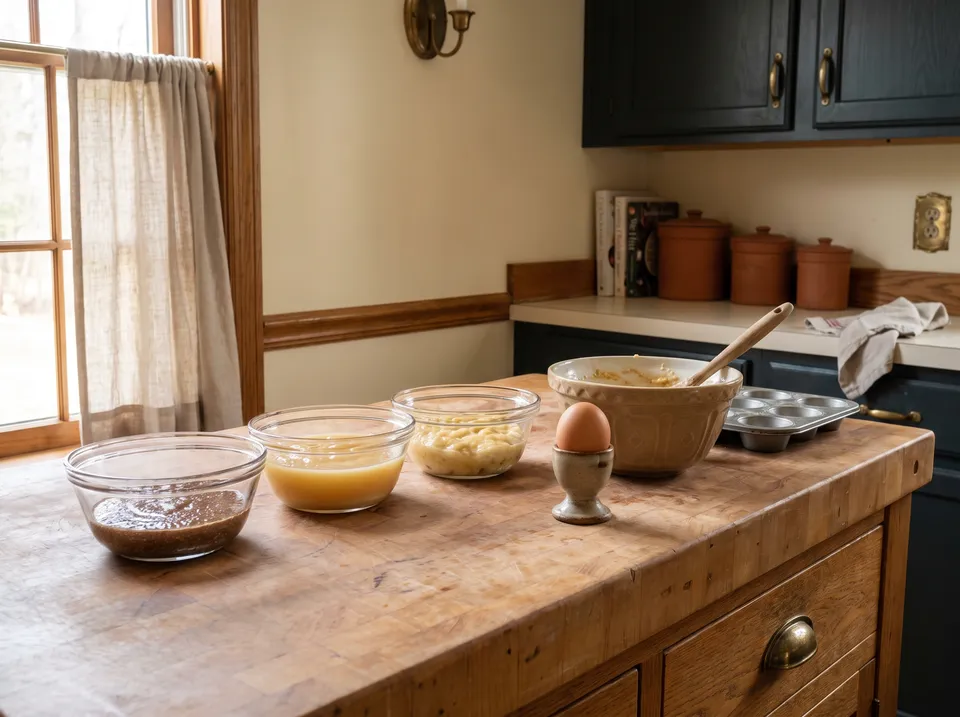
To hold it together
1 Tbsp flax or chia seed + 3 Tbsp water. Stir and let it sit 5 minutes. Or 1 packet plain gelatin + 2 Tbsp warm water, mixed right when you’re ready to add it.
To hold it together and help it rise
1½ Tbsp water + 1½ Tbsp oil + 1 tsp baking powder. Or ½ tsp baking powder + 1 Tbsp vinegar + 1 Tbsp liquid. Baking only.
To keep it moist
¼ cup mashed banana, applesauce, pumpkin purée, mashed sweet potato, mashed beans, mashed avocado or silken tofu. The flavor may come through a little.
In cake batter
2 Tbsp mayonnaise. It’s already oil and egg, so it’s less strange than it sounds.
Anywhere
2 egg whites, or ¼ cup egg substitute from a carton. In baking, one egg out of every three can also be 1 Tbsp cornstarch.
Only yolks left
In custards and cream fillings, 2 yolks for 1 whole egg. In cookies, 2 yolks + 1 Tbsp water.
Out of bread crumbs, for meatloaf or meatballs
¾ cup cracker crumbs for 1 cup dry bread crumbs. One slice of dry bread makes about ⅓ cup crumbs. For ¼ to ⅓ cup crumbs, ⅔ cup rolled oats works too.
3 · FatButter, oil and shortening: solid for solid, melted for melted.
Fat makes things tender and carries flavor. But solid fat and oil do different things. When a recipe beats butter with sugar until it’s fluffy (that’s “creaming”), it’s trapping air in the butter. Oil can’t do that. So the rule is simple: only swap in oil where the recipe melts the fat anyway. And butter usually has salt in it, so a few swaps add a little back.
Out of butter (for 1 cup)
1 cup margarine. Or ⅞ to 1 cup shortening + ½ tsp salt. Or ⅞ cup lard + ½ tsp salt. (⅞ cup is 1 cup minus 2 Tbsp.)
Recipe melts the butter (for 1 cup)
⅞ cup oil + ½ tsp salt. An equal amount of oil works too. Either way, melted recipes only.
Out of solid shortening (for 1 cup)
1⅛ cups butter, and use ½ tsp less salt in the recipe. Or 1 cup minus 2 Tbsp lard.
Recipe melts the shortening (for 1 cup)
1 cup oil. Again, only when it’s melted.
Out of oil, for the frying pan (for ¼ cup)
¼ cup melted butter, margarine, shortening, lard or bacon drippings.
Out of unsweetened chocolate (for 1 oz)
3 Tbsp cocoa + 1 Tbsp butter, oil or shortening. The fat stands in for what cocoa is missing.
4 · TangLemon, vinegar, buttermilk: sour does real work.
Sour ingredients brighten flavor, and in baking they’re what gets baking soda going. That’s why plain milk is a poor stand-in for buttermilk in a recipe with baking soda: tested side by side, the cake came out darker and denser. Swap sour for sour. One more thing worth knowing: the simpler the recipe, the more a swap shows. Pancakes and biscuits deserve your best one.

Out of buttermilk (for 1 cup)
1 Tbsp lemon juice or vinegar, then milk to make 1 cup. Let it sit 5 minutes (the same swap as No. 02). Give it 10 to 15 and it thickens and curdles a little — that’s what you want. Or shake 1¾ tsp cream of tartar into 1 cup milk. Or use 1 cup plain yogurt.
The buttermilk swap that tastes best
Greek yogurt thinned with milk, 1 part to 2. One 5.3-oz cup of Greek yogurt plus 1⅓ cups milk makes 2 cups. In pancakes and biscuits it came closest to the real thing. If buttermilk is the star, like in a buttermilk dressing, buy the buttermilk.
Out of lemon juice (for 1 tsp)
½ tsp vinegar. Vinegar is stronger, so use half as much.
Out of sour cream (for 1 cup)
1 cup plain yogurt. Or 1 cup evaporated milk + 1 Tbsp vinegar, left to sit 5 minutes.
Out of yogurt (for 1 cup)
1 cup sour cream or 1 cup buttermilk. For a looser, yogurt-like texture: 2 parts sour cream + 1 part milk.
Out of mayonnaise, for salads and dressings (for 1 cup)
1 cup sour cream, plain yogurt, or cottage cheese blended smooth. Use it for all of the mayo or just part.

5 · ThickensCornstarch, flour, tapioca: same job, different strength.
These are the easiest swaps, as long as you remember they’re not equally strong. Cornstarch and the other pure starches thicken about twice as much as flour, so you use half as much. Here’s the whole list behind No. 02’s one-line cornstarch swap.

Out of cornstarch (for 1 Tbsp)
2 Tbsp all-purpose flour. Or 2 Tbsp granular tapioca. Or 1 Tbsp arrowroot.
Out of flour, for thickening (for 1 Tbsp)
½ Tbsp cornstarch, potato starch, rice starch or arrowroot. Or 1 Tbsp quick-cooking tapioca. Or 1½ Tbsp whole-wheat flour.
Thickening with eggs
2 egg whites, or 2 yolks in custards and cream fillings, for each whole egg.
Used honey or maple in a fruit pie?
They make the filling runnier. Use 10 to 25 percent more thickener.
Shop this
6 · SweetensSugar, honey, maple: mind the extra water.
Sugar sweetens, but it also browns things, keeps them tender, and helps trap air when it’s beaten with butter. Honey and syrups do most of that, but they bring water with them, so the swap always takes a little liquid back out. Honey is sweeter than sugar and browns faster. There are two good ways to swap it, so you get both.
Out of brown sugar (for 1 cup)
1 cup white sugar + 1 Tbsp molasses, mixed well. In a real pinch, 1 cup white sugar on its own.
Honey for sugar, the cautious way (for 1 cup sugar)
½ to ⅔ cup honey. For each cup of honey: use ¼ cup less of the other liquid, add ¼ tsp baking soda, and turn the oven down 25°F.
Honey for sugar, the bolder way (for 1 cup sugar)
A generous ¾ cup honey, and 3 to 4 Tbsp less liquid. No liquid in the recipe? Add about 1 Tbsp flour for every ¼ cup honey instead. Keep it at 350°F or lower; honey scorches.
Maple syrup for sugar (for 1 cup sugar)
1 cup real maple syrup, with 3 to 4 Tbsp less liquid. Let it come to room temperature first, or cold syrup will make the butter clump.
Molasses for sugar
The same amount, with the same liquid fix as maple. It’s strong, so it’s best in small amounts or mixed with another sweetener.
Out of powdered sugar (for 1 cup)
1 cup white sugar + 1 Tbsp cornstarch, whirred in a food processor until it’s fine and powdery.
7 · Savory depthBroth, tomato, and the bottles in the fridge door.
This is what makes a soup taste finished instead of just hot. Fewer of these have exact amounts, so here are the ones that do. For soy sauce, fish sauce, miso or Parmesan there’s no tested amount we could find, so we won’t make one up: add a little, taste, add more.
Out of broth (for 1 cup)
1 bouillon cube, or 1 tsp bouillon powder or granules, dissolved in 1 cup boiling water. Taste before you salt; bouillon already is.
Out of tomato sauce (for 2 cups)
¾ cup tomato paste + 1 cup water.
Out of tomato juice (for 1 cup)
½ cup tomato sauce + ½ cup water.
Out of condensed tomato soup (for a 10¾-oz can)
1 cup tomato sauce + ¼ cup water.
Out of ketchup, for cooking (for 1 cup)
1 cup tomato sauce + ½ cup sugar + 2 Tbsp vinegar.
Out of Worcestershire (for 1 tsp)
1 tsp bottled steak sauce.
Out of fresh mushrooms (for 1 lb)
3 oz dried mushrooms + 1½ cups water. Save the soaking water for the pot.
Out of dry mustard (for 1 tsp)
1 Tbsp prepared mustard, in cooked dishes.
8 · LiquidMilk, cream and wine from the back of the shelf.
No. 02 covered milk from powder and from a can. Here’s the rest of the dairy, plus what to pour when a recipe wants wine or spirits you don’t keep around.
Out of whole milk (for 1 cup)
½ cup evaporated milk + ½ cup water. For baking only: 1 cup water + 1½ tsp butter, or 1 cup fruit juice.
UseEvaporated milk, 12 oz cans (search link) · Instant nonfat dry milk (search link)
Out of half-and-half (for 1 cup)
1 cup evaporated milk, straight from the can. Or ⅞ cup milk + 1½ Tbsp butter.
Out of heavy cream, for cooking and baking (for 1 cup)
¾ cup milk + ⅓ cup butter. It won’t whip, so don’t ask it to.
Out of red wine
The same amount of grape juice or cranberry juice.
Out of white wine
The same amount of apple juice or white grape juice.
Out of rum (for ¼ cup)
1 Tbsp rum extract + 3 Tbsp water.
Out of vanilla
Twice as much bourbon, rum or whiskey.
Also on the shelfFlour, spice mixes and the little things.
Make it a habitKeep a swap shelf in the zones you already have.
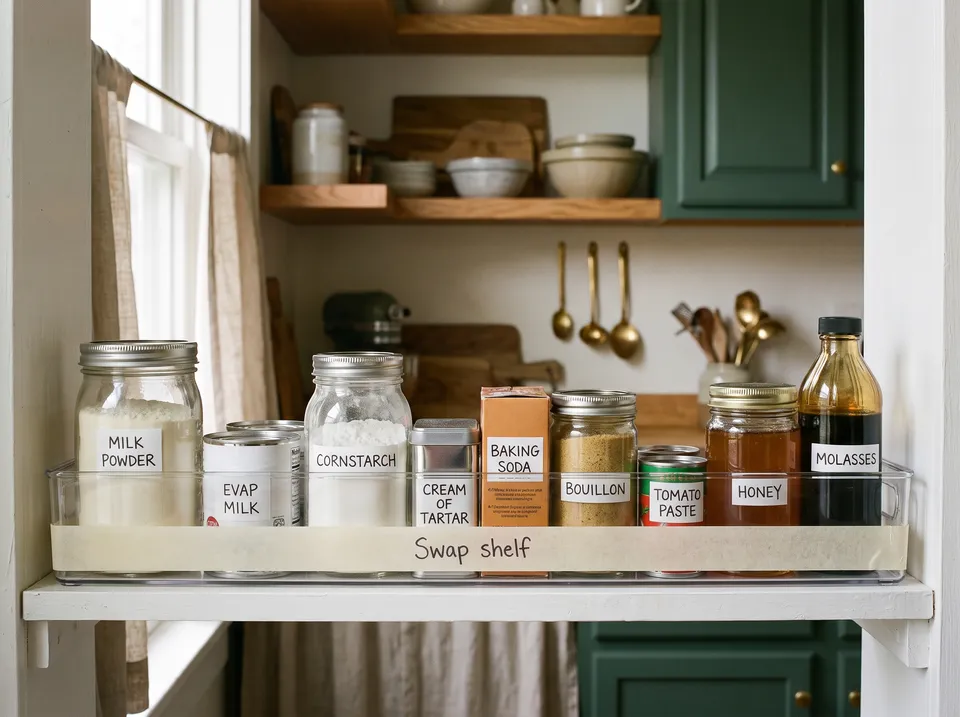
Most of these swaps run on a handful of things that keep for ages. Give them a home inside No. 03’s zones, labels facing out, so “we’re out of…” gets answered in one glance instead of one car trip. Buy only what your own recipes actually call for; nobody needs a decade’s supply of cream of tartar.
- E
Bulk & backstock — Instant nonfat dry milk, evaporated milk, cornstarch, cream of tartar, baking soda, a jar of yeast.
- C
Meals & sauces — Bouillon, tomato paste, a can of tomato sauce, Worcestershire, honey, molasses.
- A
Use first — The open sour cream, the half lemon, the last of the yogurt. If a swap can use it up, it goes first.
Shop this
- iDesign Linus clear binsThe same bins as No. 03; one becomes the swap binamazon.com
- Instant nonfat dry milk (search link)Shelf-stable milk for the backstock zoneamazon.com
- Evaporated milk, 12 oz cans (search link)Stands in for milk, half-and-half and sour creamamazon.com
- Cream of tartar (search link)The acid half of homemade baking powderamazon.com
- Bouillon base or cubes (search link)One cube or 1 tsp base makes 1 cup of brothamazon.com
- OXO Good Grips 1 Cup Angled Measuring CupRead the markings from above · ATK recommended, liquid measuring cupsamazon.com
Know when to stopSometimes the store wins.
A swap is for the night you come up short, or a dish where a small difference doesn’t matter. Buy the real thing when the ingredient is the star (buttermilk dressing, a honey cake that should taste of honey), when the recipe is short and simple so everything shows, or when you’d be swapping more than one thing at once. Change one thing at a time, and you’ll know which swap to keep.
Quick referencePin this.
Sources: University of Illinois Extension, Recipe Substitutions · Nebraska Extension, Basic Ingredient Substitutions (reviewed 2026) · Colorado State University Extension, Ingredient Substitutions, Fact Sheet 9.329 · Mississippi State University Extension, Ingredient Substitutions and Equivalents, P1690 (2024) · University of Missouri Extension, Using and Storing Honey · King Arthur Baking: baking soda vs. baking powder, buttermilk substitutes, baking with liquid sweeteners, what to bake if you run out · CDC, Botulism Prevention · America’s Test Kitchen reviews of measuring spoons and liquid measuring cups. Checked October 4, 2026. HearthIQ may earn a commission on product links.