Shop Your House First · No. 16 of 20
Eggs: The Household Workhorse
What the numbers on the carton mean, how long eggs really keep, hard-cooked eggs that peel in seconds, cooking them through, freezing them, and the frittata that uses up the last six.
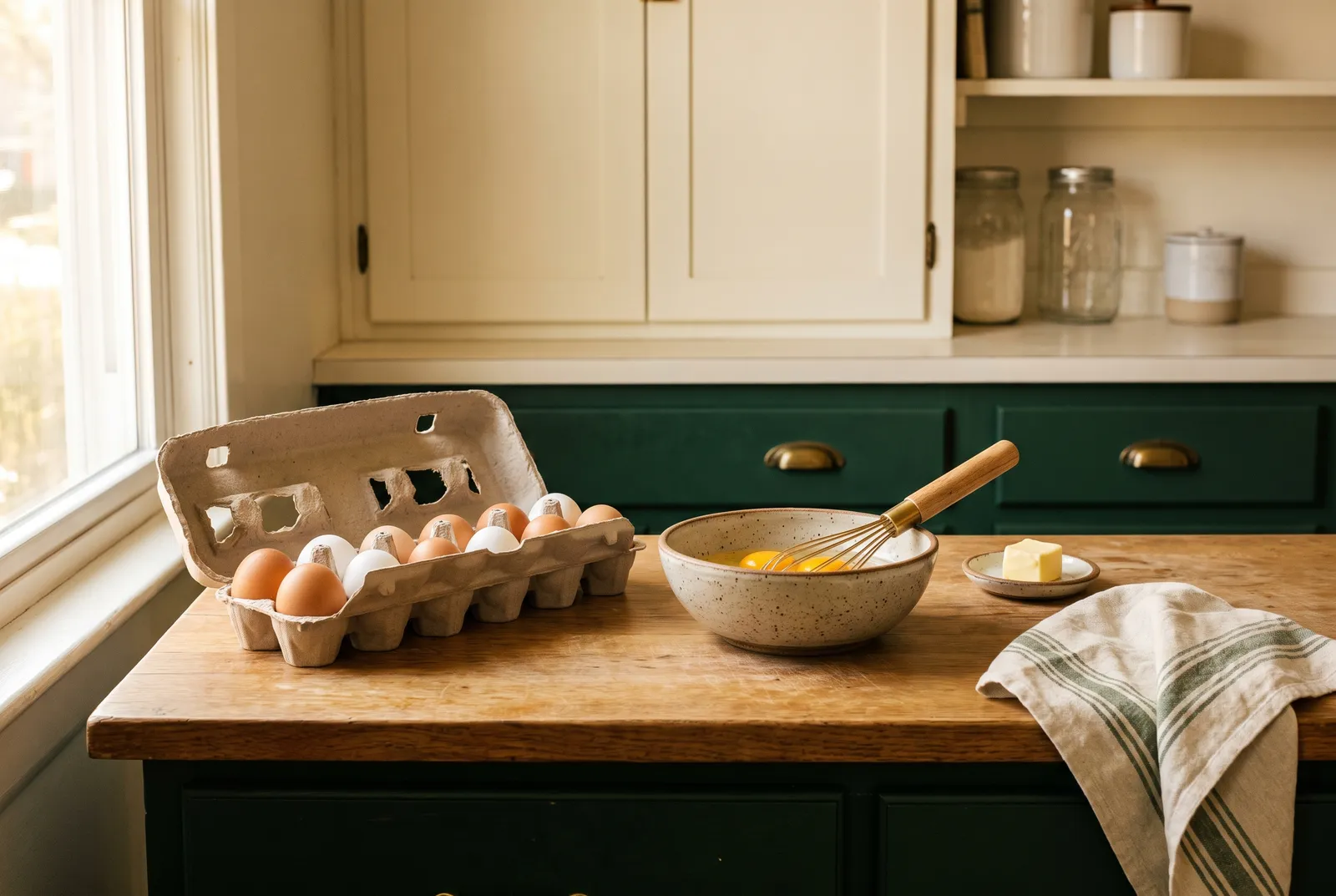
A carton of eggs is breakfast, lunch, a quick dinner, the binder in the meatloaf and the thing that saves a fridge full of odds and ends. It also comes with the most confusing dates in the kitchen and more myths than any other food. Here’s what the carton actually says, how long eggs really keep, the easiest hard-cooked eggs you’ll ever peel, and what to do with the half-dozen left when the week is almost over.
1 · The cartonWhat the numbers on the end mean.
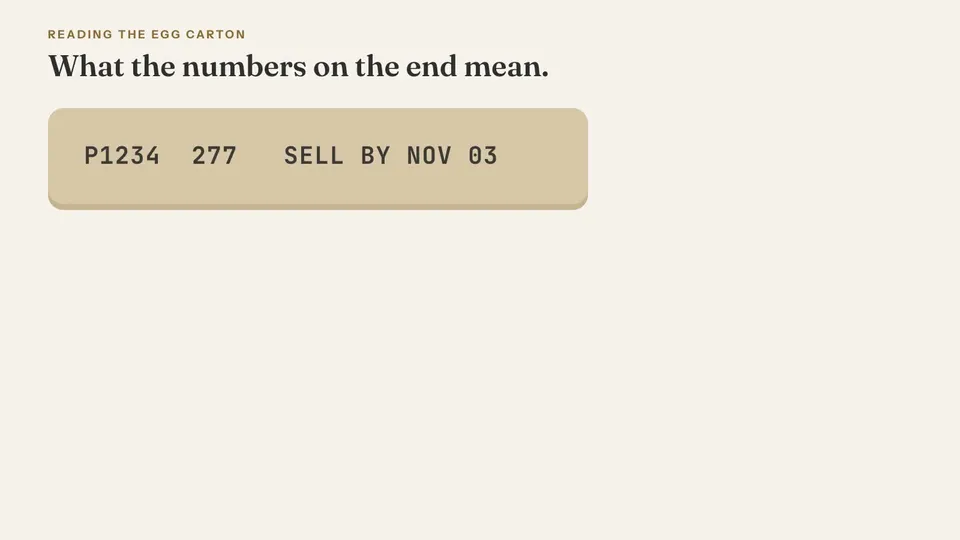
Look on the end of the carton for a three-digit number from 001 to 365: that’s the day of the year the eggs were washed, graded and packed (001 is January 1). A “sell by” date can be no more than 30 days after that, and a “use by” or “best before” date no more than 45 days, counting the pack day. Not every carton has one; it depends on your state. And none of them are a safety deadline: they’re about quality.
2 · Keeping themIn the carton, on a shelf. Not the door.
- ✓
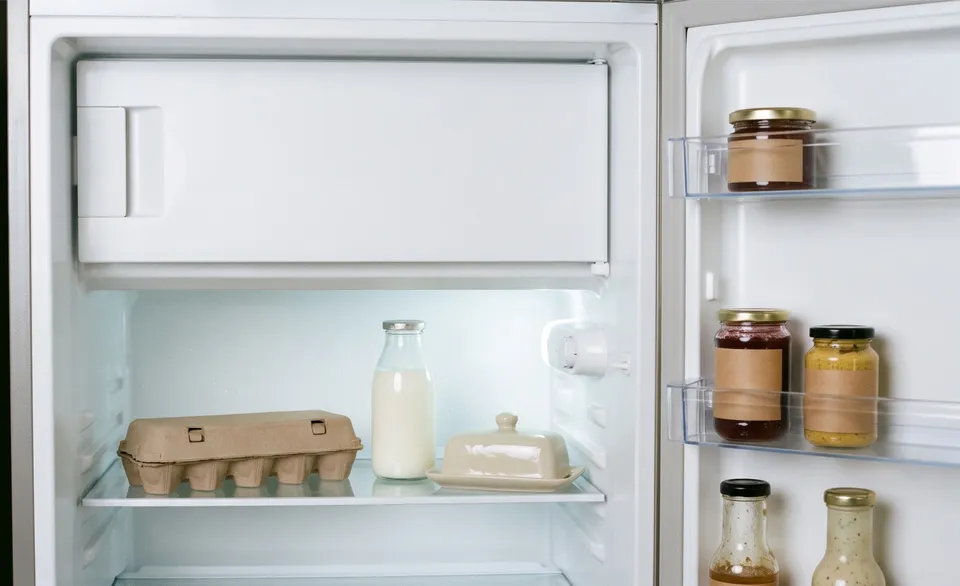
In their carton — Keep them in the carton they came in, so the pack date stays with them.
- ✓
The coldest part of the fridge — At 40°F or colder. Not the door: it warms up every time you open it.
- ✓
3 to 5 weeks — Raw eggs in the shell keep 3 to 5 weeks in the fridge. For the best texture and flavor, aim for the first 3.
- ✗
Not on the counter — In the US, eggs are washed before they’re sold and need to stay cold. Once they’ve been refrigerated, don’t leave them out more than 2 hours.
3 · Hard-cooked eggsSteam them. They peel like a dream.
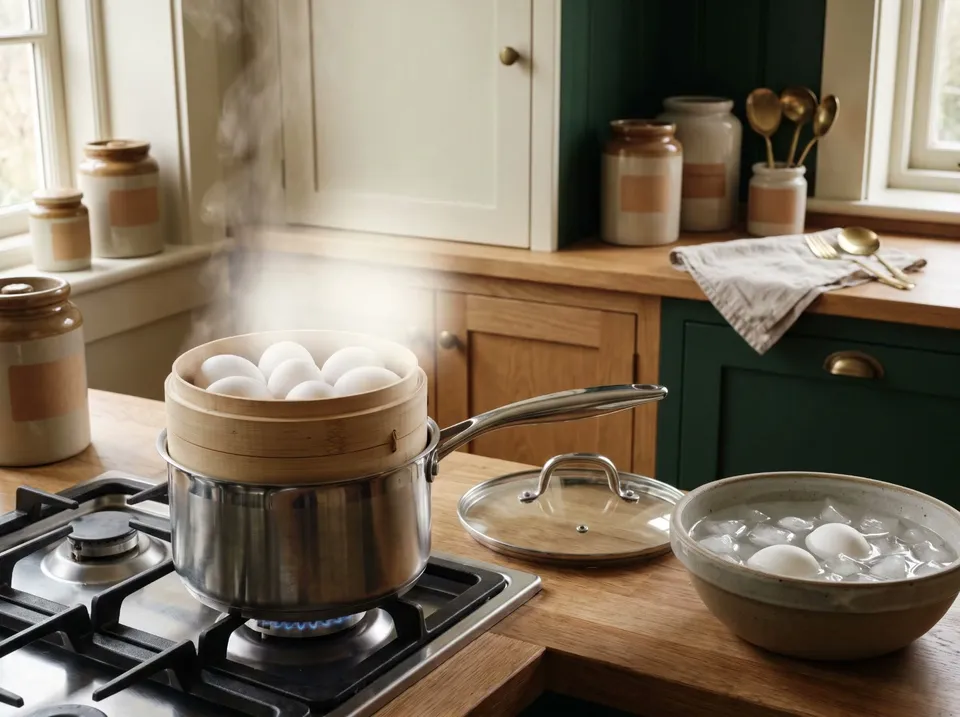
Step 1: Boil an inch of water
Bring 1 inch of water to a rolling boil in a saucepan.
Step 2: Steam · 13 min
Put cold eggs straight from the fridge in a steamer basket, set it in the pan, cover, and turn the heat to medium. Cook 13 minutes. (No basket? Lower the eggs into the water with a spoon; it doesn’t matter if they’re partly under.) Works the same for 1 egg or 6.
Step 3: Ice bath · 15 min
Move the eggs into 2 cups of ice and 2 cups of cold water for 15 minutes.
Step 4: Shake and peel
Make the ice bath in a container with a lid. When the eggs are cold, pour off half the water, hold the lid on and shake hard, up and down, about 40 times, until the shells are cracked all over. They’ll slip right off.
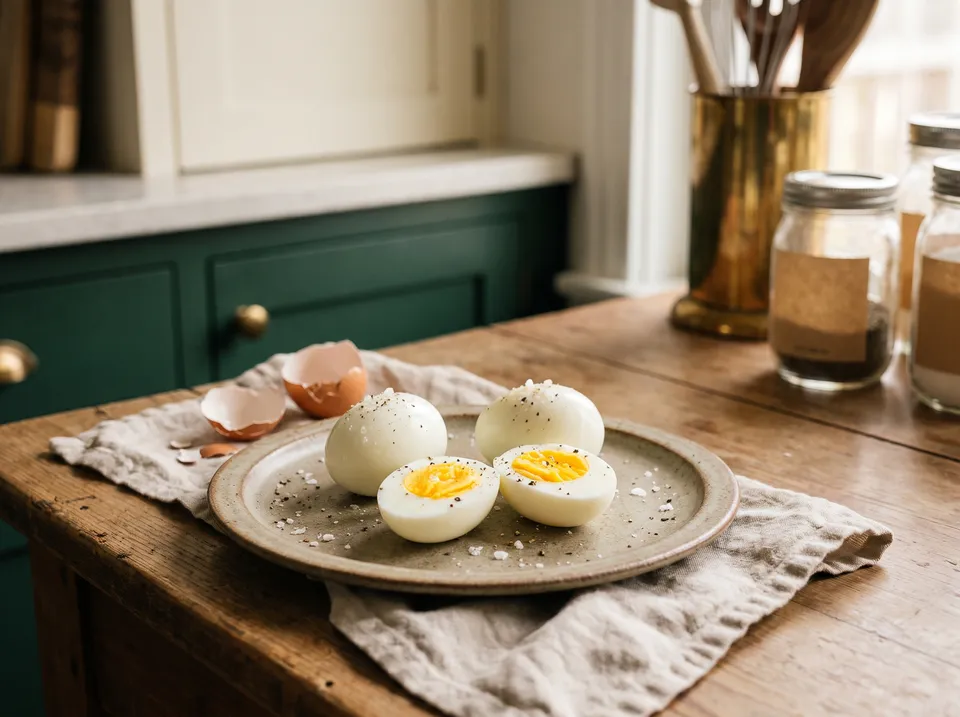
Hard-cooked eggs keep 1 week in the fridge, peeled or in the shell. Don’t freeze them.
4 · Cooking themSoft and creamy, and still cooked through.
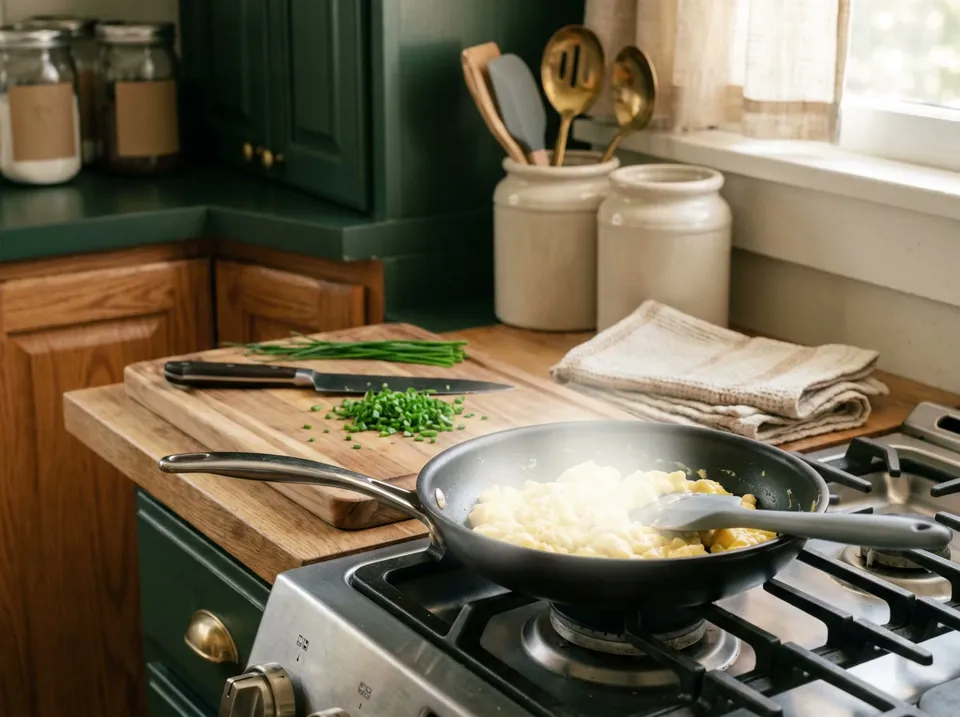
Scrambled eggs for 4: beat 8 eggs plus 2 extra yolks with ¼ cup half-and-half, a good pinch of salt and some pepper, just until it’s all one yellow. Melt 1 tablespoon butter in a 10-inch nonstick skillet over medium-high heat, pour in the eggs and keep scraping the bottom and sides with a spatula as big curds form, 1½ to 2½ minutes. Then turn the heat to low and fold gently until they’re set, another 30 to 60 seconds. No half-and-half? Use milk with a splash of cream.
Shop this
5 · Use them upThe last six eggs are dinner.
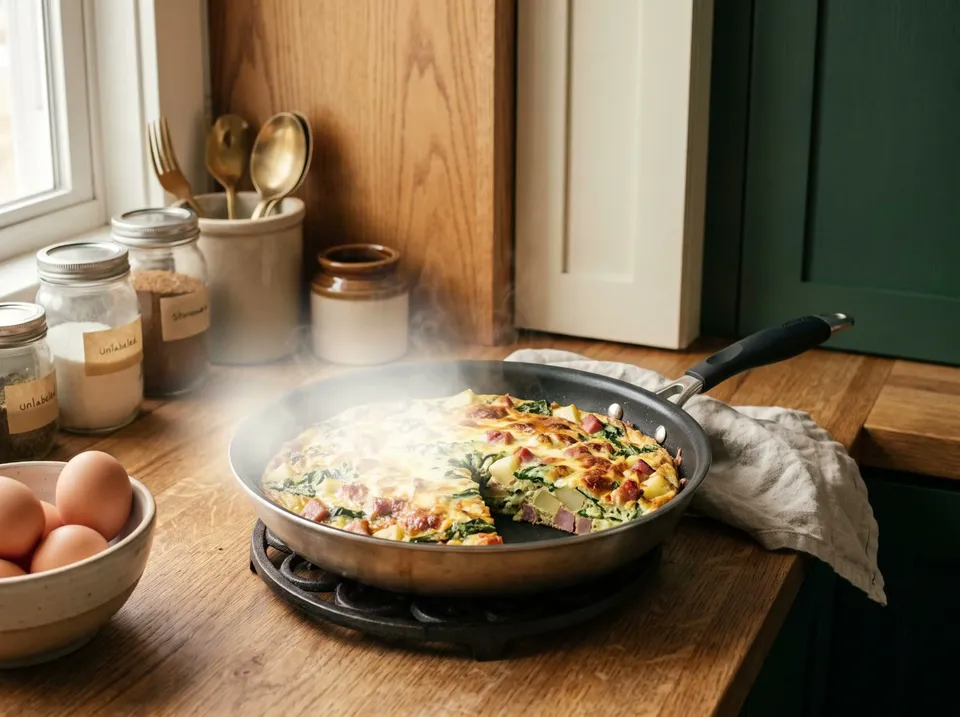
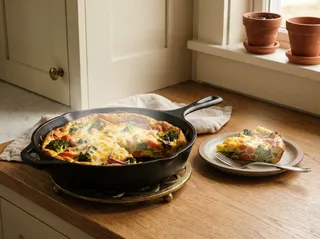
Frittata for 4. Sauté 2 cups chopped vegetables (mushrooms, onions, peppers, tomatoes, or leftovers, thawed frozen or drained canned) in an ovenproof skillet over medium heat until tender, 3 to 5 minutes, then turn the heat to medium-low. Beat 6 eggs with ¼ cup milk and stir in ½ cup shredded cheese. Pour it over the vegetables, cover, and cook without stirring until nearly set, about 6 minutes. Slide it under a hot broiler for a minute or two to set and brown the top; it’s done at 160°F in the center. Leftover potatoes from No. 13 or tired herbs from No. 15 are perfect in it.
Egg fried rice. Leftover rice and a couple of eggs make one of the fastest dinners there is: scramble the eggs first and set them aside, stir-fry the rice and vegetables, then fold the eggs back in. More next-day ideas in No. 06.
Leftover egg dishes
Into the fridge within 2 hours, in shallow containers. Eat within 3 to 4 days and reheat to 165°F.
Leftover raw whites or yolks
Covered in the fridge for 2 to 4 days, or freeze them (below).
Baking without an egg
For one egg in a muffin or quick bread, 1 tablespoon ground flaxseed stirred into 3 tablespoons water often works; in boxed brownies, ¼ cup applesauce or Greek yogurt does. Swaps work best when the recipe calls for only one or two eggs. More in No. 07.
6 · Freezing eggsOut of the shell, they freeze for a year.
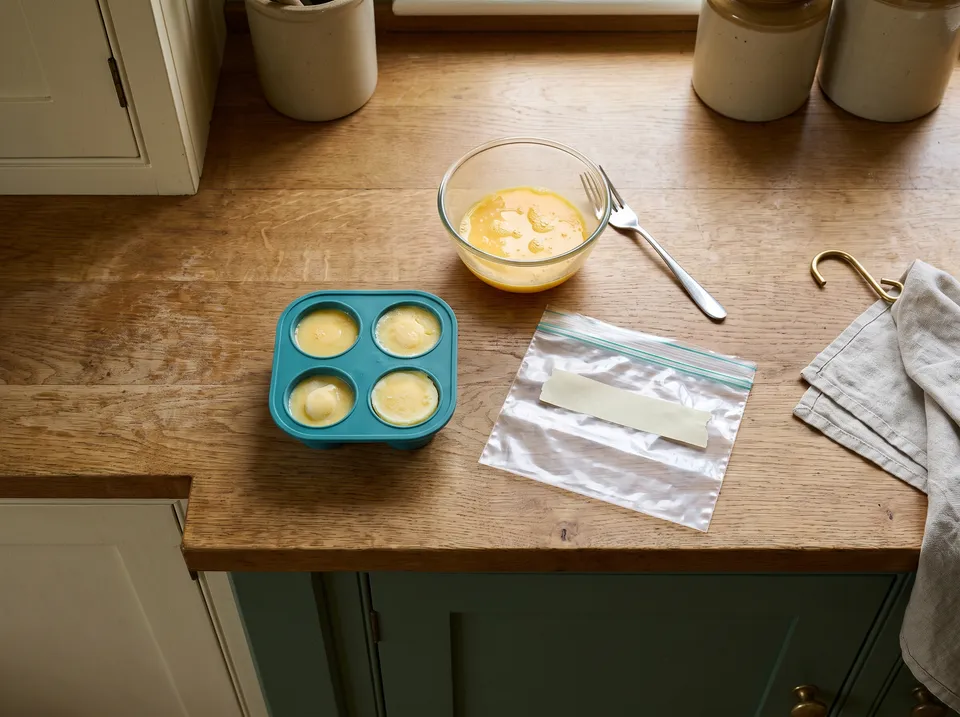
Step 1: Never in the shell
Eggs in the shell expand and crack in the freezer. Crack them first.
Step 2: Whole eggs
Mix the yolks and whites without whipping in air. For every cup, stir in ½ teaspoon salt (for savory cooking) or 1½ tablespoons sugar or corn syrup (for baking) so the yolks don’t go grainy. Freeze in a tray: 3 tablespoons = 1 egg.
Step 3: Whites
Nothing to add; just mix gently and freeze. 2 tablespoons = 1 white.
Step 4: Yolks
Add the same salt or sugar as for whole eggs. 1 tablespoon = 1 yolk.
Step 5: Use them
Label what you added. Frozen eggs keep up to a year. Thaw them in the fridge and use them within 3 to 5 days.
Quick referencePin this.
Sources: USDA FSIS, Shell Eggs from Farm to Table, Food Product Dating and FoodKeeper data · FDA, What You Need to Know About Egg Safety · CDC on egg safety · National Center for Home Food Preservation, Freezing Eggs · University of Nebraska–Lincoln Extension, Freezing Eggs · Iowa State University Extension, Vegetable Frittata · University of Maine and University of Illinois Extension on egg substitutes · America’s Test Kitchen on easy-peel hard-cooked eggs, perfect scrambled eggs, egg substitutes in baking and egg sizes, plus reviews of nonstick skillets, steamer baskets, silicone spatulas and whisks. Checked October 4, 2026. HearthIQ may earn a commission on product links.