Shop Your House First · No. 14 of 20
Garlic: Fresh, Roasted, Powdered, Frozen & Preserved
Which form does which job, the exact swaps per clove, how to keep a head from sprouting, roasting it soft and sweet, freezing it, and the one garlic rule that’s about safety: garlic in oil.
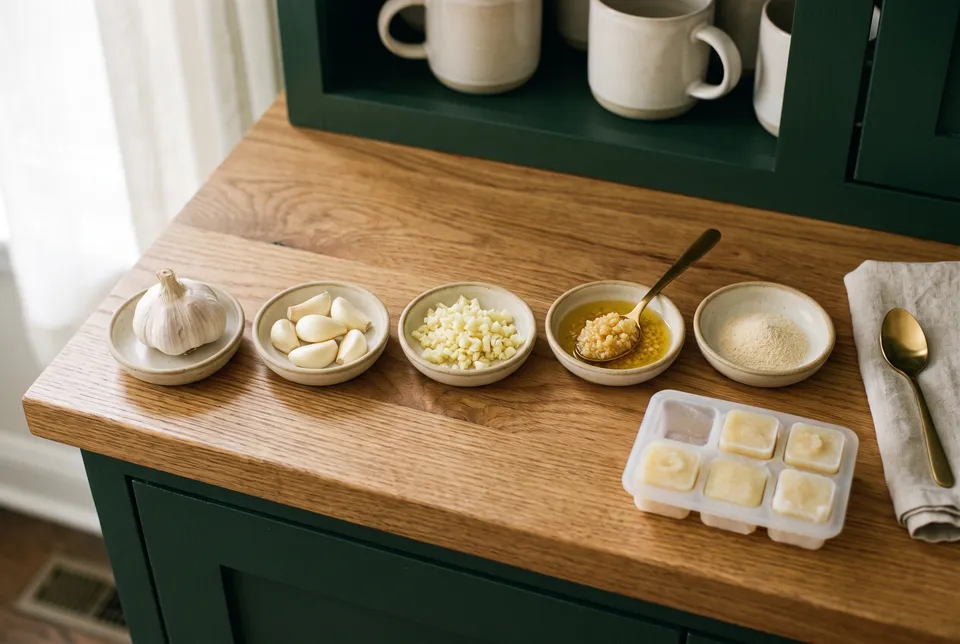
Garlic comes in more forms than almost anything else in the kitchen: whole heads, peeled cloves, the jar of minced, the shaker of powder, roasted, frozen. Each one does a slightly different job, and most of them swap for each other once you know the numbers. There’s exactly one garlic rule that’s about safety, not flavor, and it’s worth knowing by heart. Here’s all of it.
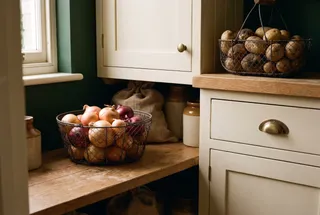
Garlic is the onion’s little cousin, and it likes the same treatment you gave onions in No. 11: somewhere cool, dark and dry, with air around it. Get that right and a head keeps for weeks. Get the forms right and you’ll never again stand at the stove with a recipe that says “3 cloves” and nothing but a shaker of powder.
1 · The formsWhich garlic for which job.
Fresh cloves
The strongest, brightest flavor, and the more finely you cut it, the stronger it gets. Grate it to a paste for dressings and dips; slice it for a gentler flavor. Mince it right before you cook: cut garlic gets harsher the longer it sits.
UseKuhn Rikon Epicurean Garlic Press · Microplane Premium Classic Zester/Grater
Jarred minced
The weeknight shortcut. Use 1 teaspoon per clove. It’s noticeably weaker than fresh (it’s often packed in water), so save it for sauces, soups and chili rather than a raw dressing. Once it’s open, keep it in the fridge and go by the date on the jar.
Garlic powder
Use ⅛ to ¼ teaspoon per clove, depending on how garlicky you like it. Two tricks: stir it into an equal amount of water first and let it sit a minute to wake up the flavor, and reach for it in dry rubs and on the grill, where fresh garlic would burn. An unopened shaker keeps its flavor for years, but it does fade, so give it a sniff.
Roasted
Sweet, mellow and spreadable: a whole different ingredient. One head gives you a scant ¼ cup. Recipe below.
Frozen
Minced garlic tossed with a little oil and frozen in small portions, ready to drop into a pan. In taste tests, frozen garlic cubes beat the jar. How to do it safely is in section 5.
2 · Keeping a headCool, dark, airy. Not the fridge.
- ✓
Whole heads: the pantry — Somewhere cool, dry, dark and airy: a basket, a mesh bag, a garlic keeper with holes. Plan on a few weeks to about a month.
- ✗
Not the fridge — Fridge temperature actually tells garlic to sprout. Whole heads keep better in the pantry.
- !
Once you break into a head — The loose cloves go faster. Use them within a week or two, so break off what you need and leave the rest of the head whole.
- ✗
Don’t chop ahead — Peel and mince right before you cook; chopped garlic sitting around gets harsh.
3 · Sprouted garlicA green sprout is a flavor issue, not a safety one.
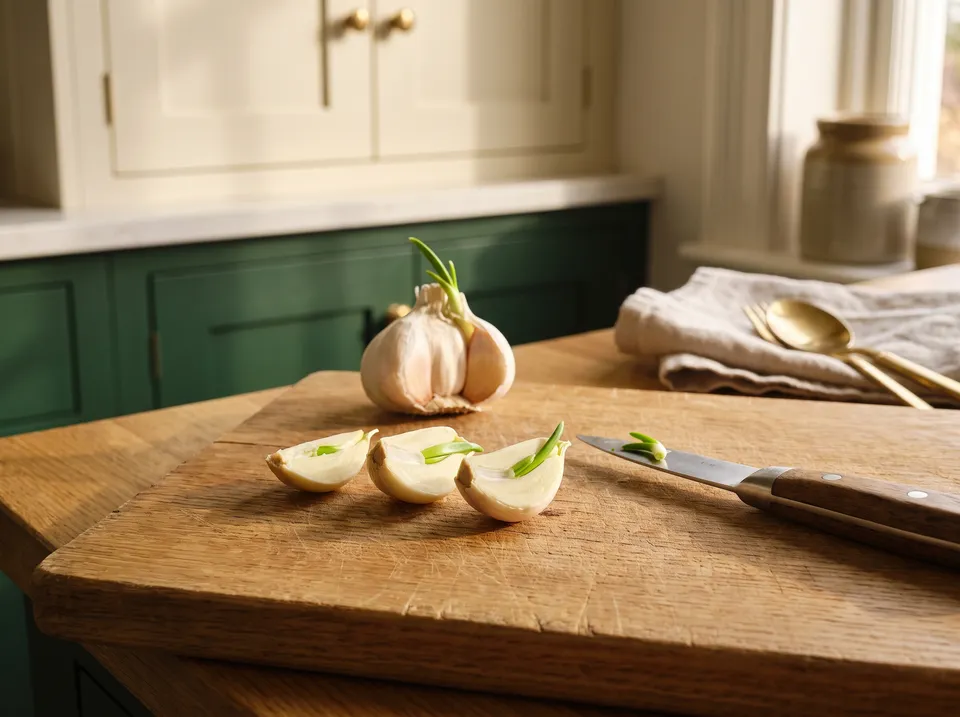
Garlic that’s been around a while grows a green sprout up the middle of each clove, and eventually a shoot out the top of the head. It’s perfectly safe to eat. If the clove is still firm, use it: cut it in half and flick the green bit out with the tip of a knife if you like (it can taste a little sharp), or don’t bother, especially in anything that cooks a while. Shriveled, dried-out cloves aren’t harmful either; they’re just past their best.
4 · In the panThirty seconds, then the next thing.

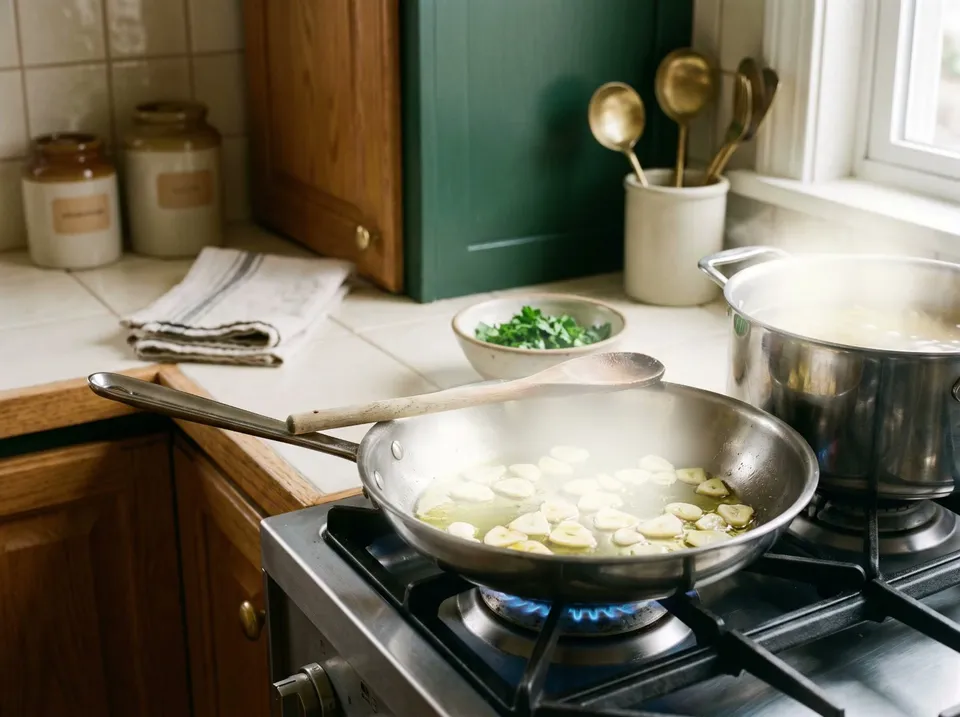
Garlic burns fast, and burnt garlic is bitter. So cook your onions or other vegetables first until they soften, push them to the side, then add the garlic and stir constantly. Over high heat it needs about 30 seconds: the moment it smells wonderful, add the next ingredient (the tomatoes, the broth, the pasta) and you’ve stopped the clock.
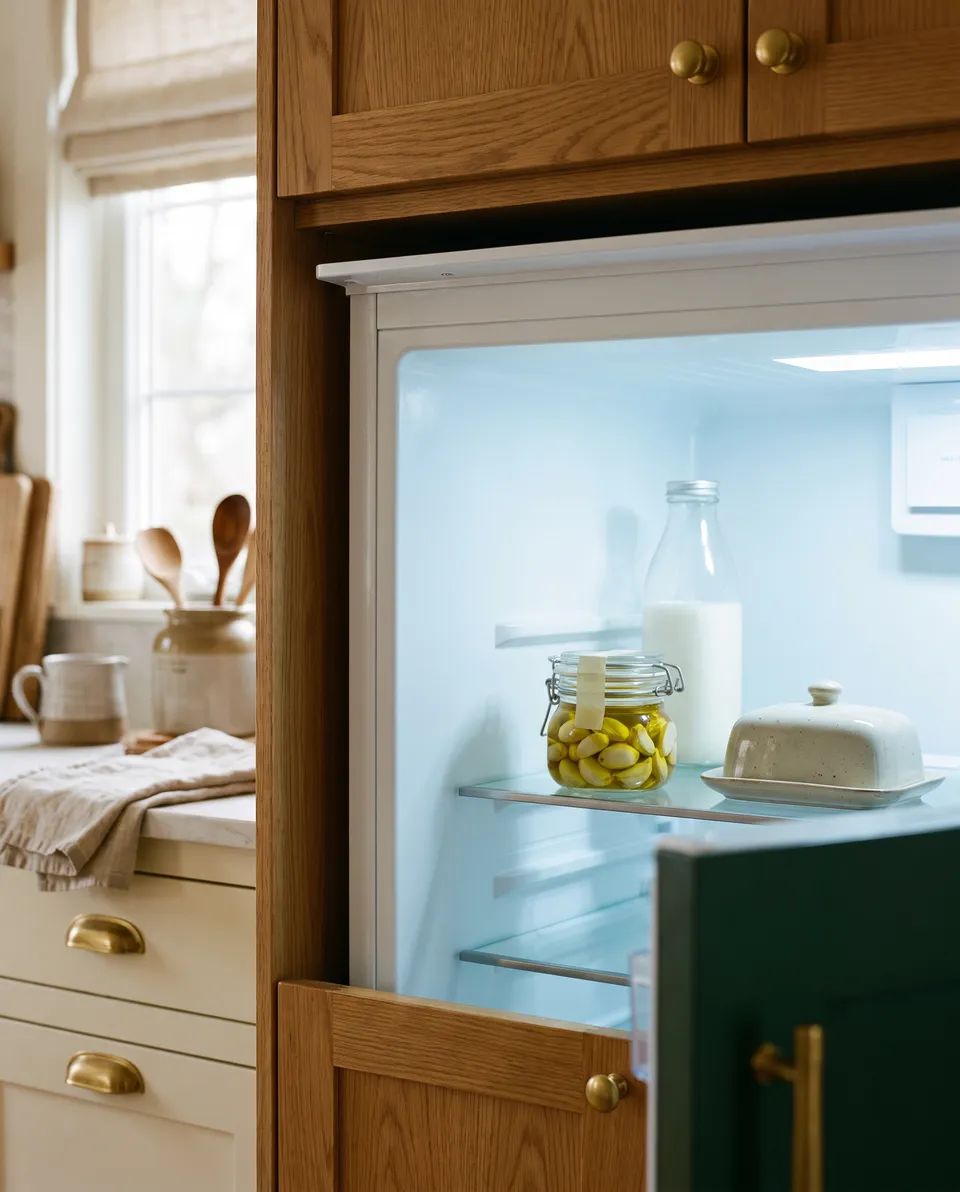
5 · Garlic in oilThe one garlic rule that’s about safety.
Step 1: Freeze it chopped
Mince or grate the garlic, wrap it tightly and freeze. Break off what you need.
Step 2: Freeze it as a purée
Blend peeled cloves with oil, 2 parts oil to 1 part garlic, and freeze it right away. It stays soft enough to scrape out a spoonful at a time. Don’t let it sit out before or after freezing.
Step 3: Freeze whole cloves
Easiest of all: freeze unpeeled cloves and pull out what you need.
Step 4: Wrap it well
Whatever form, wrap it tightly: garlic will happily flavor everything else in your freezer.
6 · Roasted garlicSweet, soft and spreadable.
Step 1: Trim
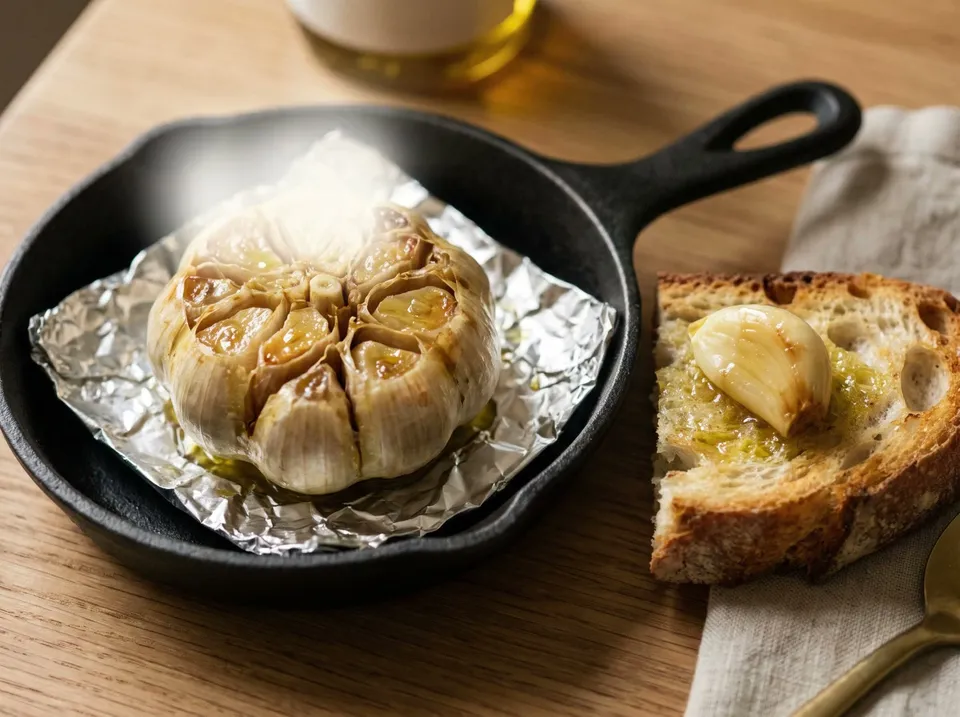
Cut the top third off each head so the cloves peek out.
Step 2: Wrap
Set the heads cut side up on foil, drizzle with olive oil (about a teaspoon a head), sprinkle with salt, and pull the foil up and crimp it closed.
Step 3: Roast · 45 min to 1½ hr
At 350°F, about 45 minutes to an hour; at 400°F, closer to 1½ hours for the softest, most even result. It’s done when the cloves are very soft.
Step 4: Squeeze
Let it cool a bit in the foil, then squeeze the cloves out of their skins.
Keeping it: whole roasted heads go in an airtight container in the fridge for up to 1 week. Or squeeze out the cloves and freeze them for up to 1 month. Covered in oil, it’s the 4-day rule again.
Quick referencePin this.
Sources: CDC, Botulism Prevention · National Center for Home Food Preservation, Freezing Garlic in Oil · USDA FSIS FoodKeeper data · University of California ANR, Publication 8568, Garlic: Safe Methods to Store, Preserve, and Enjoy · Oregon State University Extension on preserving garlic · Penn State Extension · America’s Test Kitchen on clove sizes, jarred garlic and garlic powder, sprouted garlic, garlic dos and don’ts, roasted garlic and garlic confit, plus reviews of garlic presses and rasp graters. Checked October 4, 2026. HearthIQ may earn a commission on product links.