Shop Your House First · No. 11 of 20
Onions: Types, Uses, Cooking, Storage & Substitutions
Which onion for what, how to dice one, how to caramelize, how to store and freeze them, and what to use when you’re out.
Almost every savory recipe starts the same way: one onion, chopped. Which onion? How chopped? And what do you do when the bag in the pantry is empty, or sprouting, or there’s half of one wrapped in plastic in the fridge door from who-knows-when? This is the onion, all of it: which kind for what, how to keep them, how to cut one without a fuss, and what to reach for when you’re out.
 From No. 07The Pantry Swap GuideSwap by the job an ingredient does. Here’s that idea, for the onion.
No. 07 taught swapping by the job an ingredient does. Onions do two jobs: raw, they bring bite and crunch; cooked, they turn sweet and become the base everything else sits on. Pick the onion for the job and you’re most of the way there.
1 · Which onionRaw for bite, cooked for sweet.
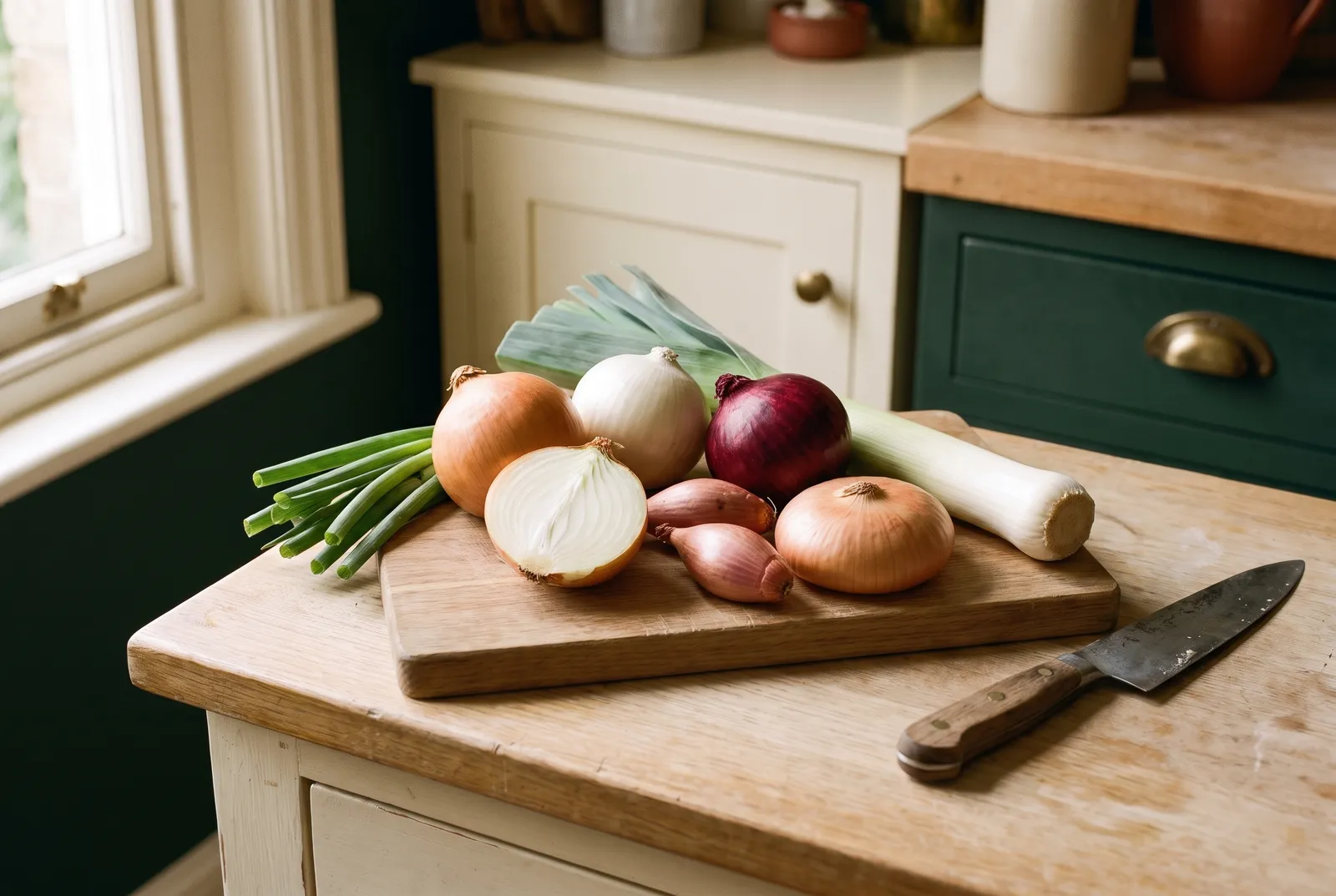
Raw sweet and red onions are the milder ones, so they’re the ones for salads and sandwiches. Yellow and white onions are stronger, and that’s exactly what you want once they’re cooked.
Yellow
The all-purpose onion, and the one to keep on hand. Full-flavored and reliable for cooking almost anything: soups, sauces, sautés, roasts. When a recipe just says “onion”, it means this one.
White
Sharper and cleaner-tasting, not sweet. The traditional onion for Mexican cooking, and good in prepared salads and white sauces.
Red
Mild enough to eat raw, with great color: salads, sandwiches, salsas, and anything grilled or roasted.
Sweet (Vidalia, Walla Walla)
Thin, light skins and lots of water. The best bulb onion for eating raw: sandwiches, salads, lightly cooked or grilled dishes. All that water means they don’t keep as long.
Shallots
Small, mild and a little sweet. In a cooked dish, swap in the same amount of regular onion, cut the same size, and nobody will notice. Raw, onion is sharper; soak it in ice water for 10 minutes to tame it.
Green onions (scallions)
Two names for the same thing. Mostly used raw, sliced thin over soups and tacos, or tossed in at the very end of a stir-fry.
Leeks
Mild, sweet and buttery. Keep them in the fridge, and rinse well: soil hides between their layers.
2 · How to cut oneThe four-cut dice.
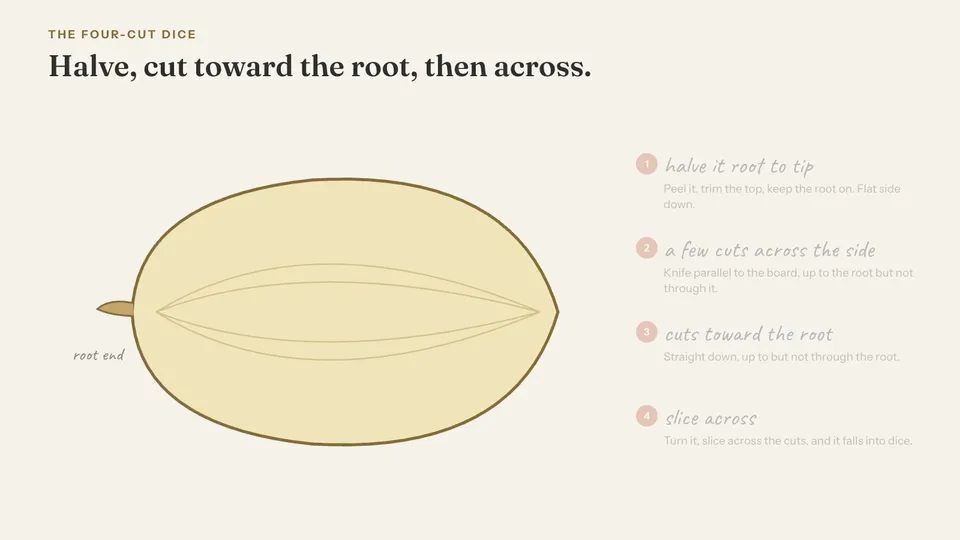
Step 1: Halve it root to tip
Cut the onion in half through the root and the top. Peel it and trim off the top, but leave the root end on.
Step 2: A few cuts along the side
Lay a half flat side down. Holding the knife parallel to the board, make a few cuts from the top end toward the root, stopping before you reach it.
Step 3: Cuts straight down
Now cut straight down, the long way, up to but not through the root.
Step 4: Slice across
Turn it so the root is at the back and slice across all those cuts. Space them ¼ to ½ inch apart for chopped, ⅛ to ¼ inch for minced. Keep your fingertips tucked in.
Shop this
- Victorinox Fibrox Pro 8-inch chef’s knifeSharp knife, fewer tears · ATK winner, chef’s knivesamazon.com
- Mercer Culinary Millennia 8-inch chef’s knifeThe budget pick · ATK Best Buy, chef’s knivesamazon.com
- Teakhaus edge-grain cutting boardBig enough to dice on without onions rolling off · ATK winner, wood cutting boardsamazon.com
- KitchenAid 3.5-cup food chopperFor a lot of onions at once · ATK winner, small food processorsamazon.com
3 · Cooked downCaramelizing is just patience.
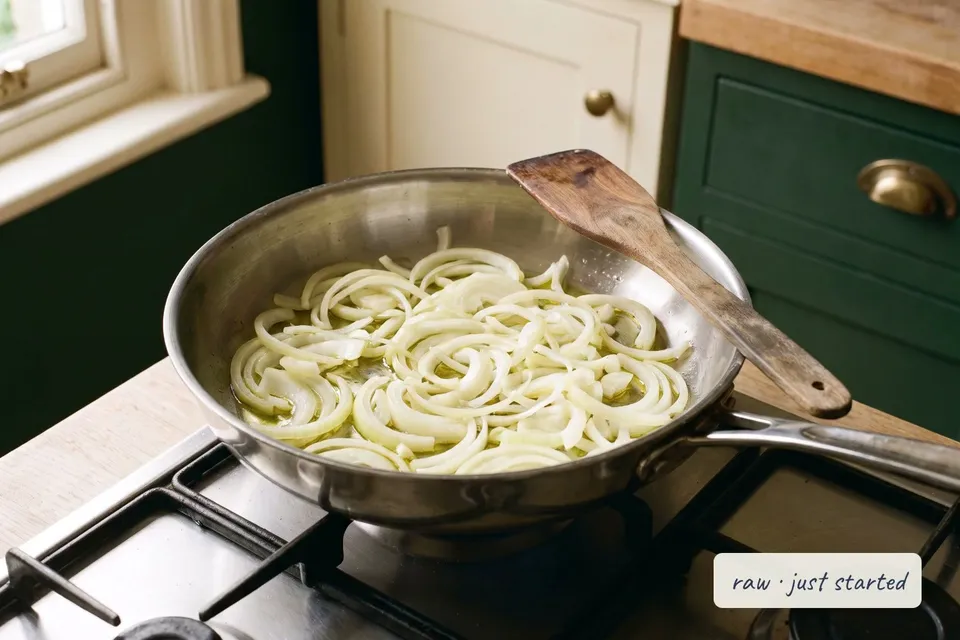
Slice onions about ¼ inch thick and cook them in a little oil over medium-low heat, stirring now and then. Roughly how it goes: 5 minutes and they’re translucent, 15 and they’re soft and pale golden, 30 or more and they’re brown and sweet, 45 or more and they’re dark and jam-like. Plan on 45 minutes to an hour the slow way. Three pounds cooks down to about 2 cups. They keep 3 days in the fridge or about 1 month in the freezer, so make a big batch.
4 · How to keep themCool, dark, dry, and not next to the potatoes.
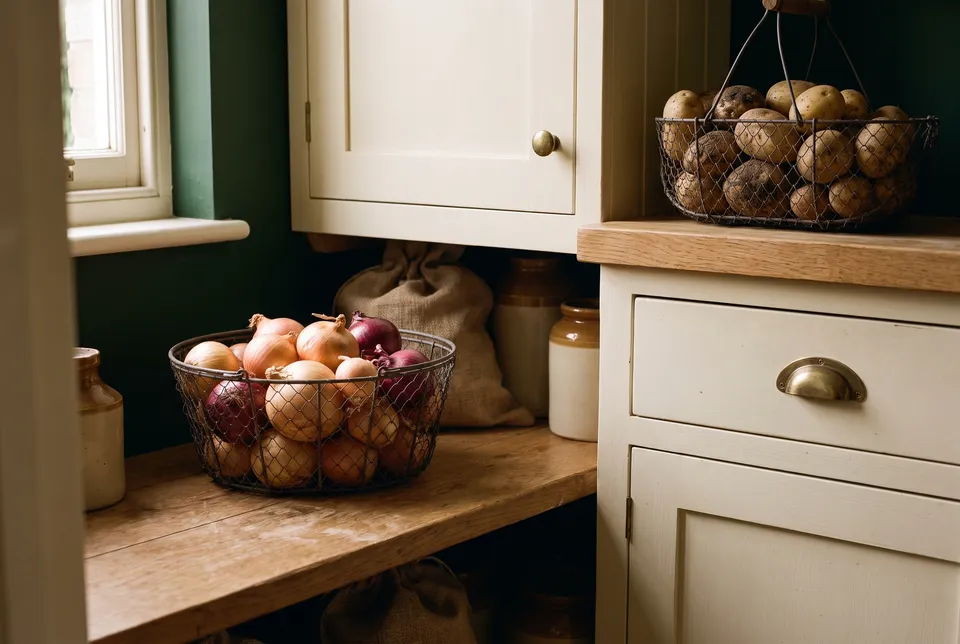
Whole dry onions
Somewhere cool, dark, dry and airy: a wire basket or a mesh bag, not a plastic bag. They keep about a month that way. Keep them away from potatoes; the two speed each other’s spoilage.
Sweet onions
All that water makes them delicate. They do better in the fridge, each one wrapped in a paper towel, for a few weeks.
Cut or chopped onion
In a sealed container in the fridge. Sources give anywhere from 2 to 10 days; plan on about a week, and less if it starts to look slimy or smell off. Cut onions are not poisonous, despite what you may have read online.
Green onions
In a plastic bag with a damp paper towel in the fridge, about a week. Pull off any leaves that turn yellow or shrivel.
Leeks
In the fridge, 1 to 2 weeks.
5 · For laterFreeze them chopped, for cooking.
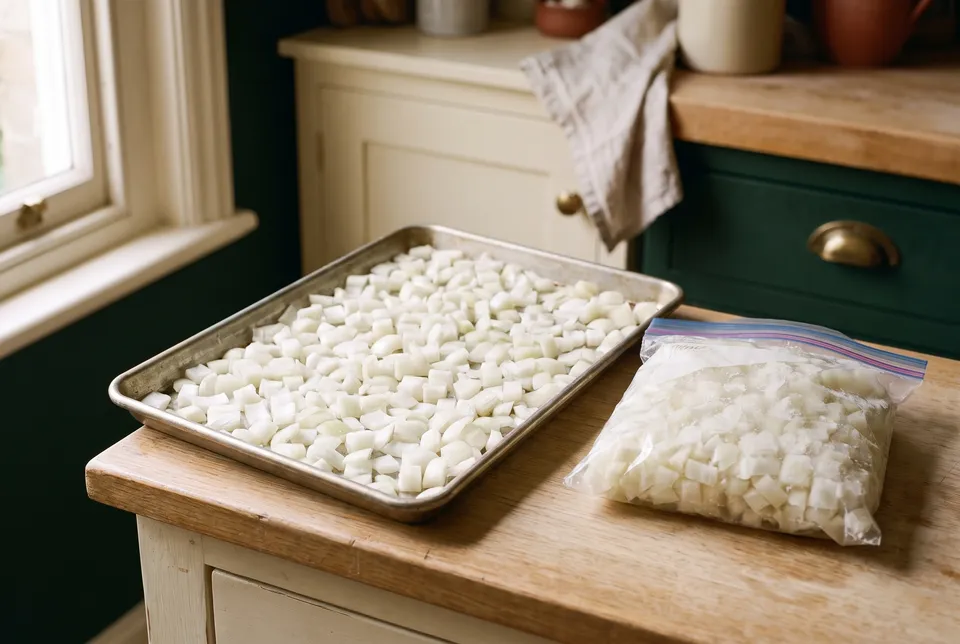
Diced onions freeze well with no blanching: cut them into about ¼-inch pieces, spread them on a tray to freeze, then bag them. Use them within a few months, in cooked dishes only: soups, sauces, casseroles, stir-fries. Frozen whole onions come out mushy, so always chop first. Green onions freeze too; they lose their crunch but keep their flavor. (More freezing basics in No. 10.)
6 · Out of onions?What to reach for instead.
Keep a jar of onion powder or dried minced onion with the rest of your backstock in No. 03’s pantry, and an empty onion bag never stops dinner.
7 · SafetyTwo quick rules.
Cut onion goes in the fridge within 2 hours (1 hour on a day over 90°F), like any cut produce. And onions have been part of food recalls before, both whole and pre-diced, so if you hear of one, check the label and where you bought them.
Quick referencePin this.
Sources: USDA FSIS, FoodKeeper data and Danger Zone · CDC, 2021 onion Salmonella outbreak and 2023 diced onion outbreak · National Center for Home Food Preservation, Freezing Onions · Extension: University of Minnesota, Purdue FoodLink, Utah State, Illinois, Nebraska substitutions, Nebraska freezing, NDSU · National Onion Association and Vidalia Onion Committee · America’s Test Kitchen, How to Cut an Onion, Why Do Onions Make You Cry?, Can You Substitute Onions for Shallots?, Caramelized Onions and its frozen-onion test, plus reviews of chef’s knives, cutting boards, small food processors and stainless skillets. Checked October 4, 2026. HearthIQ may earn a commission on product links.