Shop Your House First · No. 23 of 30
What Should We Buy Again? A Household Guide to Learning From What You Use
Two weeks of tally marks on the fridge, a three-way sort of the grocery list, always-have versus try-it, and when bulk and unit prices really save money.
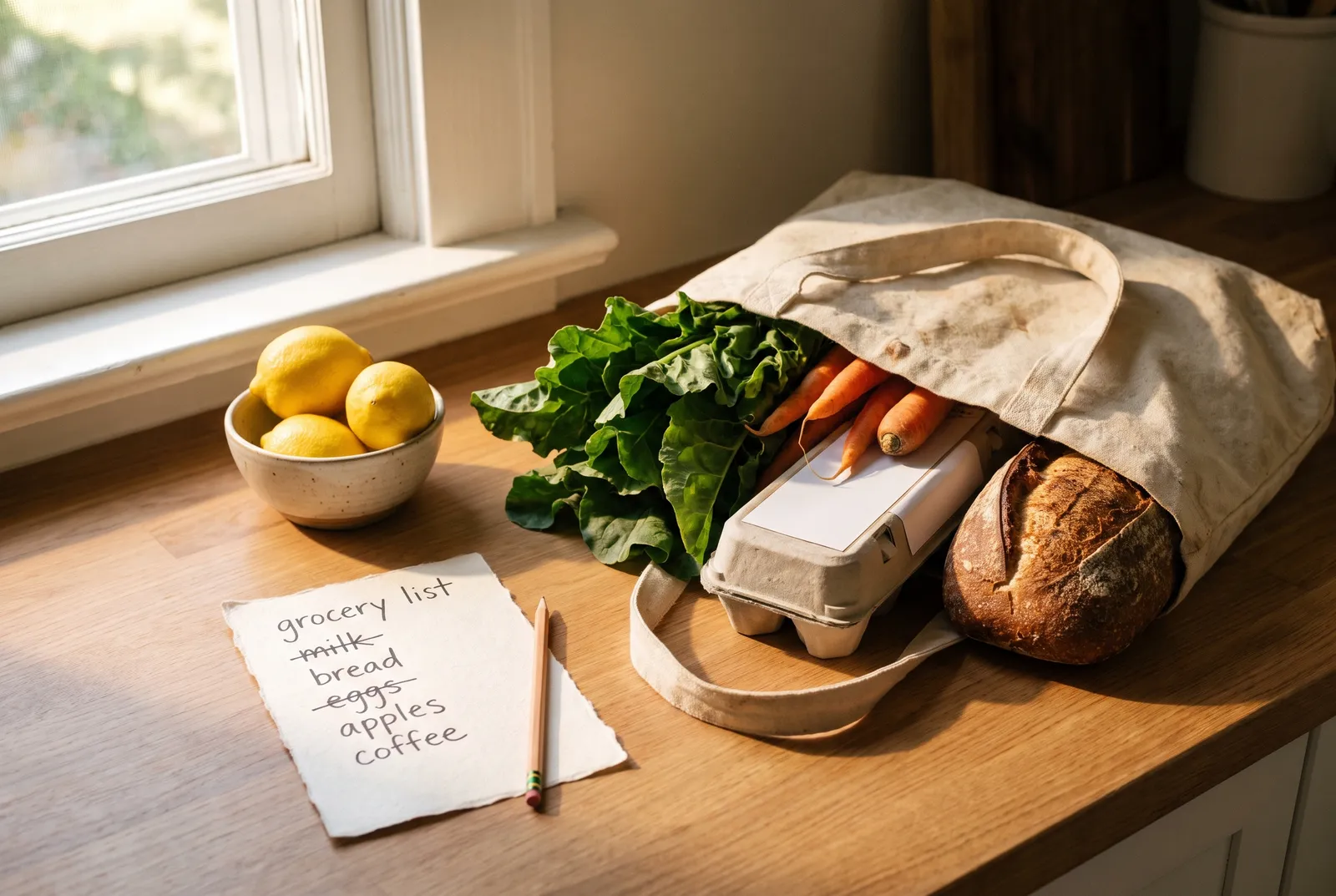
Every household has its own spinach: the thing you buy every week with the best intentions and throw out every week, a little slimier. And every household has its milk: the thing that runs out before the next shop, every time. Your fridge and your trash can already know what your family really eats. Two weeks of paying attention turns that into a grocery list that wastes less and runs out less.
1 · Two weeks of tally marksLet what you toss write the next list.
Step 1: Put a sheet on the fridge
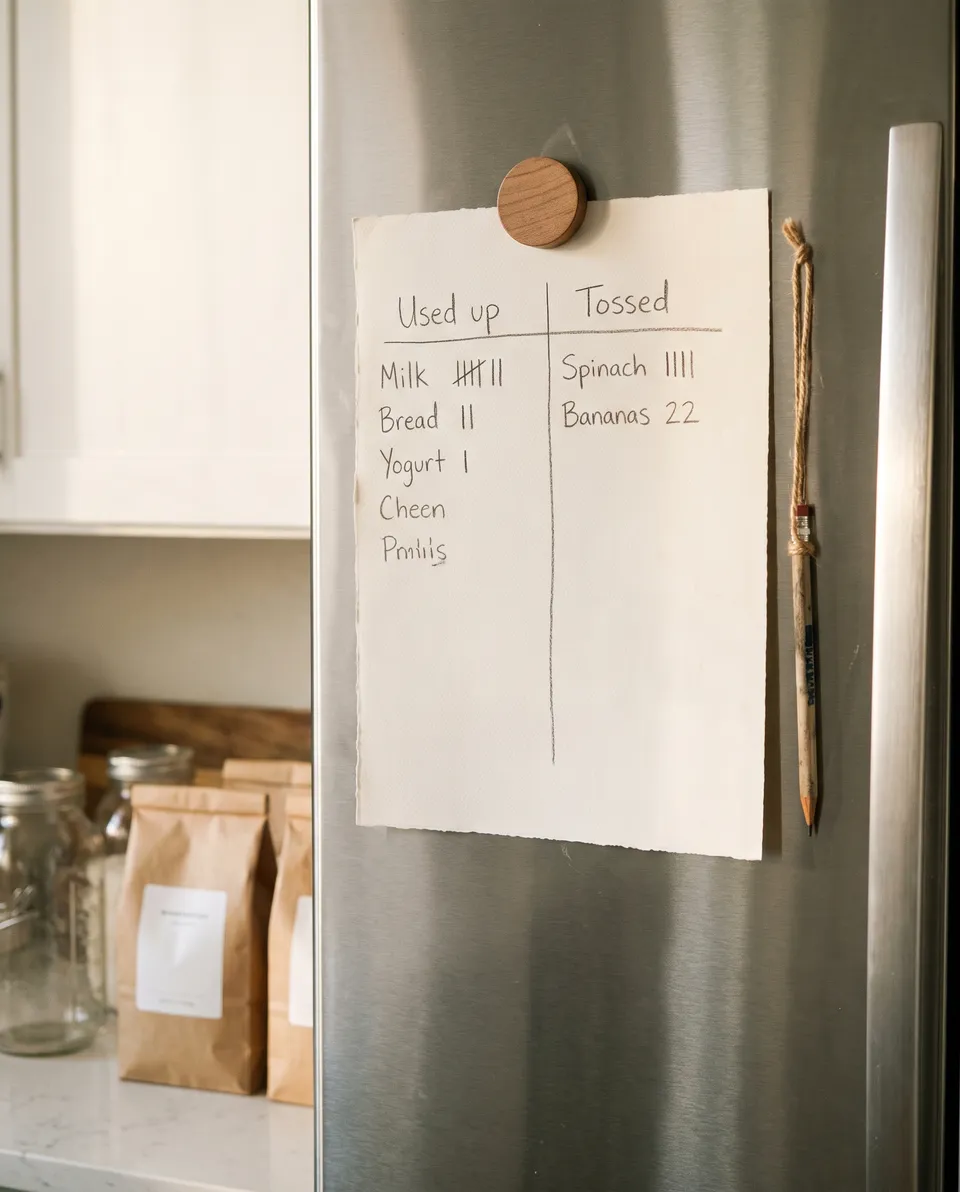
Two columns: Used up and Tossed. Hang a pencil next to it.
Step 2: Make a mark every time
When the milk runs out, a mark under Used up. When the spinach goes in the trash, a mark under Tossed, with a word about why if you can (went bad, made too much, nobody liked it). It takes a few seconds a day.
Step 3: Do it for two weeks
Two weeks is usually enough to see the pattern. The whole thing takes no more than about 15 minutes a week.
Step 4: Then sort
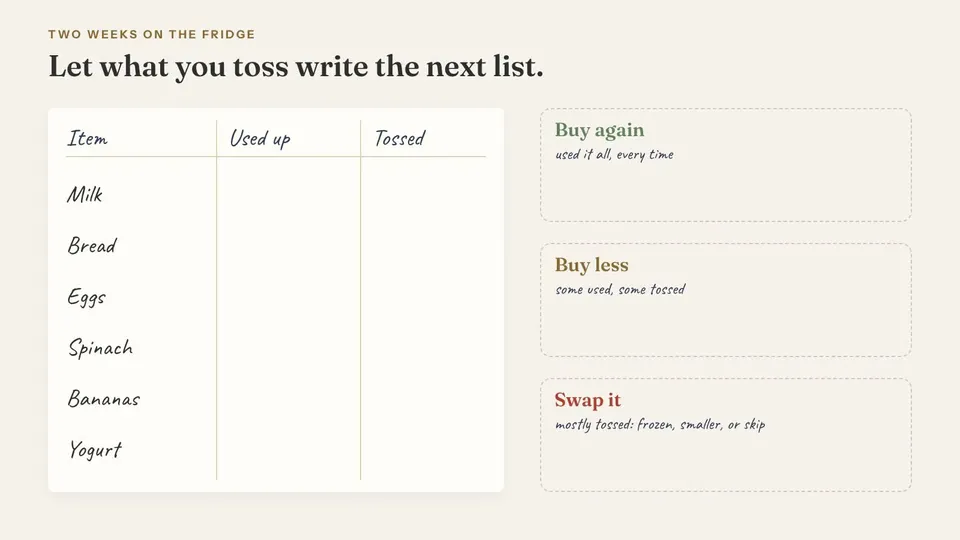
Everything you used up every time: buy again. Things that were half used, half tossed: buy less, or less often. Things that mostly went in the trash: swap it for a frozen or canned version, a smaller size, or skip it altogether.
Families that try this often cut their wasted food by a quarter or more, and it costs nothing but a sheet of paper. Notice the why, too: “made too much” is a portion problem, “went bad before we got to it” is a timing problem, and “nobody liked it” means it doesn’t belong on the list at all.
2 · Where the money goesMeat and dairy cost the most to waste.
- $
Meat is the priciest waste — Across what Americans buy at the store and eat out, wasted meat costs more than any other food, about $133 per person a year, with dairy next. Buy meat for the meals you’ve planned, and freeze it the day you buy it if plans might change (see No. 01).
- V
Fresh produce is the easiest to lose — Fresh vegetables and fruit together come to more than 50 pounds per person a year thrown away. Buy them in smaller amounts, more often, and plan the delicate ones for early in the week.
- !
Your list is the real data — National averages tell you where to look; your two-week sheet tells you what to change.
3 · Write the list from what’s on handShop the house first, then the store.
Step 1: Check before you write
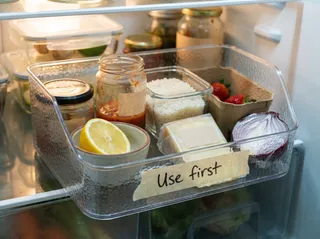
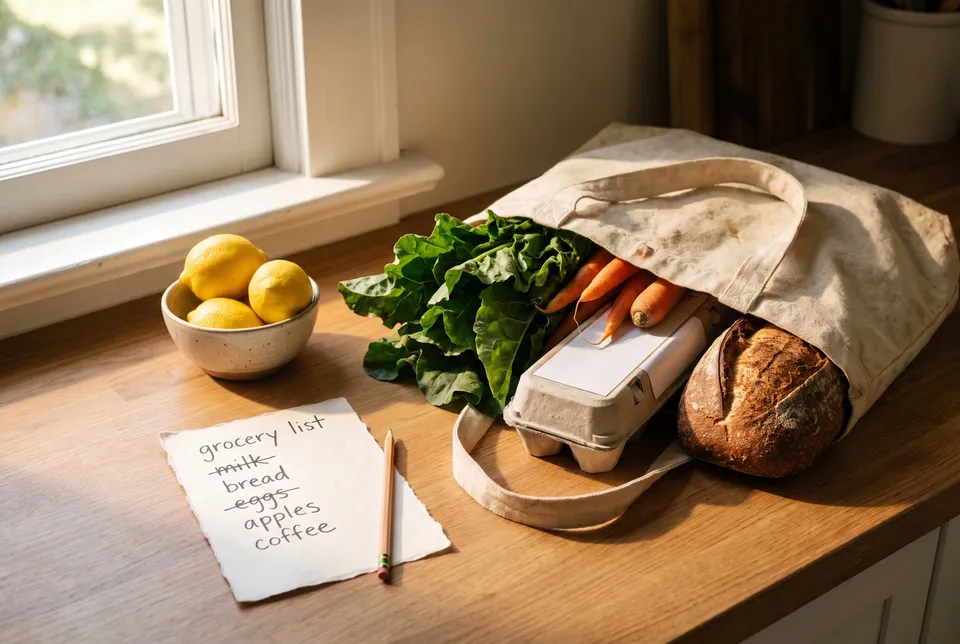
Fridge first (the Use-first bin from No. 21), then the freezer and the pantry. Plan the next few meals around what needs using.
Step 2: Then plan the week
Pick meals that share ingredients so nothing is bought for just one recipe (the method is in No. 08).
Step 3: Write only what’s missing
Organize the list by the store’s layout so you don’t wander, and stick to it. Shopping with a list is one of the simplest ways to spend less.
4 · Always have vs. try itTwo kinds of items on the list.
Always have
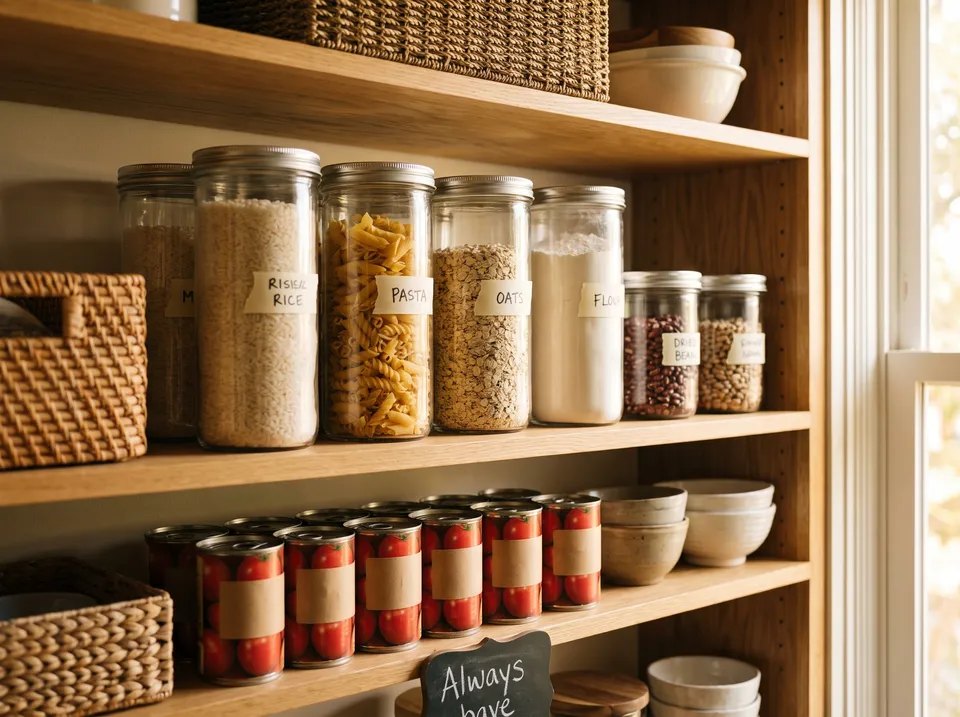
The things that land in “buy again” every time: maybe milk, eggs, bread, rice, pasta, oats, canned tomatoes, beans (see No. 18), onions. Keep them in their own spot on the pantry shelf, as in No. 03, and restock when you open the last one. Our rule of thumb: if you’ve bought it three times and used it up every time, it’s a staple.
Try it
New foods, a recipe experiment, something the kids asked for. Buy the smallest size, put it straight in the Use-first bin, and see where it lands on the sheet before you buy it again.
5 · Bulk and unit pricesBig packs only save money if you finish them.
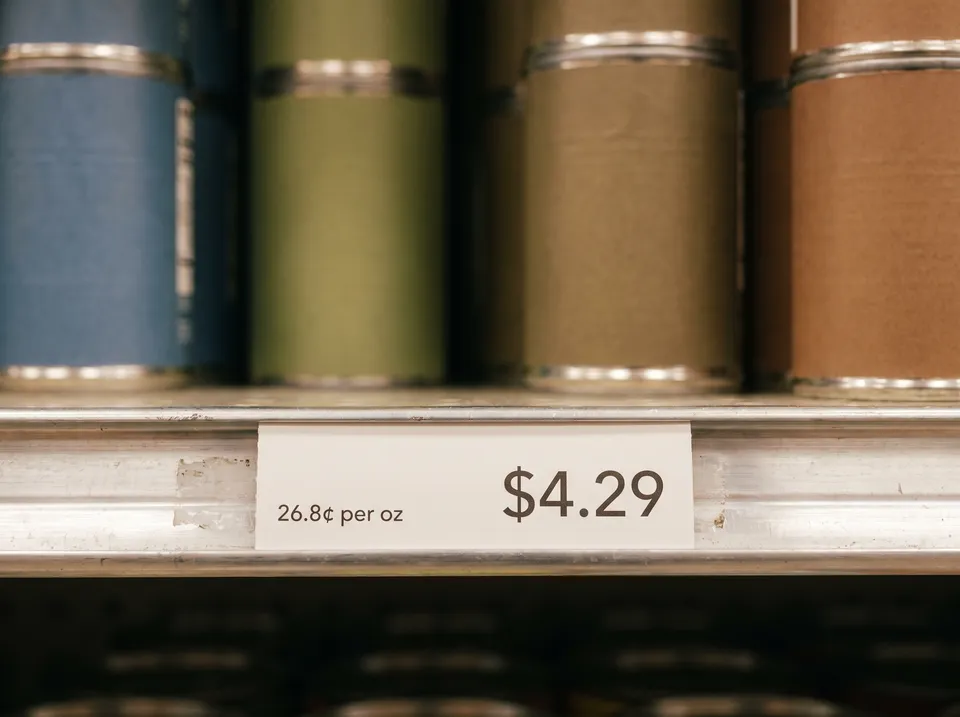
Buying in large quantities (including buy-one-get-one deals) only saves money if you use all the food before it spoils. Bulk makes sense for staples that keep: rice, pasta, oats, canned goods, frozen vegetables, and meat you’ll portion and freeze. It usually doesn’t for bagged salad, fresh dairy, bread or spices you use a pinch at a time, unless your sheet says your family really does go through them.
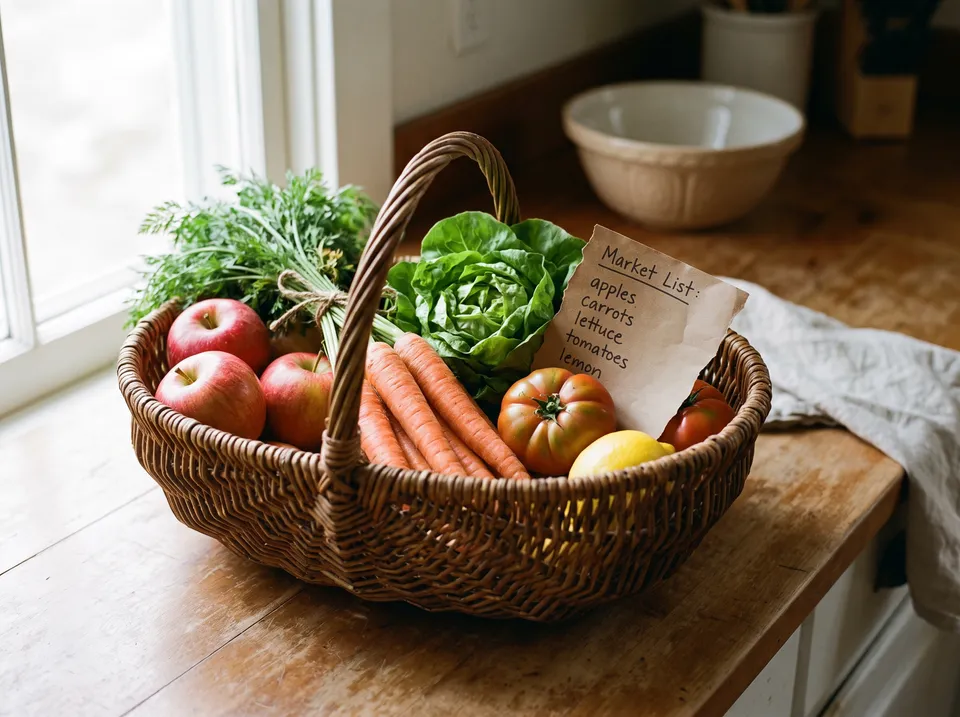
Quick referencePin this.
Sources: U.S. EPA, The Cost of Food Waste (April 2025), Preventing Wasted Food at Home, the Food: Too Good to Waste “Get Smart” challenge and the 2019 Wasted Food Report · USDA Economic Research Service, food spending and food loss data · USDA MyPlate on budget grocery lists and price tags · University of Minnesota Extension, Unit Pricing · University of Maryland Extension, Stock Staple Foods · University of Arkansas Extension on bulk buying · NIST on unit pricing · America’s Test Kitchen on buying in bulk. Checked October 4, 2026.