Shop Your House First · No. 21 of 30
The Use-First System: How to Stop Losing Food in Your Fridge
One bin at eye level, a roll of tape and five minutes a week: how long opened food really keeps, what the dates mean, and how to turn the bin into dinner.
You know the container. It went into the fridge with the best intentions, slid to the back behind the milk, and three weeks later nobody is brave enough to open it. Most wasted food isn’t forgotten because we don’t care; it’s forgotten because we can’t see it. The fix isn’t a fridge makeover. It’s one small bin at eye level, a roll of tape, and five minutes once a week.
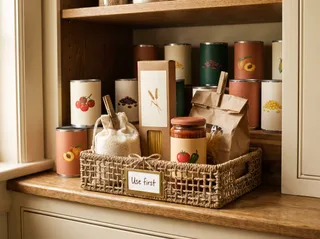
1 · You can only use what you can seeSame fridge, ten minutes later.
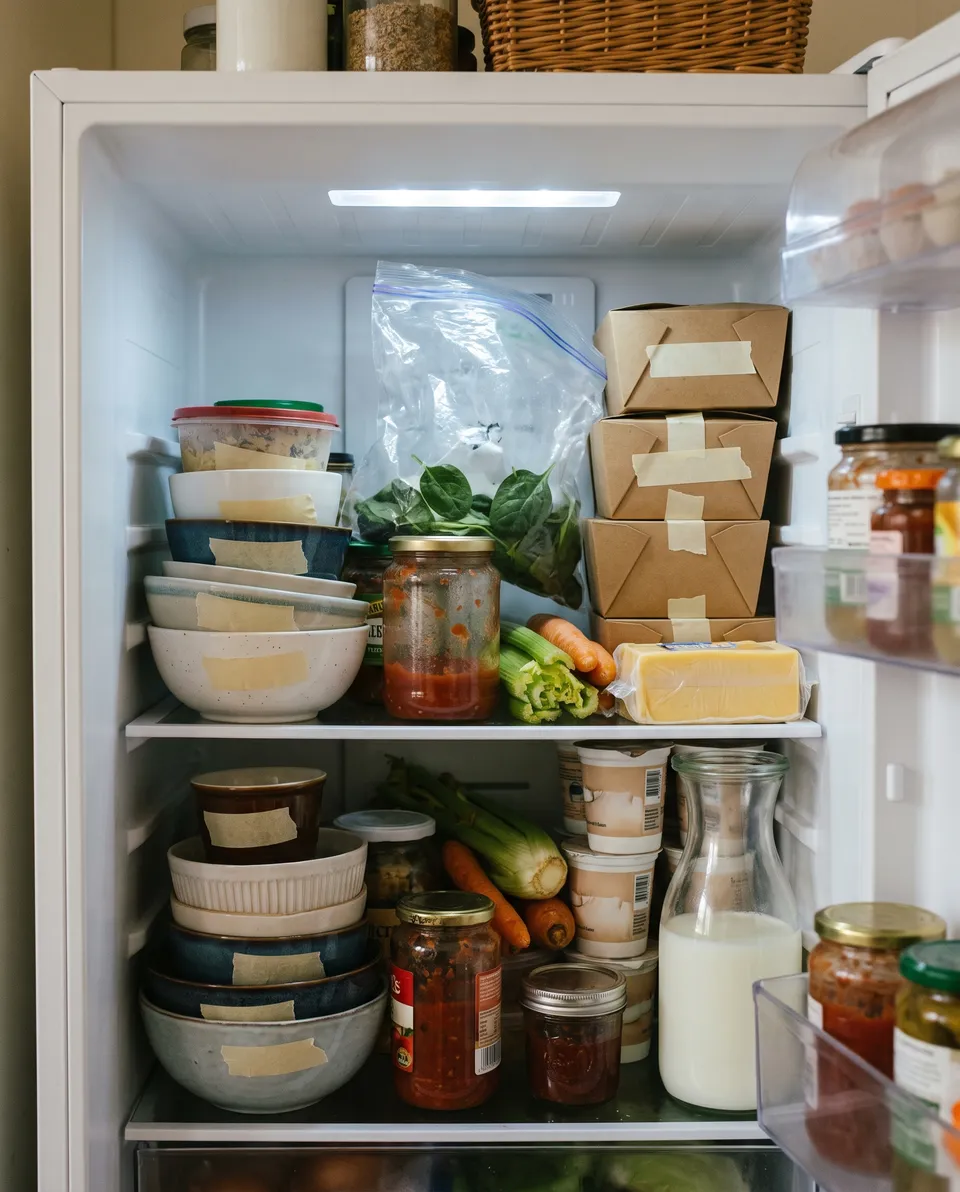
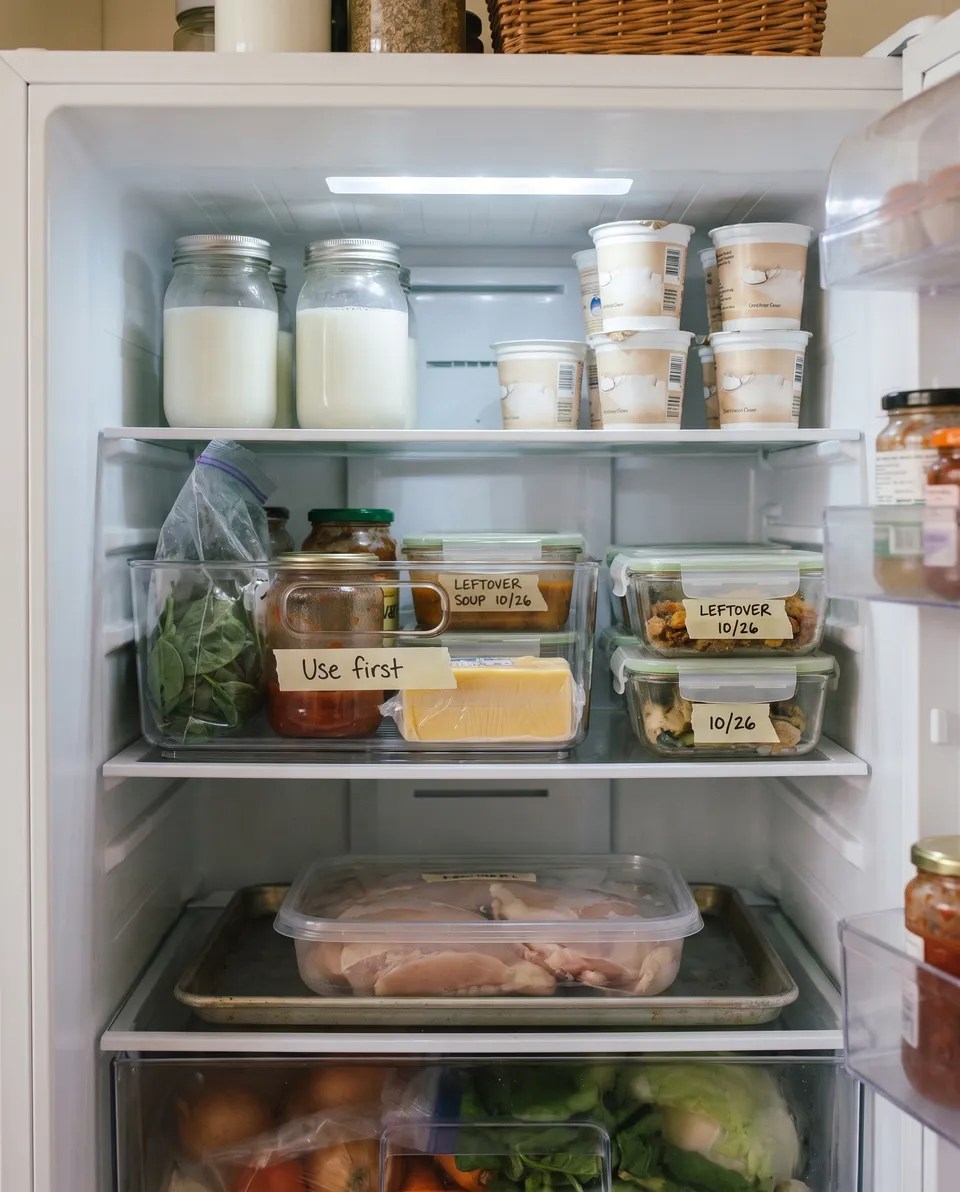
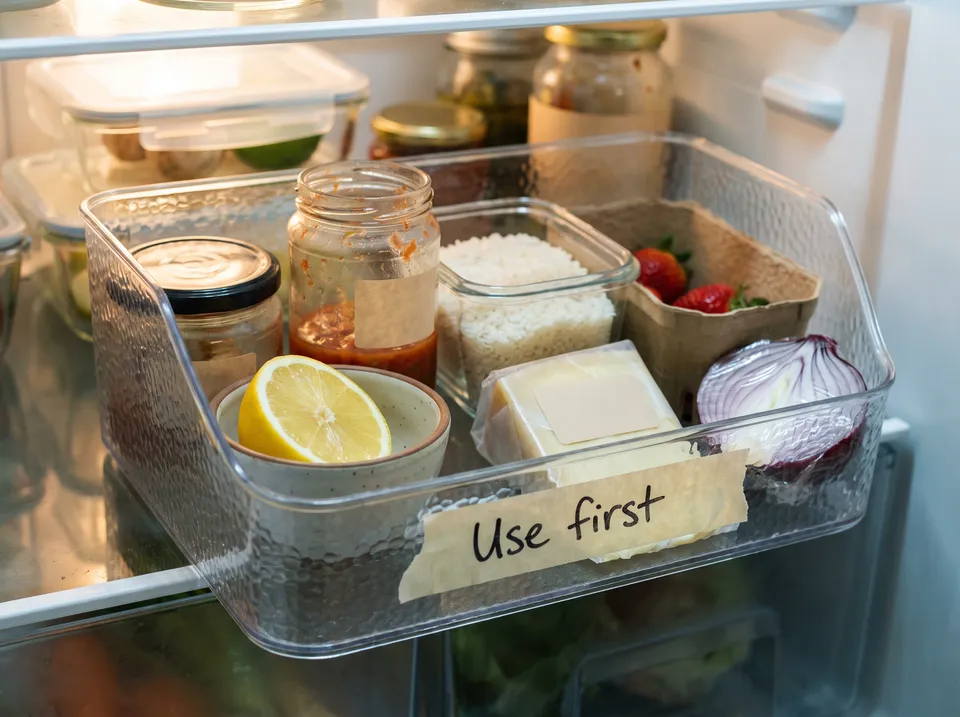
2 · The Use-first binOne bin, at eye level, for whatever needs eating next.
Step 1: Pick a spot you can’t miss
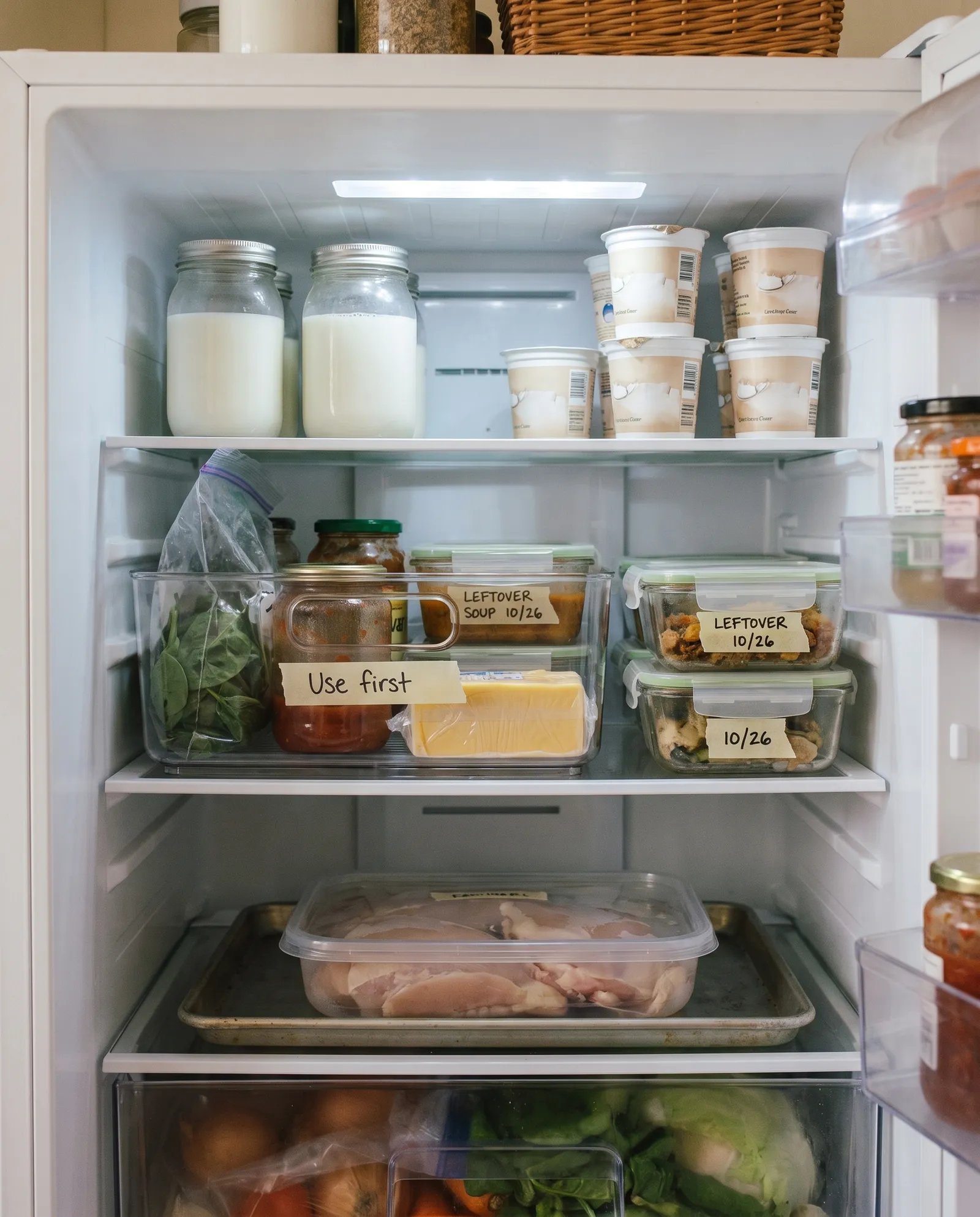
A clear bin or a shallow tray on the shelf at eye level, front and center. Stick a strip of tape on it: Use first (or Eat first, whatever your family will actually read).
Step 2: Fill it with what’s on the clock
The half jar of salsa, the leftover rice, the open bag of spinach, the last wedge of cheese, the half lemon, the strawberries that need eating. Ready-to-eat foods only.
Step 3: Keep it small
If everything is urgent, nothing is. The bin should be small enough to scan in two seconds; anything that can wait goes back on its shelf.
Step 4: Look there first
Before you plan a meal, pack a lunch or reach for a snack, open the fridge and look in the bin. That’s the whole system.
3 · How long things keepOnce it’s opened, the clock is shorter.
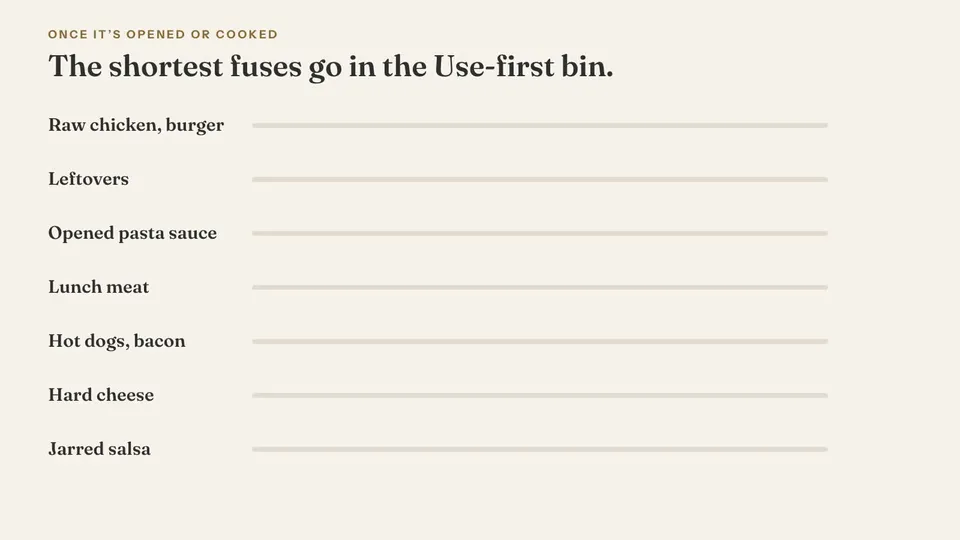
Leftovers: 3 to 4 days
Into shallow containers and into the fridge within 2 hours, eaten or frozen within 3 to 4 days. Ideas for turning them into something new in No. 06.
Raw chicken and ground meat: 1 to 2 days
Cook it or freeze it. The freezer is a pause button (see No. 01).
Opened jar of pasta sauce: about 4 days
And an opened can of beans, soup or vegetables: 3 to 4 days.
Lunch meat: 3 to 5 days once opened
Hot dogs and bacon: about a week once opened.
Hard cheese: 3 to 4 weeks once opened
Salsa from a jar keeps about a month; mayonnaise about 2 months; ketchup about 6.
Eggs: 3 to 5 weeks
In their carton, on a shelf (more in No. 16).
4 · Dates and labelsWhat the package date means, and the date you write yourself.
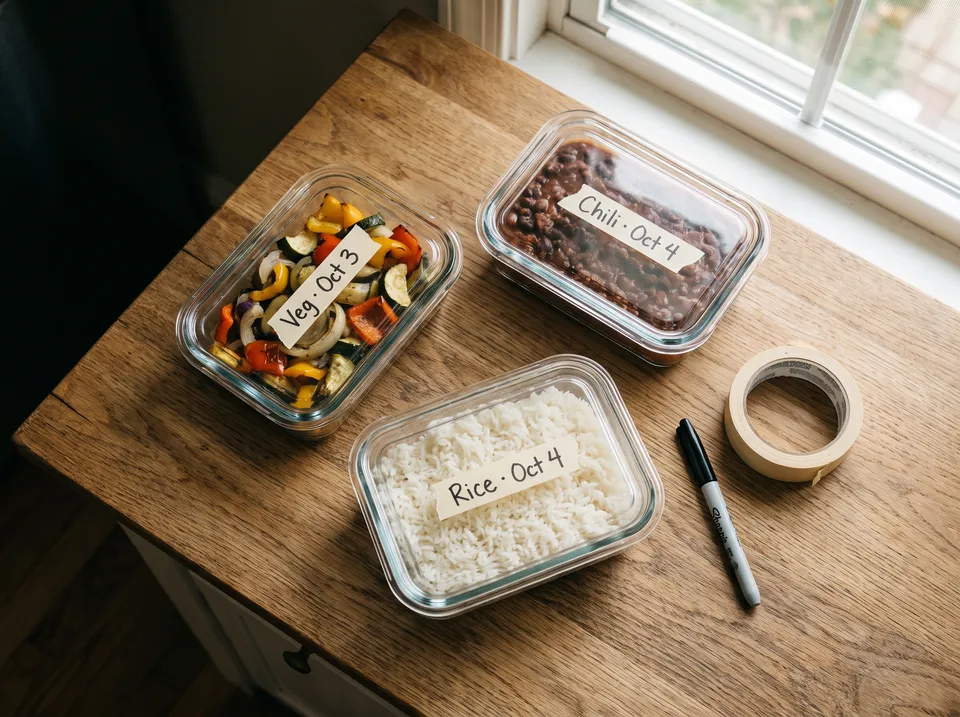
Most dates printed on food (best if used by, sell by, use by, freeze by) are about quality, not safety; infant formula is the exception. Food past its date can still be fine if it was stored properly, and food before its date can go bad if it wasn’t. So use your eyes, your nose, and how long it’s actually been open. That last one is the hard part, which is why the tape matters: when you open something or put leftovers away, write the food and the day on a strip of masking tape. Now nobody has to guess.
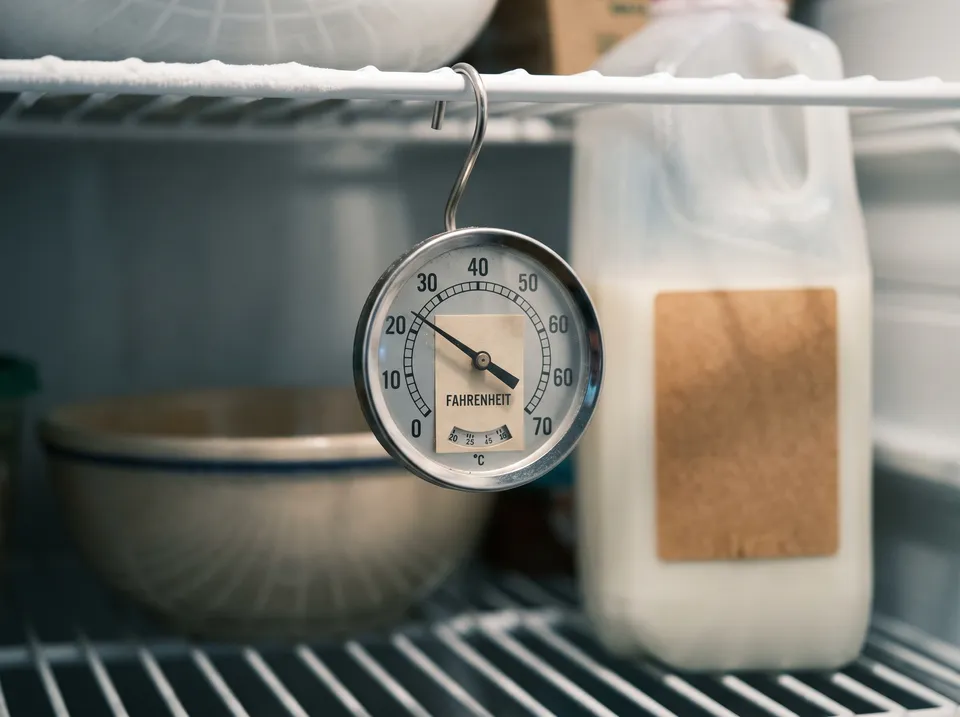
5 · Keep it cold40°F, and a thermometer to prove it.
- 1
40°F or colder — The fridge dial doesn’t tell you the temperature. A freestanding appliance thermometer does: check it once a week. (The freezer should be at 0°F.)
- 2
The door is the warmest spot — Condiments live in the door; milk, eggs and leftovers go on the shelves.
- 3
Don’t pack it solid — Cold air needs to move. A fridge crammed to the walls warms up, which is one more reason for the weekly check.
Shop this
6 · Five minutes, once a weekThe weekly fridge check.
Step 1: Pick a day
The night before grocery day is perfect: you’ll shop for what you actually need.
Step 2: Toss what’s past it
Anything that’s been open or cooked longer than it should, or that looks or smells off. Then wipe the shelf.
Step 3: Refill the bin
Pull forward whatever is getting close and put it in the Use-first bin.
Step 4: Plan around it
Pick one or two things from the bin to build the next few meals around, then write the grocery list. Produce that’s going soft has its own rescue plan in No. 10.
7 · Turn the bin into dinnerSoup, frittata, stir-fry, and a snack plate.
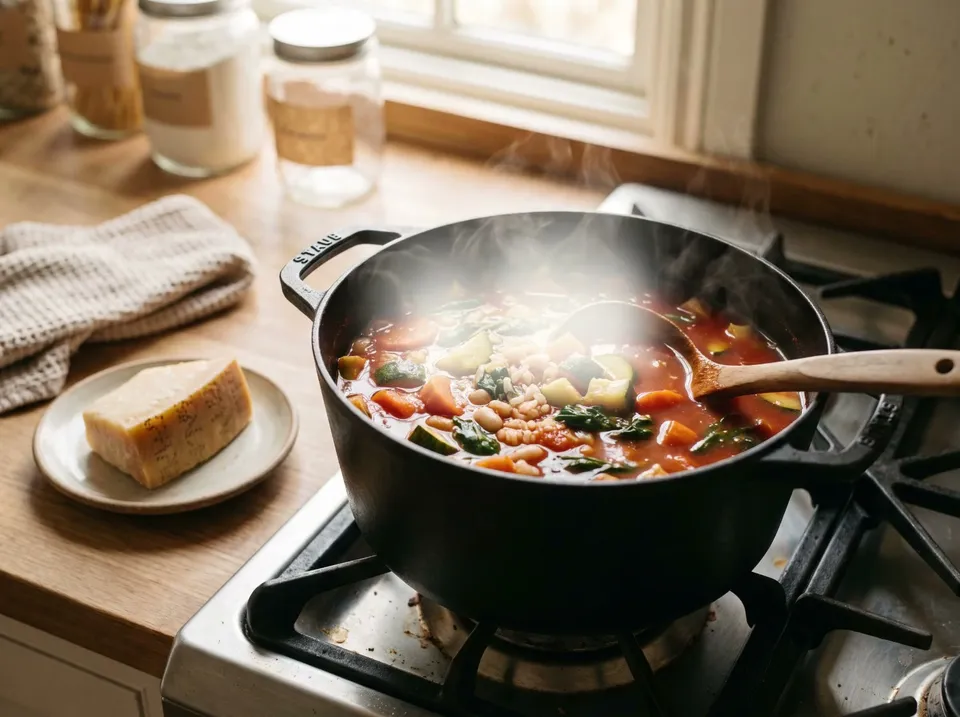
Everything soup
Soften an onion in a little oil, add broth or a can of tomatoes, then whatever vegetables, beans, grains and cooked meat are in the bin. Simmer until it’s all hot and tender; a parmesan rind makes it taste like you planned it.
Frittata
Six eggs and two cups of whatever’s in the bin (see No. 16).
Stir-fry or fried rice
Leftover rice, the odds and ends of vegetables, a scrambled egg and soy sauce.
The snack plate
Cheese ends, cut fruit, the last of the hummus and some crackers: lunch or an after-school snack, and the bin is empty.
Quick referencePin this.
Sources: USDA FSIS, Leftovers and Food Safety, Food Product Dating, Refrigeration and Food Safety, and FoodKeeper data · FDA, Are You Storing Food Safely? and Refrigerator Thermometers · U.S. EPA, Preventing Wasted Food at Home · USDA Economic Research Service on food loss · University of Illinois Extension on an “Eat first” spot and reducing food waste at home · Missouri, Minnesota, Penn State, Utah State and NC State Extension on first-in, first-out · America’s Test Kitchen reviews of refrigerator thermometers and glass storage containers. Checked October 4, 2026. HearthIQ may earn a commission on product links.