Shop Your House First · No. 09 of 20
How to Elevate Convenience Food Without Making More Work
Add one thing to the shortcut, and make it the food that needs using. Five tested upgrades, the safety rules the box won’t repeat, and how to trim the salt.
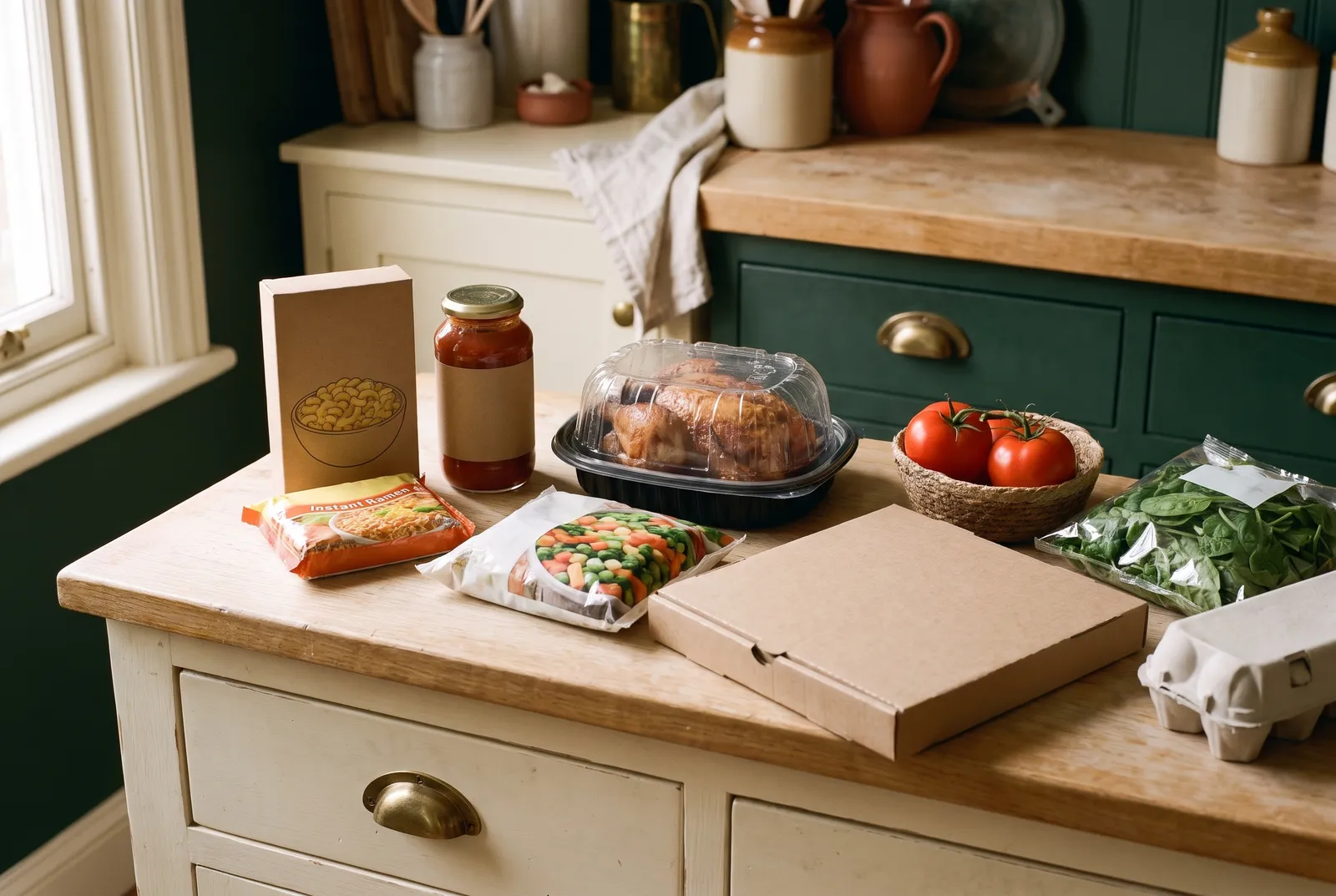
Some nights the plan is a box. That’s not a failure; that’s Tuesday. The box of mac and cheese, the packet of ramen, the frozen pizza: they exist so you can feed people when there’s nothing left in the tank. Here’s the move that turns a shortcut into a real dinner without turning it into a cooking project. Add one thing. And make that one thing the food in your house that needs using.
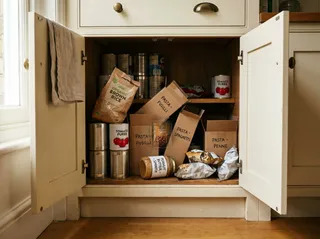
You set up your shelves in No. 03 so you could see what you have. Tonight that pays off. The shortcut is the base, and the thing that needs using (the half bag of frozen peas, the last of the chicken, the two tomatoes going soft) is the addition. It’s the same choose-your-own-adventure as No. 02, just with a head start.
The one ruleAdd one thing, and make it the thing that needs using.
The point of a shortcut is the time it saves. If the upgrade takes longer than the shortcut, you’ve just cooked dinner the long way with extra dishes. So keep it to one addition that does a real job: a vegetable, some protein, or something fresh on top. Pick it from what’s already on the clock in your fridge or freezer, and you save the shortcut and the leftover in one move.
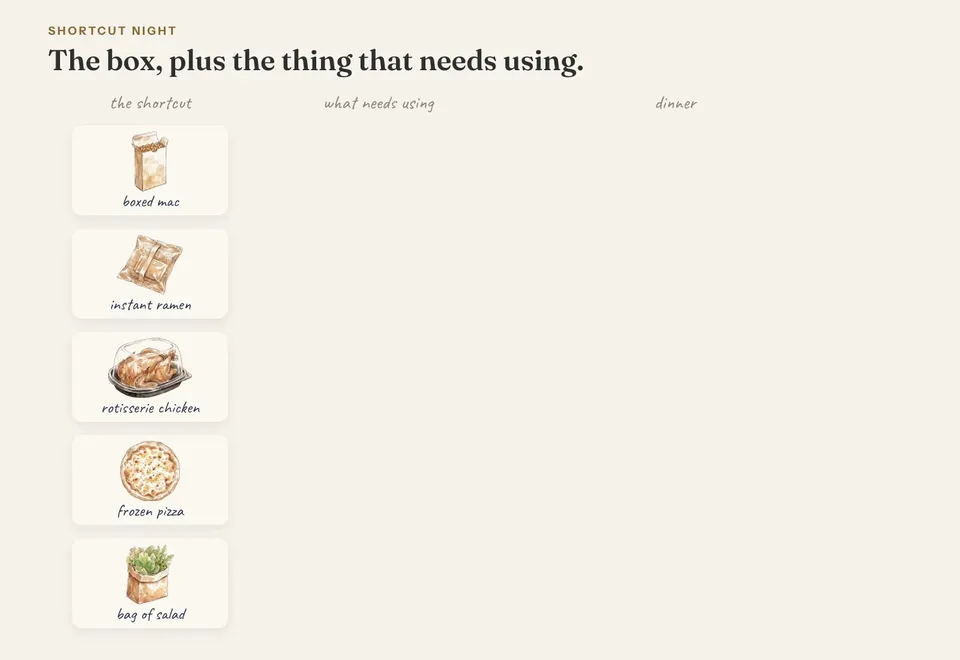
1 · The formulaFour quick questions.
Step 1: What’s the shortcut?
The box, the packet, the jar, the frozen pizza, the rotisserie chicken from the store. No judgment here.
Step 3: Does it go in, or on the side?
Vegetables and cooked meat usually go right in. Fresh things go on top at the end. For picky eaters, serve it next to the shortcut instead of in it; nobody’s favorite box gets ruined, and the vegetable still gets eaten (or at least looked at).
Step 4: Is it safe as-is?
Frozen vegetables need cooking, even for a cold dish, and anything you warm up should reach 165°F. More on that below.
“The shortcut saves the time. The one thing you add saves the leftover.”
2 · Five shortcuts, five additionsBoxed mac and cheese + frozen vegetables.
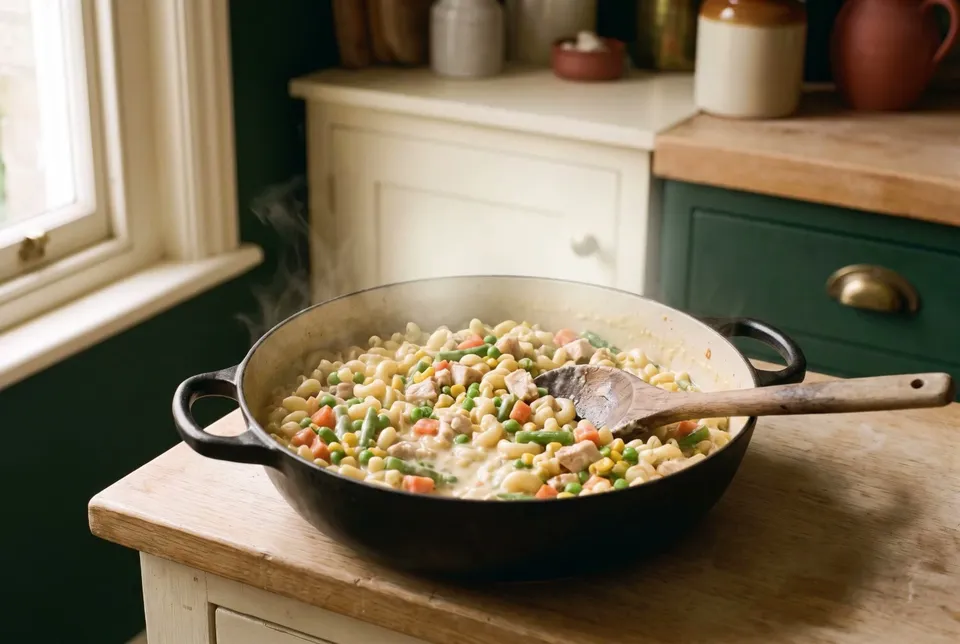
Serves 4. You need one 7.25-ounce box of macaroni and cheese, one 16-ounce bag of frozen mixed vegetables, 1½ cups chopped cooked meat (chicken, beef or pork, a great job for leftovers), ¼ cup milk and ⅛ teaspoon garlic or onion powder. Cook the macaroni the way the box says, and add the frozen vegetables after about 5 minutes so they cook together. Drain, put it back in the pan and add the meat. Stir the cheese sauce mix with the milk and garlic powder, stir it in, and heat on low a minute or two until it’s hot all the way through. You can skip the butter the box calls for.
Instant ramen + a bag of frozen vegetablesThe noodle packet becomes the sauce.
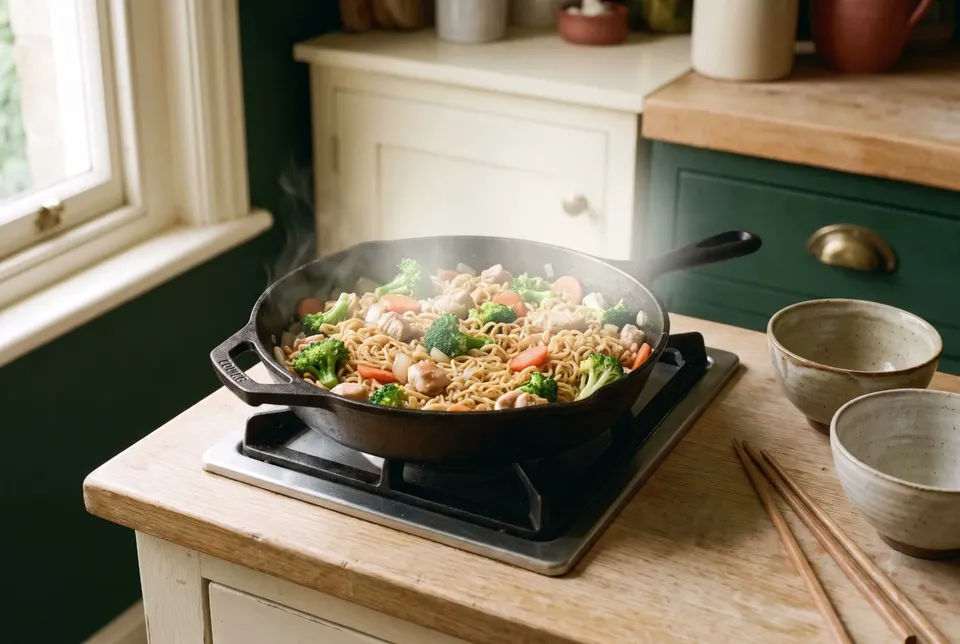
Serves 4. Cook 1 cup chopped onion and 1 chopped carrot in 2 teaspoons oil about 5 minutes. Thaw 2 cups frozen broccoli stir-fry vegetables in the microwave and drain them, then add them with 2 cups bite-size cooked meat or chicken and heat 1 to 2 minutes. Stir the seasoning packet from one 3-ounce package of ramen into 1 cup water or broth, pour it in, and when it simmers add the noodles, broken up. Cover and cook about 2 minutes. That packet is salty: one serving made this way carries about a third of a day’s sodium, so using half the packet and a pinch of garlic powder, ginger or pepper instead is an easy trade.
Store rotisserie chicken + rice and frozen vegetablesA cheesy chicken skillet from the pantry.
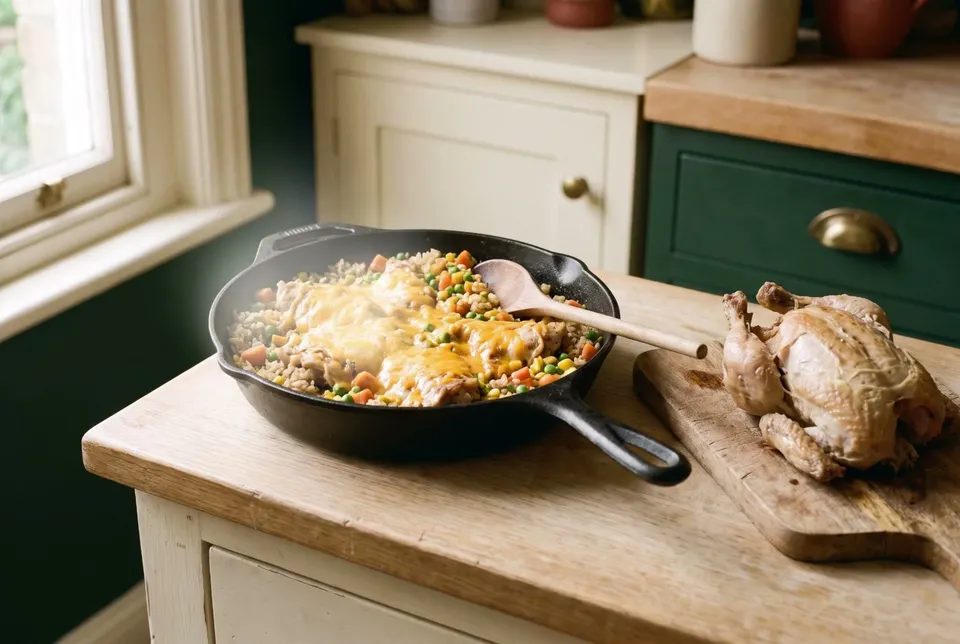
Serves 4. Cook 1 cup diced onion and 1 garlic clove in 1 tablespoon oil for 2 minutes. Add 1½ cups reduced-sodium chicken broth and bring it to a boil. Stir in 1 cup instant brown rice and 2 cups frozen vegetables, turn it to low, cover and cook 10 minutes. Add 2 cups shredded cooked chicken and ¾ cup shredded cheddar, and stir until the chicken is hot and the cheese melts. Leftovers keep up to 4 days.
Frozen pizza + whatever tomatoes are on the counterFresh on top, baked by the box.
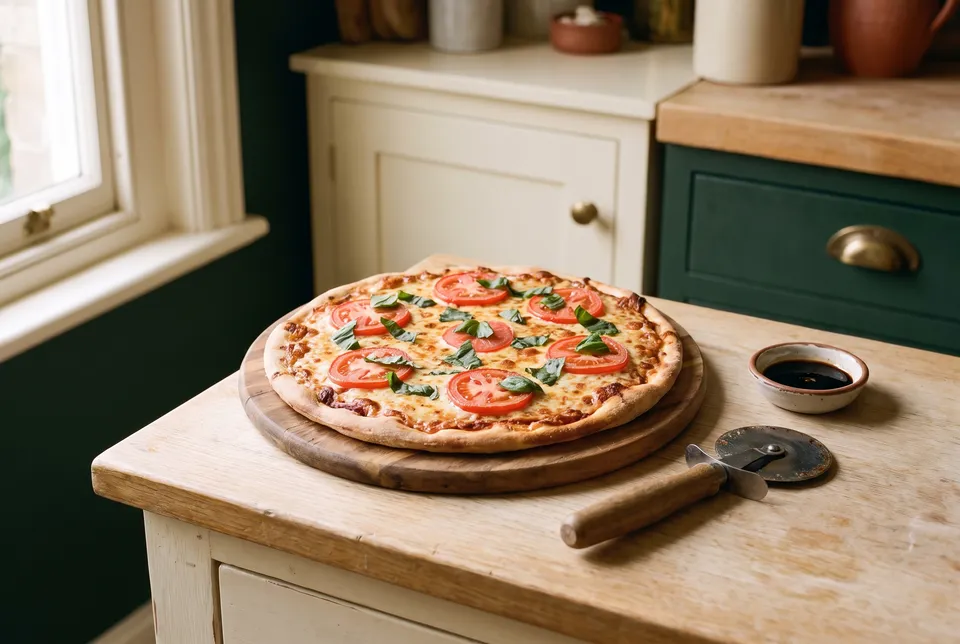
Slice the tomatoes that need using over a plain cheese pizza and bake it the way the box says: frozen pizza is meant to be cooked as directed, so follow the time and temperature on the package. When it comes out, tear a few basil leaves over it, or add a thin drizzle of balsamic glaze if you have some open. The tomatoes are the vegetable, and the box still does all the work.
A bag of salad + leftoversSide salad, meet dinner.
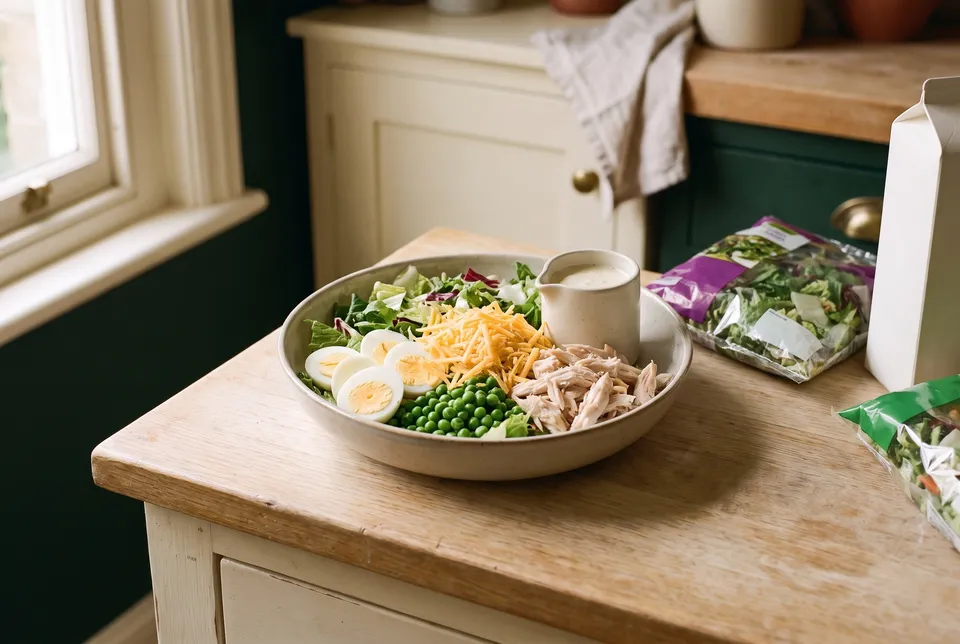
Turn a bag of greens into dinner by adding a little protein and something hearty. Per person: a big bowl of greens, a few spoonfuls of peas (thawed and cooked first, see below), 1 sliced hard-cooked egg, 1 ounce of cooked chicken or ¼ cup rinsed canned beans, 1 tablespoon cheese or nuts and 2 tablespoons dressing. If the bag says pre-washed or ready-to-eat, it doesn’t need washing again. Once it’s open, use it within a couple of days.
Shop this
- T-fal Experience nonstick fry pan, 12 inThe ramen and chicken skillets · ATK Best Buy, nonstick skilletsamazon.com
- Shun Multi-Purpose ShearsCuts a rotisserie chicken apart in a minute · ATK winner, kitchen shearsamazon.com
- Rao’s Homemade Marinara Sauce, 24 ozA jar worth keeping in Meals & sauces · ATK winner, jarred pasta sauceamazon.com
3 · Safe shortcutsThe two things the box won’t tell you twice.
Frozen vegetables need cooking
They look ready, but they aren’t meant to be eaten straight from the bag. Cook them to 165°F, even if they’re headed into a cold salad, and let them cool after. Freezing stops bacteria from growing; it doesn’t kill them.
Follow the label, then the thermometer
Frozen meals and pizza are cooked “as directed.” In the microwave, start with the shortest time on the label, add time if it needs it, and let it stand the minutes the label says: it keeps cooking while it rests. Anything you’re reheating should hit 165°F in the middle.
Leftovers of the upgrade
Into the fridge within 2 hours (1 hour on a day over 90°F), eat within 3 to 4 days, reheat to 165°F. A half-used jar of pasta sauce keeps about 4 days once open.
4 · Know when to stopIf it needs a second pan, it’s a different night.
A good shortcut upgrade takes one pot or one pan, and about as long as the box says. If you find yourself chopping for 20 minutes, browning meat, making a sauce: lovely, but that’s a No. 02 night, not a shortcut night. And if the addition is a leftover with a deadline, No. 06 has a whole list of next uses.
Quick referencePin this.
Sources: USDA FSIS, Preparing Frozen Food, Cooking with Microwave Ovens, Leftovers and Food Safety, Chicken from Farm to Table and FoodKeeper data · FoodSafety.gov Cold Food Storage Chart · FDA, Sodium in Your Diet and Selecting and Serving Produce Safely · Iowa State Spend Smart Eat Smart: Meat and Veggie Mac, Ramen Noodle Skillet, Cheesy Chicken Casserole, Whole Meal Salad · University of Illinois Extension, pantry staples and quick meal hacks · University of Maine Extension, frozen vegetables and ramen · Penn State Extension, Making Use of Canned Foods · USDA ARS, draining and rinsing canned vegetables (2011) · America’s Test Kitchen reviews of nonstick skillets, kitchen shears, jarred pasta sauce, instant-read thermometers and food storage containers. Checked October 4, 2026. HearthIQ may earn a commission on product links.